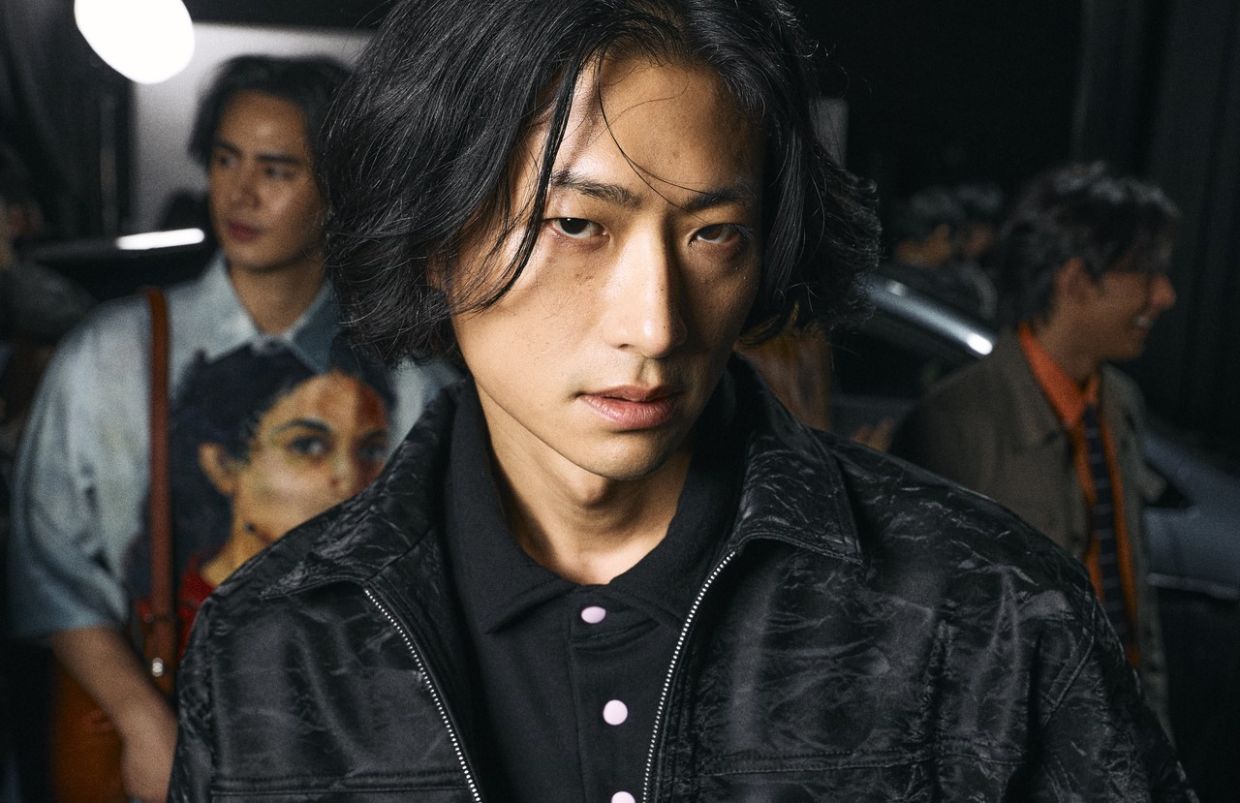
At an age when most professionals have firmly established their career trajectory, Heo Yong-jin made the counterintuitive decision to abandon a decade-long legal career to chase fashion modelling. The South Korean former litigation support specialist at Kim & Chang, the country's most prestigious law firm, now navigates the unpredictable world of fashion after turning 40—an age when many regard the modelling industry as effectively closed. His unlikely transformation offers a window into how personal reinvention continues to challenge conventional wisdom about career transitions and life stages, particularly resonating across Asia where professional stability has long been culturally prized.
The catalyst for Heo's dramatic career shift came in early 2023 when he relocated to Spain with his wife to pursue studies in sports management and agency operations. What began as an academic endeavour took an unexpected turn as he became immersed in a fitness-conscious environment among his classmates. Participating in football and padel, a racket sport gaining traction throughout Europe, Heo gradually shed weight through sustained physical activity. His wife, observing these tangible changes, casually suggested he consider modelling—a comment that would fundamentally alter the course of his life. Standing at 188 centimetres, Heo possessed the physical attributes the industry sought, yet the suggestion initially seemed far-fetched given his professional background and the industry's youth-oriented culture.
With merely four months remaining on his Spanish visa, Heo made the decisive leap into an entirely unfamiliar domain. His calculations proved pragmatic: European modelling agencies maintained strong demand for Asian male models, creating a genuine market opportunity worth exploring despite the substantial professional and financial risks involved. Rather than waiting for perfect circumstances, he recognised that his tenure in Spain presented a unique window to test whether modelling could viably complement or replace his legal career. He independently assembled a professional portfolio, commissioned photographers, and directly approached potential clients without agency representation—a bootstrap approach that demonstrated entrepreneurial initiative rather than industry connections.
Returning to South Korea with renewed optimism, Heo encountered an industry reality that dampened his momentum considerably. Domestic agencies proved reluctant to invest in an aspiring model approaching 40 with negligible professional experience in fashion. The repeated dismissals centred explicitly on his age, a blunt acknowledgement of modelling's systematic bias toward youth. Undeterred by this setback, Heo broadened his geographical scope, methodically emailing portfolios to agencies across China and Southeast Asia. This persistence eventually yielded results when a Thailand-based agency responded positively to his submission, setting the stage for his relocating between Bangkok and Seoul to pursue available opportunities in the region's more receptive market.
From his new base in Thailand, Heo accumulated an impressive roster of brand collaborations that validated his decision to pursue modelling seriously. He appeared in sunglasses commercials and European insurance advertisements, with one particularly notable campaign casting him as a Malaysian father—a booking that spoke to the versatility and representational diversity brands increasingly sought in their campaigns. These incremental successes accumulated into substantial social media traction; an Instagram reel documenting his improbable career transition accumulated four million views, transforming Heo into an unexpected internet phenomenon. The viral attention reflected a broader cultural appetite for narratives about unconventional life paths and personal reinvention, particularly those challenging age-related stereotypes.
The pinnacle of this emerging modelling career arrived in July when Heo received an exclusive invitation to walk in a Louis Vuitton trunk show in Bangkok. The French luxury house, presenting a menswear collection developed through the creative partnership between Pharrell Williams and Japanese designer Nigo, offered Heo an unprecedented platform showcasing his work to an elite clientele. The experience proved transformative not merely for his professional portfolio but for his psychological relationship with his career trajectory. Walking for a house of Louis Vuitton's stature validated that his career pivot—however unconventional—deserved serious consideration rather than dismissal as a midlife impulse.
Heo maintains considerable perspective about his position within the modelling industry, resisting the temptation to characterise his achievements as a complete success narrative. He acknowledges that his Louis Vuitton appearance, despite its prestige, has not automatically translated into sustained high-profile bookings. The uncertainty inherent to modelling work contrasts sharply with the stability he abandoned in litigation, yet this unpredictability carries unexpected psychological benefits. After spending years in a secure professional role that increasingly felt hollow, Heo discovered that financial precarity paired with meaningful work generated genuine satisfaction. He attributes this shift partly to his age and life experience—by his forties, he possessed enough perspective to question whether material comfort necessarily correlates with authentic happiness or professional fulfilment.
The South Korean market, initially unreceptive, has gradually warmed to Heo's profile as his international visibility increased. Domestic brands now actively approach him with campaign opportunities, including recent inquiries for fashion lookbooks that represent tangible recognition from his home market. These developing opportunities suggest that viral attention and prestigious international bookings do eventually influence industry gatekeepers' willingness to invest in unconventional candidates. For Heo, each brand inquiry produces an almost surreal sensation—the gap between his former identity as a corporate lawyer and his current existence as a sought-after model remains psychologically dissonant, yet increasingly normalised through repeated professional validation.
Looking forward, Heo has established ambitious targets that push beyond his current achievements. He has set his sights on securing representation and audition opportunities for Milan and Paris fashion weeks, scheduled for late September through early October, where major luxury houses including Prada, Bottega Veneta, Saint Laurent, and Tom Ford will showcase their collections. Competing at this level presents formidable challenges; at 40 with minimal industry tenure, Heo faces structural disadvantages against younger, more established models with established agency relationships and international portfolios. Securing an agency willing to invest resources in promoting a relatively unknown model approaching middle age requires convincing industry professionals that his viral visibility and prestige bookings represent sustainable career potential rather than novelty appeal.
Beyond the tangible career metrics, Heo's transformation reflects a profound philosophical shift about work and self-perception. His decade in litigation developed genuine professional competence but failed to nurture authentic confidence or genuine enjoyment. He describes previously projecting confidence as a learned professional behaviour rather than an organic manifestation of self-assurance. Modelling paradoxically delivered genuine confidence through the simple mechanism of being repeatedly chosen and valued by brands—a validation mechanism that legal work, despite its prestige, never provided. This distinction carries psychological weight; he articulates how finally discovering work that commands his full engagement and creative expression has fundamentally altered his relationship with professional identity.
Heo deliberately underplays the significance of his journey, characterising his accomplishments as merely losing weight and pursuing an interest rather than achieving something remarkable. This deflation serves multiple purposes: it acknowledges the role of circumstance and privilege in enabling his transition, it avoids alienating audiences through excessive self-promotion, and it positions his experience as potentially replicable rather than uniquely extraordinary. He expresses hope that his unconventional path might encourage others to question whether age, professional seniority, or career stability should permanently foreclose exploring genuinely desired pursuits. For Malaysian and Southeast Asian readers, his narrative challenges deeply embedded cultural narratives about career linearity and the immutability of professional identity once established.
The modelling industry's evolution toward greater diversity and inclusivity—age diversity included—reflects broader economic and cultural shifts reshaping how fashion brands construct their commercial narratives. As brands increasingly emphasise authenticity and relatability, the industry's traditional reliance on interchangeable twenty-something models has gradually softened to accommodate varied ages, body types, and life experiences. Heo's success, while still exceptional, operates within an expanding space of possibility rather than representing a complete violation of industry norms. This contextualisation neither diminishes his achievement nor removes the substantial obstacles he continues facing; rather, it acknowledges how individual agency and structural opportunity interact to create career possibilities.
As Heo continues navigating the fashion industry, his story remains incomplete, yet already instructive. He has not transformed into a supermodel; his career remains precarious and contingent on continued bookings and brand interest. Yet he has fundamentally repurposed his professional identity, accumulated meaningful work experiences, developed genuine confidence, and discovered authentic engagement with his labour. Whether he ultimately secures representation for Milan and Paris fashion weeks, whether sustained modelling work materialises, or whether his career eventually pivots again remains uncertain. What seems increasingly settled is his willingness to embrace that uncertainty rather than reverting to the comfortable predictability of legal practice. For a region that prizes stability and conventional achievement, his choice to pursue genuine satisfaction over assured material comfort constitutes a quiet but resolute challenge to expectations about how lives should unfold.

