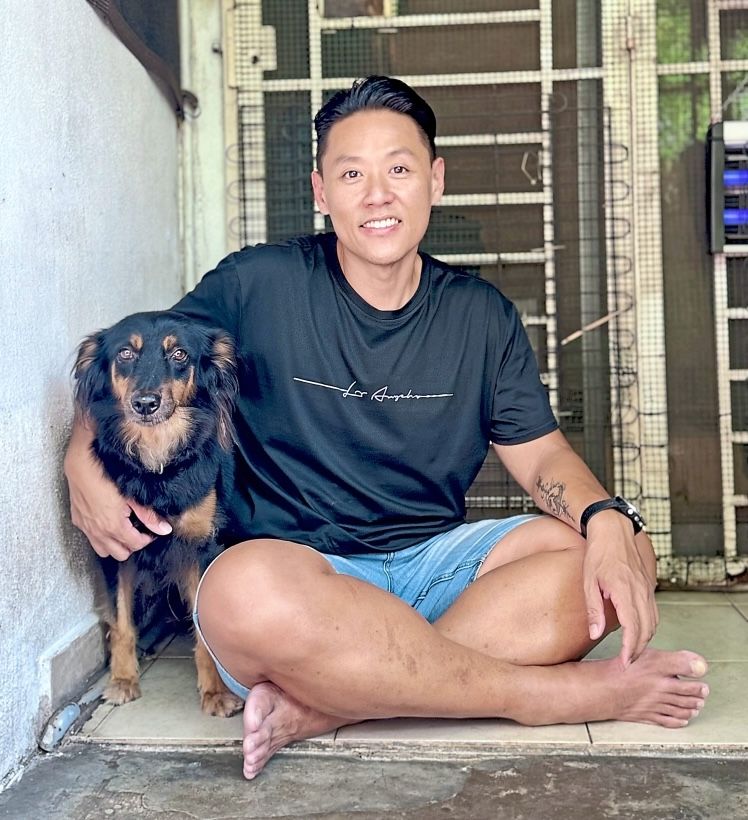
When Benjamin Tan arrived at Mid Valley Megamall's pet fair three years ago with his family, they were searching for a canine companion to keep Blacky, their twelve-year-old poodle, company at their Puchong home. Rather than choosing themselves from the dozens of available animals, the Tans turned to Brenda Chia, a volunteer with Malaysian Dogs Deserve Better, and asked her to select a suitable match. The organisation has built a reputation for rescuing abandoned dogs and finding them permanent placements, and Chia's instincts led her to introduce them to Zudy. The family was instantly charmed by the small dog's appearance, but what followed would test their commitment to animal welfare in ways they had not anticipated.
From the moment Zudy arrived at the Tan household, the family confronted the harsh realities of animal abandonment and abuse. The little dog trembled uncontrollably, her body wracked with nervous tension that suggested a difficult past. Benjamin Tan reflects on those early days with a measured sadness, acknowledging that human cruelty often leaves invisible scars on animals. Zudy's psychological distress ran so deep that she refused food for several days, a response typical of severely traumatised dogs struggling to trust their new environment. The family members, all experienced pet owners, recognised that recovery would require patience, consistency, and unconditional affection rather than quick fixes or forceful interventions.
Over the course of nine months, Tan gradually witnessed the physical manifestations of Zudy's anxiety diminish. The incessant shaking subsided as the dog began to understand that her new home represented safety rather than danger. During this extended rehabilitation period, the Tans made a curious observation that would shape their understanding of Zudy's trauma. Despite living alongside Blacky, who possessed a robust and frequent bark, Zudy remained almost completely silent. She made no whimpers, no yips, and no howls—sounds that are intrinsic to canine communication and expression. Tan initially wondered whether Zudy might be mute, a possibility that seemed to reflect the erasure of her voice both literally and metaphorically through whatever circumstances had preceded her rescue.
As Zudy's confidence within the family home gradually increased, Tan began taking her to a nearby dog-friendly park for supervised outings and socialisation. The initial outings revealed a dog still locked in survival mode, one who clung to her owner's side and recoiled from strangers. Tan's approach was methodical and gentle, allowing Zudy to approach new people at her own pace, to sniff and observe before committing to interaction. Even as her nervousness decreased week by week, her silence persisted. Tan could observe Zudy's attempts at mimicry when Blacky barked—her body language and mouth movements clearly indicated she was trying to join in—yet no sound emerged from her throat. This continued for roughly a year, a stubborn silence that seemed to suggest the dog's trauma ran deeper than mere behavioural training could address.
The breakthrough came unexpectedly during an ordinary moment at home. Blacky, now fifteen years old, was barking at a delivery person or security patrol outside when a second bark suddenly joined his voice. To Tan's astonishment, this second bark was louder and more powerful than Blacky's own. The realisation that Zudy had finally found her voice after all this time was a watershed moment for the family, proof that patience and consistent love could restore what fear and abuse had suppressed. From that day forward, Zudy's vocal presence became unmistakable. She had not simply recovered her ability to bark; she had discovered the confidence to use it.
Today, the dynamic between Blacky and Zudy represents a touching partnership rooted in mutual protection and companionship. The two dogs now tag-team their responses to external stimuli, with Zudy's bark often matching or exceeding Blacky's in volume when responding to the daily security patrols around their Puchong neighbourhood. Zudy has also expanded her vocal repertoire to include yapping along with birds in the garden, hunting lizards with announced determination, and generally making her presence and opinions known throughout the household. Tan remarks with good humour that he now finds himself occasionally requesting Zudy to lower her volume—a far cry from the days when he wondered if she would ever vocalise at all.
Beyond her newfound vocal confidence, Zudy has undergone a complete psychological transformation in her public behaviour and demeanor. At the dog park, she no longer huddles against Tan's leg or retreats from friendly strangers. Instead, she has developed a composed waiting posture, sitting calmly as people approach and allowing them to greet her without panic or excessive nervousness. When released to play among other dogs, she runs freely and engages with her environment in a manner that demonstrates genuine confidence rather than anxious caution. This evolution from a terrified, silent creature to a secure and interactive dog speaks volumes about the healing potential of consistent care and a stable environment.
Perhaps the most telling indicator of Zudy's transformation is the way she has established herself as an opinionated member of the Tan household with specific expectations and the willingness to enforce them. The family maintains a dinner schedule with Zudy's meal service beginning at 8 p.m. each evening. While she tolerates minor delays of a few minutes, any postponement of thirty minutes or more triggers an intervention: Zudy approaches her owners and barks insistently until her meal is served. Tan reports with unmistakable pride that her demands are met promptly, suggesting a household dynamic in which the once-voiceless rescue dog now commands respect and attention through clear vocal communication. This behaviour pattern illustrates how emotional healing and security can enable previously traumatised animals to develop personalities and preferences.
The story of Zudy's journey from abandonment to belonging carries broader implications for Southeast Asia's approach to animal rescue and rehabilitation. Malaysian Dogs Deserve Better's work in identifying suitable matches between rescue animals and families capable of providing therapeutic care demonstrates an important alternative to the common cycle of shelter overcrowding and euthanasia. The Tan family's willingness to invest nine months in Zudy's recovery, without demands for instant results or perfect behaviour, exemplifies the kind of patient commitment that many rescue organisations advocate but struggle to find in potential adopters. Benjamin Tan's narrative suggests that properly matched rescues, even those with severe trauma histories, can become fully integrated family members who enrich their households with personality and presence. For readers considering rescue adoption in Malaysia, Zudy's example provides reassurance that behavioural challenges and emotional scars need not be permanent barriers to successful placement and recovery.

