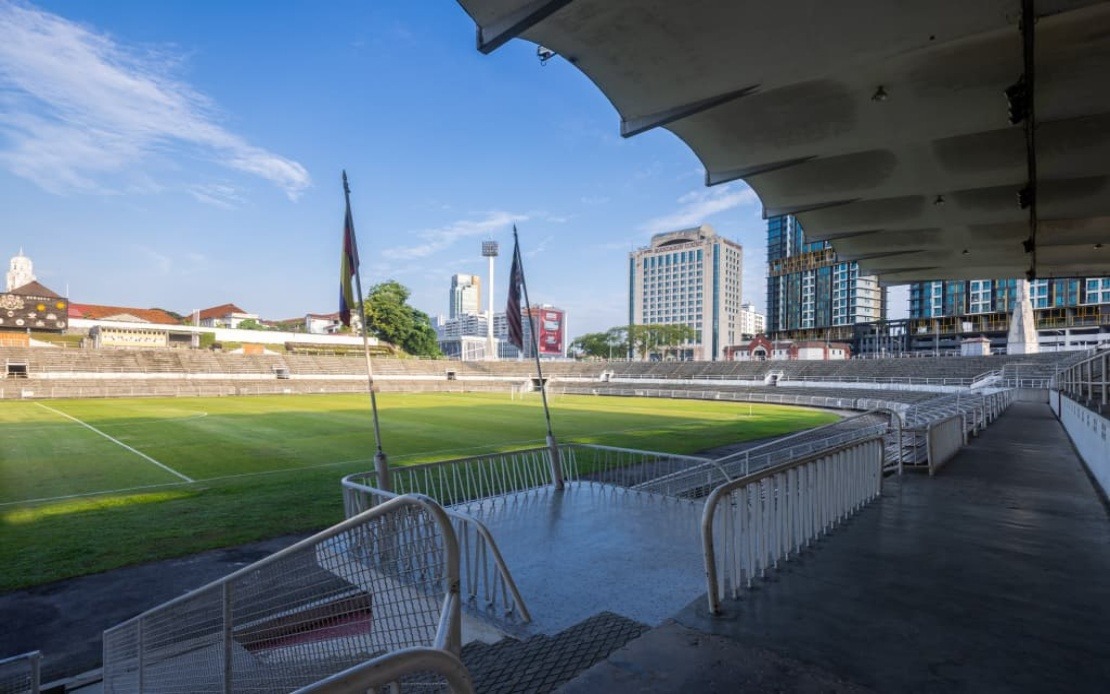
The echoing cry of "Merdeka!" that rang across Stadium Merdeka on August 31, 1957, when the nation's first Prime Minister Tunku Abdul Rahman Putra Al-Haj proclaimed independence seven times, represented far more than the ceremonial end of British colonial administration. That defining moment inaugurated Malaysia's journey as a sovereign nation and set the trajectory for decades of nation-building and development. Nearly seven decades onwards, the spirit embodying that historic declaration continues to resonate powerfully across the country, most visibly at Dataran Putrajaya, where contemporary National Day observances have become anchored in recent years, symbolising both Malaysia's administrative progress and its future aspirations.
The relocation of National Day festivities from Stadium Merdeka to varied venues across the peninsula, culminating in the increasingly prominent role of Putrajaya since the early 2000s, narrates a broader story of Malaysia's transformation and modernisation. Before its development as the Federal administrative centre commenced in 1995, Putrajaya existed as Prang Besar, a relatively unremarkable locality. Its ascendancy as a venue for national celebrations commenced in 2003 when it hosted the first national-level National Day observance under the theme "Keranamu Malaysia" (For You, Malaysia). This year marks the tenth occasion that Putrajaya has served as the principal venue for Malaysia's grandest patriotic gathering, having hosted celebrations in 2003, 2005, 2018, 2019, 2020, 2021, 2023, 2024, and 2025, with the Cabinet's April 2025 decision to designate Putrajaya as the host location for the three consecutive years spanning 2025 to 2027 cementing its status as the nation's primary National Day stage.
The pragmatic and symbolic significance of this venue transition generates important questions about how contemporary Malaysians, particularly younger generations who did not witness 1957 firsthand, comprehend and internalise the nation's independence struggle and foundational historical narratives. Does the shift from a hallowed ground associated with colonial emancipation to a purpose-built administrative hub diminish the weight of historical memory, or does it reflect an evolution befitting a maturing nation?
According to Prof Dr Sarjit Singh Gill, Chairman of the National Unity and Progressive Society Cluster at the Malaysian Professors Council and Professor of Anthropology and Sociology at Universiti Putra Malaysia, the transition between venues need not undermine National Day's historical resonance. Rather, Gill proposes that Stadium Merdeka and Putrajaya function as complementary historical symbols, each serving distinct yet interconnected purposes in Malaysia's collective memory. Stadium Merdeka evokes profound social nostalgia, particularly among older Malaysians in their seventies and eighties who retain living connections to the colonial period and independence negotiations. Conversely, Putrajaya embodies Malaysia's modernist aspirations as a "smart city in a garden," representing the administrative sophistication and forward-looking orientation that characterises contemporary governance. By celebrating at both locations, Gill argues, Malaysia enables successive generations to comprehend not merely isolated historical facts but the interconnected trajectory of societal transformation and national progress.
Preserving this intergenerational understanding demands deliberate effort, particularly given demographic shifts and the postmodern cultural context shaping younger Malaysians' relationship with national narratives. Gill emphasises that every National Day celebration must consciously foreground two foundational elements: acknowledgement of the sacrifices and diplomatic achievements of past leadership who secured independence through negotiation and consensus rather than violent rupture, and celebration of Malaysia's multiracial character operating under the principle of unity in diversity. These dual commitments constitute the irreducible substance of Malaysian patriotism, transcending any single venue or ceremonial format. Drawing on his own memories of participating in the "Berjaya" (Success) themed parade in 1990, Gill stresses that authentic and enduring patriotism among young people derives fundamentally from their active participation in national observances, transforming them from passive spectators into stakeholders in the nation's ongoing project.
Beyond symbolic and pedagogical considerations, practical logistical factors have influenced the sustained selection of Putrajaya as Malaysia's primary National Day venue. Officials from the Event Management and Innovation Unit of the Management Services Division at the Ministry of Communications highlighted that Putrajaya's modern infrastructure and accessibility significantly facilitate the staging of increasingly complex and expansive celebrations. The Federal administrative centre benefits from connectivity via the Mass Rapid Transit network, water taxi services, and shuttle bus operations, providing viable alternatives to private vehicle transport and enabling efficient movement of the substantial crowds attending these events. This infrastructural advantage proves particularly significant given Malaysia's escalating urbanisation and traffic congestion patterns, ensuring that accessibility rather than exclusivity characterises National Day participation.
The relationship between historical origins and contemporary settings also manifests in the thematic architecture of National Day observances themselves. The 2026 National Day and Malaysia Day celebrations will operate under the theme "Malaysia MADANI: Kesejahteraan Dinikmati" (Malaysia MADANI: Shared Prosperity Enjoyed), explicitly bridging the nation's independence struggle with contemporary development priorities and citizen welfare. This thematic continuity acknowledges that independence constitutes not merely a historical accomplishment but an ongoing commitment to enriching and substantialising sovereignty through sustained national development and popular wellbeing. The theme thereby reframes independence not as a static achievement but as a dynamic process requiring constant renewal and reimagining.
Cognisant of the challenge of engaging younger generations whose primary engagement with history occurs through educational curricula rather than lived experience, organisers have incorporated substantial creative and technological dimensions into recent celebrations. The 2025 programme features performances including "Gema Inovasi MADANI" (Echoes of MADANI Innovation), the musical fusion "Rentak MADANI, Paluan Tradisi" (MADANI Rhythms, Traditional Beats), and a "Human Graphic" visual formation comprising 1,500 schoolchildren. These elements employ aesthetic and technological language resonating with contemporary youth sensibilities whilst remaining anchored in patriotic narratives, attempting to demonstrate that national consciousness need not constitute a rejection of modernity but rather an integration of contemporary cultural forms with substantive historical awareness.
For individual participants, National Day celebrations in Putrajaya provide tangible, memorable encounters with patriotism rather than abstract textual encounters. Muhammad Nasrul Nasir, a 30-year-old Administrative Assistant (Finance) at the Federal Territories Department, exemplifies this dynamic. He attended last year's celebration at Dataran Putrajaya with family and friends, where witnessing skydiving performances created vivid, lasting impressions that he recalls with evident enthusiasm. More significantly, attending the celebration prompted reflection on the contributions and sacrifices of independence-era leaders who secured Malaysia's sovereignty. This year, Muhammad Nasrul has evolved from spectator to participant, joining the parade as a representative of his agency, embodying the transition from passive appreciation to active engagement with national commemoration.
The migration of National Day celebrations from Stadium Merdeka to Putrajaya ultimately represents neither historical abandonment nor symbolic regression. Instead, it reflects Malaysia's maturation as a nation: Stadium Merdeka remains the irreplaceable birthplace of independence, preserved in institutional memory and historical consciousness, whilst Putrajaya represents the continuation and elaboration of that foundational achievement. Contemporary Malaysia, increasingly urbanised, technologically sophisticated, and generationally diverse, requires venues and formats capable of accommodating large populations whilst conveying substantive historical and patriotic messages. Putrajaya's selection as the primary National Day stage for the next three years signals official recognition that national memory does not inhere in fixed locations but rather in sustained commitment to commemoration, education, and participatory engagement across evolving contexts and formats.
For Malaysian policymakers and organisers, the challenge proceeding involves maintaining historical integrity and pedagogical effectiveness whilst embracing technological innovation and accessibility improvements. Stadium Merdeka warrants continued recognition and potential ceremonial role, ensuring that the symbolic location of independence remains culturally salient rather than relegated to museum status. Simultaneously, Putrajaya offers practical advantages and symbolic resonance as a space where administrative capability and national aspirations converge. The broader imperative concerns ensuring that younger generations comprehend independence not as historical abstraction but as the foundational accomplishment enabling their own contemporary opportunities and future possibilities, a comprehension best achieved through direct participation in celebrations combining historical narratives with engaging, accessible, and genuinely contemporary forms of expression and engagement.

