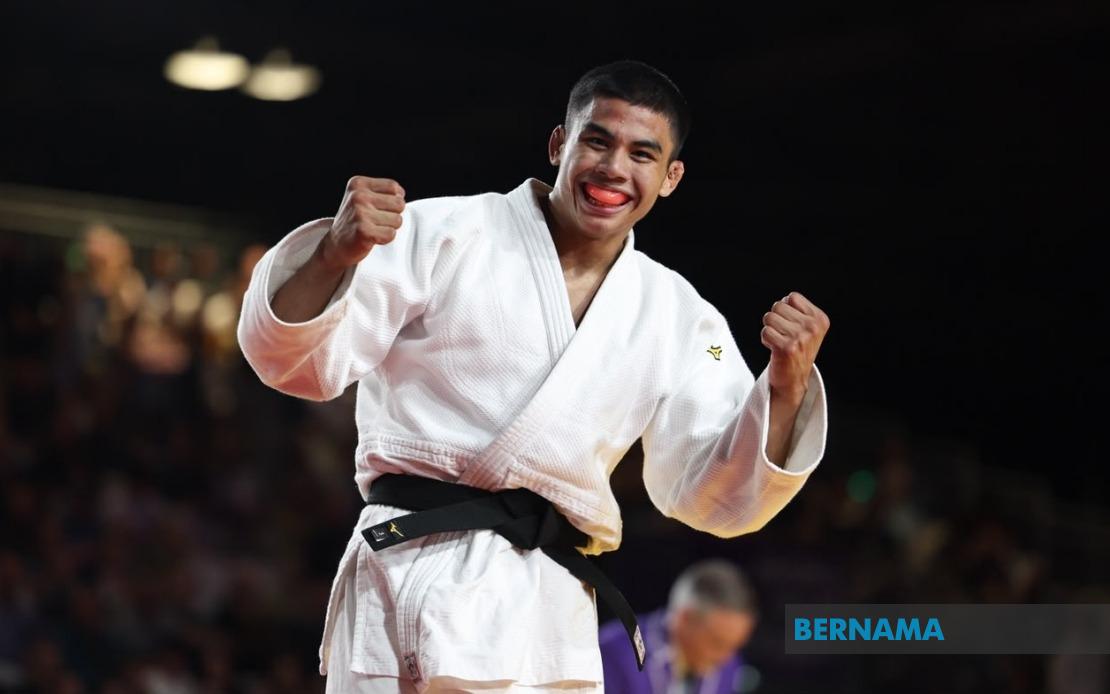
Amir Daniel Abdul Majeed's journey to sporting glory began not on the judo mat, but in a modest household negotiation when he was barely four years old. His mother, Yeoh Suatkhim, observed a pattern of fierce resolve in her young son that would eventually crystallise into one of Malaysian sport's defining moments at the Glasgow 2026 Commonwealth Games. When the child expressed a desire for a particular storybook, Yeoh recognised an opportunity to address a persistent habit. She made him a simple bargain: surrender the thumb-sucking, and the book would be his. By the following day, the habit had vanished entirely—abandoned with the same single-minded focus that would later carry him across tatami mats and into the record books.
That childhood episode, seemingly inconsequential to most parents, planted seeds that would bloom across two decades. Yeoh has reflected extensively on how her son's capacity for commitment emerged early and remained unshakeable throughout his youth. The determination she witnessed in those formative years was not a fleeting phase of childhood compliance, but rather a foundational aspect of his character. Whether confronting academic challenges, personal discipline, or the gruelling demands of elite athletic training, Amir Daniel approached each obstacle with the same unwavering resolve he had demonstrated over a storybook prize.
Introduced to judo at age five, Amir Daniel found his calling under the mentorship of national coach Md Nashriq Md Nassir, a relationship that has endured and deepened across sixteen years of development. The coach has become far more than a technical instructor within the tatami environment. For the family, Md Nashriq has served as an anchor figure who understood that elite athletic achievement cannot be compartmentalised from broader personal development. When Amir Daniel faced critical examinations, his mother would consult with the coach, who would establish binding agreements with the young judoka regarding academic responsibilities. The effectiveness of this approach lay in a simple psychological truth: once Amir Daniel committed to his coach through word, breaking that promise was inconceivable to him.
At the Scottish Event Campus in Glasgow yesterday, this decades-long cultivation bore its magnificent fruit. The 21-year-old from Penang defeated South Africa's Timothy Meuwsen in the men's under-81 kilogramme final to claim Malaysia's eighth gold medal at the Games. More significantly, he became the nation's first judoka ever to achieve Commonwealth Games gold—a milestone that transcends athletics and enters the realm of national sporting history. The victory carries particular resonance given Malaysia's judo development trajectory; the sport has traditionally produced respectable competitors, but breakthrough performances at major Games have remained elusive until now.
This triumph builds upon Amir Daniel's earlier success at the Birmingham 2022 Commonwealth Games, where he captured bronze in the men's under-73 kilogramme category. The progression from podium position to gold represents not merely an individual athletic achievement but validation of a coherent developmental pathway. Four years between Games allowed him to mature physically, refine technical execution, and sharpen mental resilience—the accumulated wisdom of competitive experience.
Yeoh, who travelled to Glasgow to witness her son's historic victory in person, has become a vocal advocate for youth engagement in structured sporting and educational activities. She is convinced that exposing children to physical discipline and learning opportunities from early childhood establishes behavioural foundations that extend far beyond athletic contexts. Her eldest daughter, Nur Yasmeen, benefited from similar exposure to sporting experiences before Amir Daniel emerged as the sibling who would pursue judo with professional intensity. This family philosophy reflects a broader understanding that champion athletes rarely appear spontaneously; they develop within households and communities that prioritise engagement and growth.
The relationship between mother, athlete, and coach illustrates an often-overlooked dimension of sporting success in Malaysia—the critical role played by family systems and mentoring networks. Yeoh credits Md Nashriq not only with technical coaching excellence but with providing the steadying influence that helped her son navigate the competing demands of elite athletics and formal education. In many cases, such arrangements risk deteriorating into resentment or imbalance, where one sphere compromises the other. Yet through structured communication and mutual respect, the family and coach maintained equilibrium, ensuring that Amir Daniel's judo trajectory never came at the expense of his academic responsibilities.
Looking beyond Glasgow, the family has articulated ambitions that extend toward the Olympic stage. Amir Daniel has expressed desire to compete at the Games, representing the natural progression for an athlete of his demonstrated calibre and age. Olympic qualification would position Malaysia within judo's global competitive landscape and establish the nation as a credible force in a sport historically dominated by Asian powerhouses such as Japan, South Korea, and China. Whether such ambitions materialise depends on multiple factors beyond pure athletic talent—qualification systems, funding, injury prevention, and mental fortitude across multiple Olympic cycles.
Yeoh has simultaneously emphasised her hope that her son will balance elite sporting ambition with continued academic development and community contribution. This perspective reflects a maturity often missing from contemporary sporting discourse, which frequently treats athletic excellence and educational attainment as competing rather than complementary pursuits. For Malaysian sport to develop sustainably and produce athletes capable of succeeding across decades, such holistic approaches to human development must remain central. Amir Daniel's ascent to Commonwealth Games gold champion, then, represents not merely his individual achievement but validation of a family philosophy and coaching methodology that others might productively emulate across Malaysian sporting institutions.

