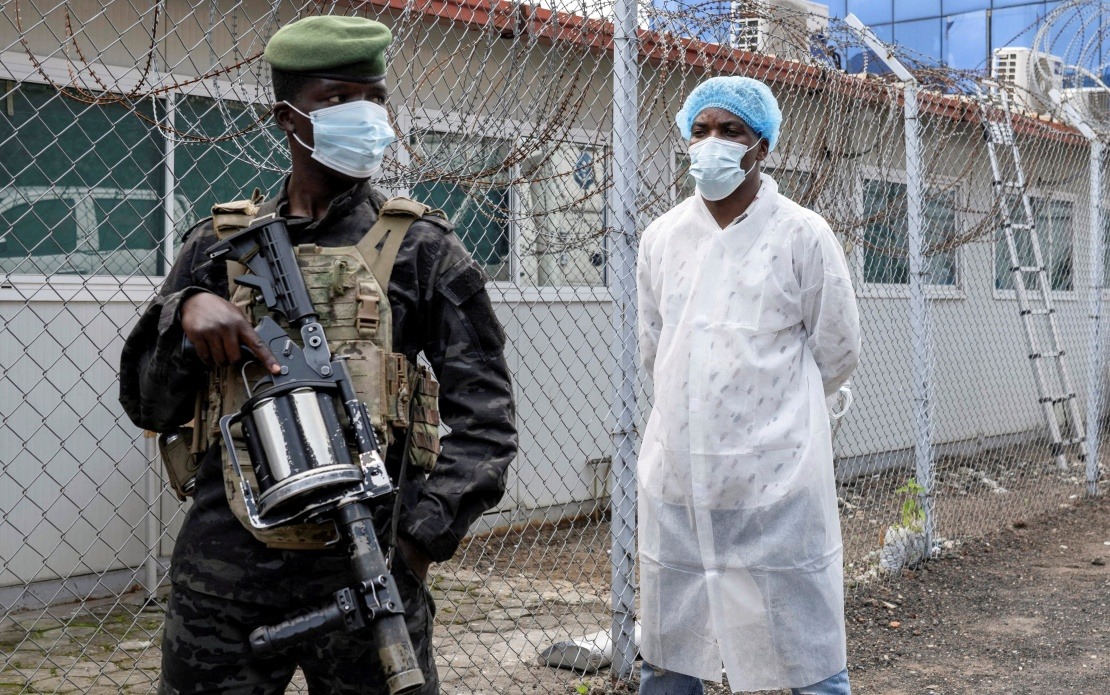
The United Nations migration agency has raised alarm over how traditional funeral customs in the Democratic Republic of Congo are accelerating the spread of Ebola across multiple provinces. The practice of transporting deceased victims across long distances for burial in ancestral communities has emerged as a significant epidemiological challenge, complicating containment efforts as the death toll climbed past 800 in mid-July.
Since the current outbreak was declared in mid-May, health authorities in the DRC have recorded more than 2,100 confirmed cases with over 828 deaths, translating to a case fatality rate of 37.5 per cent. The virus has penetrated five provinces—Haut-Uele, Ituri, North Kivu, South Kivu and Tshopo—creating a sprawling geographic footprint that strains response capabilities across the nation's vast territory. The pace of expansion has been alarming, with the outbreak growing by approximately 70 per cent over a two-week period, averaging more than 40 new cases daily during that timeframe.
International Organisation for Migration Regional Director Frantz Celestin emphasised in a video briefing that the transportation of bodies within the country remains entrenched in local practice and continues largely unabated. Migration officials intercepted 105 bodies at border checkpoints and health zone entry points during surveillance operations, underscoring the scale at which this transmission mechanism operates. This persistent mobility of corpses represents a direct threat to health workers, family members, and populations along transit routes, as the Ebola virus remains infectious in human remains even after death.
Community resistance to public health measures has compounded the challenge. Celestin noted that burial teams tasked with implementing safe funeral protocols face considerable opposition, ranging from passive refusal to active violence. In one particularly troubling incident last month, Red Cross volunteers were seriously assaulted at a cemetery in Bunia, the capital of Ituri province, when youth attempted to forcibly open a coffin during an Ebola victim's funeral. Such confrontations undermine the epidemiological foundations of outbreak response and expose responders to unnecessary risk.
The persistence of unsafe burial practices reflects deeper cultural and social currents within affected communities. Sixty per cent of reported deaths have occurred outside health facilities, within community settings where traditional burial rites take precedence over infection control measures. This pattern hampers early case detection, complicates disease surveillance, and creates delays in treatment access for suspected cases. When families transport bodies across provincial boundaries to fulfil customary obligations, they inadvertently create chains of transmission that cross administrative borders and overwhelm localised health infrastructure.
Médecins Sans Frontières characterised the outbreak as the third-largest and fastest-growing Ebola epidemic in recorded history, having reached this distinction within merely two months of declaration. The Bundibugyo virus variant driving this outbreak has proven particularly difficult to contain given the confluence of community resistance, geographic dispersion, and the entrenched role of funeral movements in disease propagation. The World Health Organisation reported that the number of affected health zones expanded from 36 to 42 over a single week, indicating that containment zones were fragmenting rather than solidifying.
For regional observers including Malaysia and Southeast Asian nations, the DRC outbreak illuminates how cultural practices intersect with epidemic preparedness in ways that epidemiological models alone cannot predict. The situation demands that public health authorities engage respectfully with communities to develop culturally sensitive alternatives to dangerous funeral practices, rather than imposing top-down restrictions that generate backlash. This approach requires sustained dialogue with religious leaders, elders, and family networks to identify safe modifications of traditional burial rites that preserve cultural dignity while interrupting viral transmission.
The outbreak also underscores the vulnerability of weak health systems in conflict-affected regions. The DRC's eastern provinces have experienced prolonged insecurity, creating fragmented governance and limited state capacity to enforce health protocols. When communities lack trust in government institutions or fear that compliance with health measures will expose them to other risks, they default to practices that feel safer within their own social networks, even if those practices amplify disease spread. International responses must therefore address not only the epidemiology of Ebola but also the political and security dimensions that shape community behaviour.
For countries across Southeast Asia with significant populations from Central Africa, the outbreak carries direct relevance. Migrant workers, students, and diaspora communities maintain transnational connections that could potentially facilitate importation of the virus, though international surveillance and airport screening protocols provide a defensive layer. Nevertheless, the outbreak demonstrates the critical importance of maintaining robust disease surveillance capacity, effective border health protocols, and pre-positioned stockpiles of personal protective equipment and vaccines.
The DRC health ministry's response strategy must evolve to address the funeral practice challenge through community engagement rather than coercion alone. Training and equipping community health workers to explain the scientific basis for safe burial practices, offering culturally appropriate alternatives, and involving traditional authorities in designing compliant ceremonies could reduce resistance while maintaining the dignity of funeral rites. Success requires sustained funding, long-term commitment to community relationships, and recognition that epidemiological control cannot be imposed against community will.

