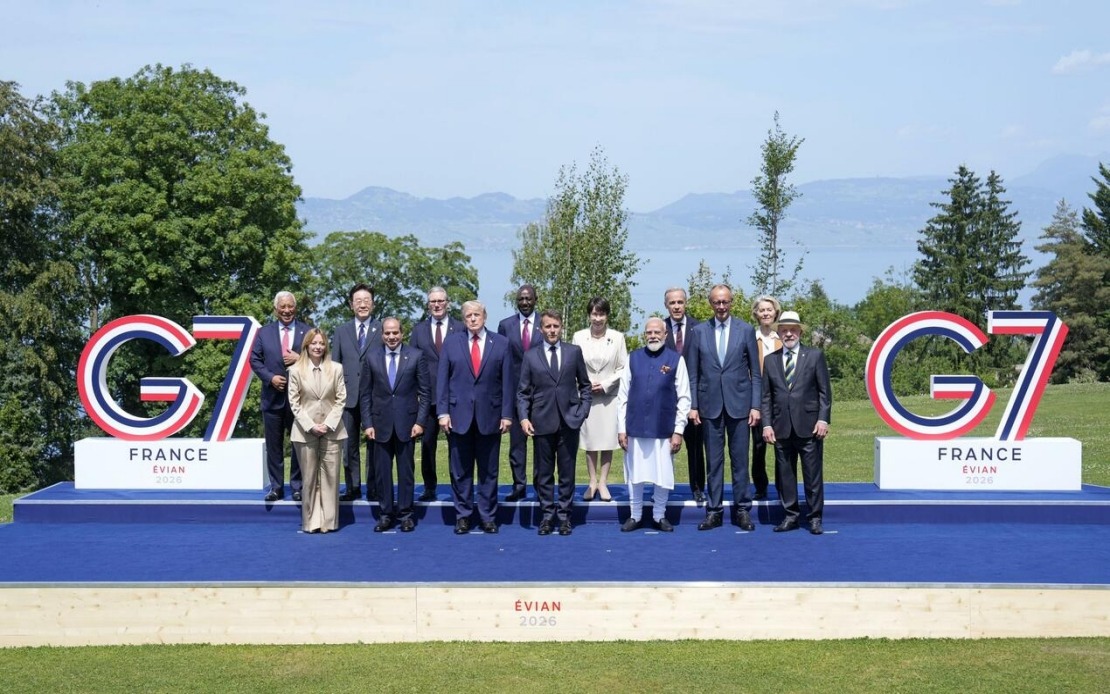
Gathered at their annual summit in the French alpine resort of Evian-les-Bains, leaders of the Group of Seven have signalled a unified determination to intensify assistance to Ukraine while keeping diplomatic channels open with Moscow. The gathering, held near the Swiss border on the shores of Lake Geneva, produced broad agreement to maintain pressure on Russia through continued support for Kyiv, yet the summit also revealed deep fissures within the Western alliance over multiple contentious issues ranging from trade protectionism to NATO commitments and America's broader strategic ambitions in the Arctic.
US President Donald Trump seized the opportunity to reiterate his preference for negotiated settlement, telling assembled media that Russia should pursue a deal given the catastrophic human toll the conflict has inflicted on both combatants. Trump indicated that sanctions relief, previously employed as a tool to stabilise global oil markets following the Iran conflict, could be revisited once market conditions permitted. His remarks suggested that the reopening of the Strait of Hormuz through a preliminary US-Iran agreement had sufficiently restored oil flows to warrant reconsideration of Moscow's sanctions regime, a position that reflects his transactional approach to foreign policy.
The presence of Ukrainian President Volodymyr Zelenskyy at the summit underscored the existential importance of Ukraine to Western security architecture, yet Zelenskyy's diplomatic priorities appear to have shifted markedly toward European capitals rather than Washington. In remarks posted across social media platforms, the Ukrainian leader emphasised the necessity of strengthening air defence systems and advancing diplomatic solutions that would compel Russian withdrawal. His framing of peace as a prerequisite for lasting stability suggests Kyiv views negotiation not as capitulation but as a mechanism for consolidating battlefield gains achieved through intensified cooperation with European partners.
Japanese Prime Minister Sanae Takaichi emerged as a voice for institutional cohesion within the G7, warning against unilateral attempts to alter territorial arrangements through military force—an implicit rebuke to Russian actions while potentially addressing broader concerns about regional powers across Asia. Takaichi's explicit references to deepening military coordination between Russia and China, alongside Pyongyang's increasing defence partnerships with Moscow, reflect growing anxiety among Indo-Pacific powers about an emerging axis of authoritarian states challenging the liberal international order. These observations carry particular resonance for Southeast Asian nations seeking to maintain strategic balance amid great power competition.
The summit's agenda extended far beyond the immediate Ukraine question, encompassing contentious discussions about the four-month-old conflict in West Asia between the United States and Iran. The preliminary agreement to reopen the Strait of Hormuz—one of the world's most critical maritime chokepoints through which roughly one-third of global seaborne oil transits—achieved consensus recognition from assembled G7 leaders and their guests from Egypt, Qatar, and the United Arab Emirates. The accord's implications for energy security, international commerce, and regional stability generated substantial discussion about ensuring sustained freedom of navigation and preventing further escalation.
France, wielding the G7 presidency, deliberately expanded the summit's membership to include major developing economies such as Brazil, India, South Korea, and others, signalling recognition that traditional Western institutions must adapt to accommodate rising powers and their interests. This outreach strategy reflects deeper anxieties about the G7's diminishing relevance in an increasingly multipolar world, where decisions affecting global development, climate change, and financial stability require legitimacy beyond wealthy industrialised nations. For Malaysia and other Southeast Asian economies, such institutional evolution carries implications for how development finance flows and how trade regulations are negotiated in coming years.
A centrepiece of the summit focused on reforming development finance mechanisms, with France championing a transition from traditional official development assistance toward private capital mobilisation for infrastructure and long-term projects. The G7's recognition that conventional aid mechanisms have proven inadequate for meeting the needs of lower-income countries suggests a fundamental recalibration of how wealthy nations approach partnerships with developing economies. This shift toward "win-win" arrangements and private sector engagement could substantially reshape investment patterns across Southeast Asia, where infrastructure development remains constrained by limited public finance and rising debt concerns.
Underlying the summit's deliberations lay palpable tension between the Trump administration and European allies over fundamental questions of trade policy, NATO burden-sharing, and America's willingness to underwrite European security guarantees. Trump's recent rhetorical flourishes regarding Greenland and other territorial acquisitions have amplified European concerns about American reliability as a security partner, even as the administration simultaneously advocates stronger responses to Russian and Chinese expansion. These contradictions reveal a fundamental misalignment between Washington's unilateral strategic interests and multilateral commitments that characterise the post-Cold War alliance structure.
The joint declaration emerging from the summit emphasised the necessity of creating mutually beneficial partnerships that acknowledge both strategic interests and development needs, yet such language obscures genuine disagreements about burden distribution, responsibility allocation, and the proper balance between economic openness and national security concerns. Southeast Asian observers will recognise in these tensions the same dynamics that have complicated regional architecture, where middle powers navigate between great power competition and their own development imperatives. The summit thus reflects broader global tendencies toward fragmentation of previously unified blocs, even as formal institutional structures maintain their rhetorical commitment to unity and cooperation.
The consensus on Ukraine represents perhaps the most fragile element of G7 solidarity, dependent upon American continued participation in sanctions regimes and military assistance despite Trump's evident preference for rapid negotiation. Europe's strategy of deepening support for Kyiv reflects calculations that Ukrainian military success strengthens bargaining position, whereas Trump's negotiation framework appears premised on current realities and immediate cost reduction. This fundamental disagreement about conflict termination—whether through Ukrainian strengthening or great power accommodation—will likely shape transatlantic relations throughout Trump's presidency and test the G7's cohesion in ways that ripple across global security architectures affecting Asian-Pacific stability.