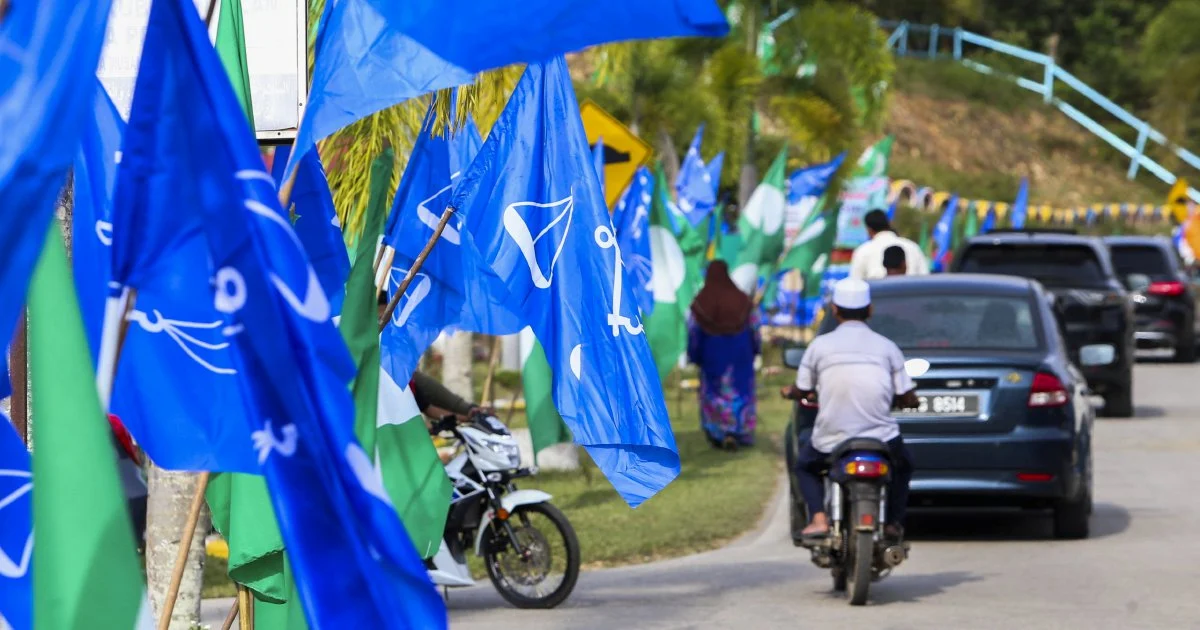
The prospect of Malaysia's 16th general election appears to be narrowing toward the final quarter of 2024, according to signals from within the ruling coalition. Speaking in Kota Baru, PAS vice-president Datuk Mohd Amar Nik Abdullah has indicated his expectation that GE16 will take place between late October and November this year, positioning the eastern Malaysian state as a focal point for early prognostication about the nation's electoral calendar.
The timing suggested by the PAS leader aligns with the constitutional flexibility available to the prime minister, who retains discretion over the precise date of dissolution, provided the election occurs before Parliament's mandatory term expires in mid-2025. This window has long been subject to intense speculation across Malaysian political circles, with various factional interests advocating for timing that suits their organisational readiness and perceived electoral advantage. The October-November corridor represents a mathematically viable period that would allow campaigning through the monsoon season and competing festival obligations.
PAS, as the dominant partner in several state administrations and a crucial component of the Perikatan Nasional coalition's federal machinery, carries institutional insights into government planning and Prime Minister Datuk Seri Anwar Ibrahim's broader strategic timeline. The party's numerical strength in Parliament and its mobilisation capabilities, particularly across rural constituencies in northern and eastern Malaysia, make its leadership's election projections noteworthy beyond mere speculation. Amar's pronouncement thus carries weight as something approaching an informed assessment rather than idle commentary.
The October-November window would situate Malaysia's election amid several significant domestic considerations. The period falls after the conclusion of the school year and the end of major monsoon disruptions, logistically advantageous for poll execution. However, it also intersects with year-end administrative demands and the approach of the 2025 budget implementation cycle, factors that typically influence electoral timing calculus among governing coalitions seeking to minimise economic and operational disruption.
For the opposition bloc and particularly Pakatan Harapan's constituent parties, such a timeline presents distinct organisational challenges and opportunities. The final quarter of 2024 would allow several more months for consolidating the opposition's fractious coalition structure, though it simultaneously compresses the window for fundraising and candidate selection processes that historically demand extensive preparation. Emerging internal dynamics within both coalitions—including lingering tensions over seat allocations and policy platforms—would require resolution or at least sufficient suppression to project unity before an October-November campaign period.
Regionally, Malaysia's electoral timing carries implications for Southeast Asian democratic rhythms. The nation joins other regional democracies managing electoral calendars across 2024 and 2025, including Indonesia's presidential contests and Philippines' midterm polls, creating a clustering of regional political activity. An October-November Malaysian election would contribute to an unusually concentrated period of electoral engagement across Southeast Asia, potentially influencing diplomatic dynamics and cross-border political attention.
The constitutional framework governing electoral timing provides the prime minister substantial autonomy, and announcements like Amar's should be understood as informed speculation rather than official confirmation. Nevertheless, such signals from senior coalition figures typically emerge from discussions within governing circles about practical planning timelines. Ministries charged with electoral administration, security forces, and election supervisory bodies require considerable notice for mobilisation, suggesting that serious conversations about October-November timing would already be underway if the projection has merit.
State-level considerations also feature prominently in any national electoral calculus. Kelantan, represented in Parliament by numerous PAS figures, maintains particular significance in the party's strategic thinking and resource allocation. The October-November timeframe would occur during relatively stable climatic conditions in the northern peninsula, avoiding flooding risks that could complicate voter turnout in previous general elections. This practical consideration, alongside PAS's substantial Kelantan representation, suggests the party's thinking reflects concrete logistical planning rather than abstract preference.
For voters and civic observers seeking clarity on Malaysia's political trajectory, Amar's statement provides a concrete temporal marker around which to organise expectation and planning. The October-November horizon represents sufficiently proximate timing to permit concrete campaign preparation while remaining far enough distant to accommodate remaining coalition negotiations and policy formulation. Election management authorities would require approximately 30 to 60 days' notice for comprehensive operational readiness, meaning genuine electoral announcements would likely emerge in late August or early September if an October-November campaign is genuinely contemplated.
The broader political significance extends beyond mere timing. An election during this period would conclude Malaysia's current parliamentary term within a reasonable timeline, preventing the political stagnation that can accumulate during prolonged election speculation. The ruling coalition's current parliamentary majority, while functional, operates amid persistent defection risks and cross-factional tensions that periodic electoral renewal potentially alleviates through the accountability mechanism that only national contests can fully activate. Whether the October-November window ultimately proves accurate remains subject to prime ministerial discretion and evolving political circumstances.