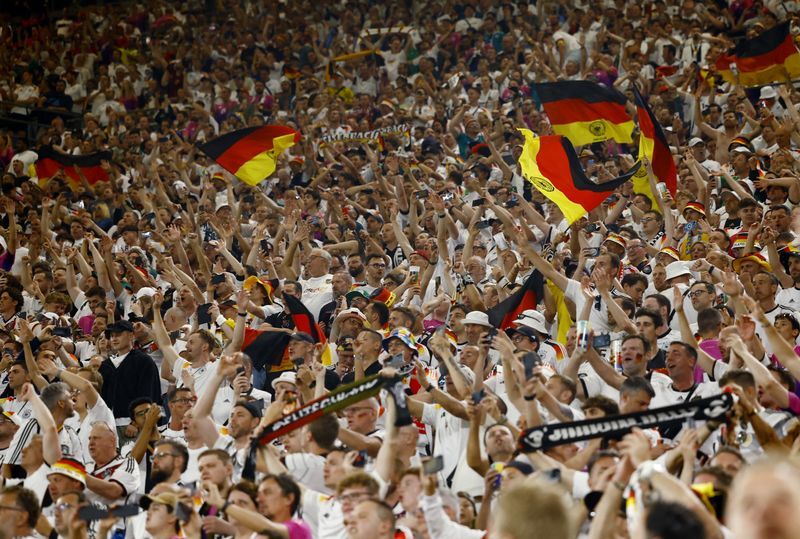
German law enforcement agencies moved swiftly on Wednesday to conduct a series of coordinated raids across the country, with the German Football Association's headquarters among the targeted locations, as investigators zeroed in on suspected irregularities in how tickets were distributed for the Euro 2024 championship tournament. The nationwide operation marked an escalation in authorities' scrutiny of ticketing practices surrounding the summer competition, which has drawn heightened attention from sports regulators and law enforcement bodies across Europe.
According to reporting by Bild, Germany's largest newspaper by circulation, the searches were triggered by ongoing inquiries into the conduct of multiple individuals, including at least one German national and one French national, among others whose involvement remains under examination. The investigation appears to target potential violations in the allocation and distribution processes that govern how tickets reach the public for major sporting events, a sensitive area given the commercial and organisational complexities involved in staging international tournaments.
While police and prosecutors confirmed in an official statement that searches were being executed at several sites throughout Germany, they deliberately withheld specific mention of the DFB in their public communication. This discrepancy between the official account and the Bild newspaper's reporting creates a notable gap in transparency, though it is not uncommon for authorities to restrict initial public disclosures during active investigations to protect investigative integrity and avoid compromising ongoing inquiries.
The DFB, as Germany's supreme governing body for football, occupies a central position in the nation's sports infrastructure and holds significant responsibility for organising participation in international competitions. Any suggestion of impropriety within the association's operations carries considerable weight given its institutional standing and the trust placed in it by fans, government bodies, and the broader European football community. The timing of these raids, occurring during the tournament itself, underscores the seriousness with which authorities are treating the allegations.
Ticket allocation for major tournaments represents a consistent flashpoint in sports governance, with legitimate public interest competing against commercial interests, VIP access protocols, and administrative capacity constraints. In the context of Euro 2024, which took place on German soil, the spotlight naturally focused on how the host nation's governing body managed distribution. Allegations of improper ticket handling can range from unauthorized resales, to preferential allocations to connected individuals, to corruption in the licensing process itself, each carrying different legal and ethical implications.
For Malaysian and Southeast Asian readers, this investigation illustrates a broader trend of increased regulatory scrutiny on sporting event administration across developed nations. As the region continues to bid for and host major international tournaments, including football competitions and other sporting events, the standards and expectations established through cases like this in Europe increasingly influence global norms. Transparency and accountability in ticketing have become matters of genuine governmental and public interest, not merely commercial convenience.
The investigation also reflects growing sophistication in how European authorities coordinate enforcement across borders, particularly when allegations involve multiple nationals. This international dimension is significant because it demonstrates that sports governance violations are no longer treated as purely internal association matters but as potential criminal conduct warranting law enforcement intervention. Such an approach has implications for how major sporting bodies across Asia must structure their compliance and governance frameworks.
The DFB has not publicly responded to these developments at the time of reporting, leaving open questions about the association's own internal investigations and whether parallel administrative inquiries are underway. In similar cases involving other European sports bodies, associations have sometimes commissioned independent investigations while law enforcement proceedings advance separately, creating parallel tracks of accountability. The outcome of these searches and subsequent investigation will likely influence how other national football associations, particularly those preparing to host future tournaments, structure their ticket allocation systems and oversight mechanisms.
Beyond the immediate facts of the investigation, this development touches on a fundamental tension in sports administration: the balance between commercial viability, which depends on flexibility in ticket sales and allocations, and integrity, which demands transparent and equitable distribution. Euro 2024's significance as a major championship event heightens public expectations for institutional conduct, and any findings of misconduct would inevitably undermine confidence in the DFB's stewardship. For the broader football community internationally, the investigation serves as a reminder that modern sports governance operates within an evolving legal and regulatory landscape where transparency and accountability are no longer optional considerations but mandatory requirements.

