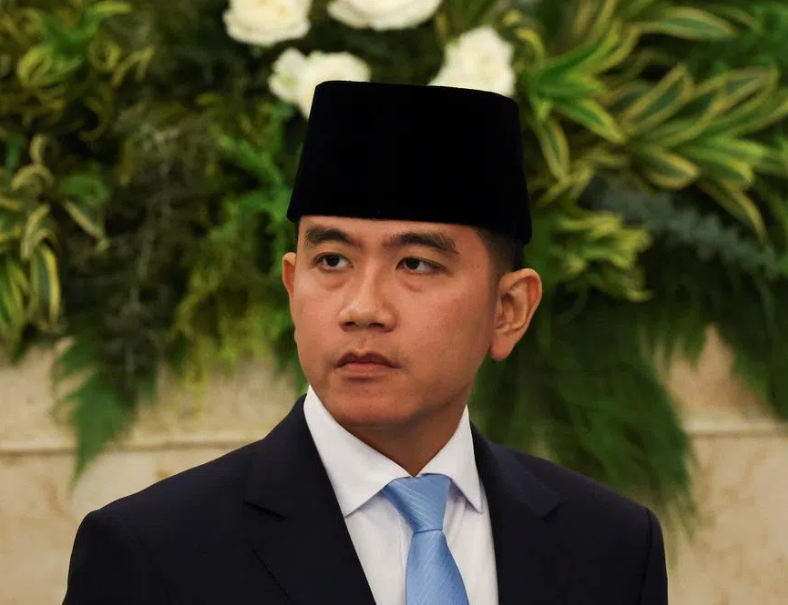
Indonesia's Vice-President Gibran Rakabuming Raka is drawing scrutiny for his highly visible engagement with student demonstrators, a manoeuvre that has prompted observers to question whether this represents genuine policy responsiveness or a carefully calibrated political strategy ahead of the 2029 presidential election. The 38-year-old deputy leader invited five university students who had protested against government initiatives onto a working visit to eastern Indonesia in mid-June, a move that brought public attention to his role within the administration and raised questions about his actual influence over policy.
The meeting itself came three days after Gibran convened a closed-door session with student representatives upset over two of the Prabowo administration's most ambitious and contested projects: the free meals programme and the Red and White Cooperative scheme, which aims to establish thousands of village-owned enterprises across the archipelago. Following the discussion, Gibran's office released a statement in which a student leader from Bung Karno University described the Vice-President as receptive and committed to reviewing the research presented. The statement suggested that findings would be audited and passed to President Prabowo Subianto. However, public reaction proved mixed, with online commenters questioning both the authenticity of the engagement and the selection of participating students, with some noting that including representatives from Indonesia's largest universities would have lent greater credibility to the exercise.
Analysts from Jakarta-based think tanks describe Gibran's approach as a deliberate effort to cultivate a public persona of openness and accessibility at a moment when student-led unrest has intensified across parts of the country and government programmes face mounting criticism. According to Nicky Fahrizal, a researcher at the Center for Strategic and International Studies, the Vice-President is projecting an image of willingness to listen to both students and ordinary citizens, a tactic that analysts interpret as positioning him favourably for potential future electoral contests. Fahrizal explicitly linked this strategy to the timing of Indonesia's next presidential election, though Gibran has not publicly confirmed any intention to seek the presidency.
The underlying political calculation appears straightforward: by meeting critics directly, Gibran seeks to position himself as a bridge between public concerns and government decision-making, thereby establishing a more prominent and independent identity within an administration where his formal role has remained somewhat ill-defined. Since taking office alongside Prabowo in October 2024, the eldest son of former president Joko Widodo has been associated with high-profile assignments including Papua's development and the new capital project Nusantara, yet he has largely remained peripheral to major policy decisions. Unlike some predecessors, he has not been granted a significant policy portfolio, and most flagship government initiatives are overseen directly by ministries and agencies that report to the president rather than to the Vice-President.
In the specific cases of the free meals programme and the Red and White Cooperative initiatives, Gibran's actual authority is minimal. The National Nutrition Agency, which oversees the free meals scheme, reports directly to the President, while the Cooperative initiatives are coordinated by multiple ministries and agencies as a presidential priority programme. Academic observers from institutions such as Padjadjaran University emphasise that Gibran's rising visibility around these programmes does not reflect genuine involvement in their design or implementation. One analyst noted that the programmes appear to remain under the substantive control of the military and police rather than the Vice-President's office.
The legitimacy of Gibran's engagement with students has been further complicated by reports that some participants received payments following the palace meeting. On June 23, local media outlets reported that a student leader from Bung Karno University acknowledged receiving 20 million rupiah after attending the discussion, while other participating students acknowledged receiving sums between 2 and 2.5 million rupiah. The source and purpose of these payments remain unclear, and the Presidential Palace indicated that it was investigating the matter. These disclosures have fuelled scepticism about whether the meeting represented a genuine consultation or a carefully staged public relations exercise.
Suspicions about orchestration were reinforced by observations that the students invited to the palace did not represent Indonesia's largest or most prominent universities, a detail that critics argue undermined the authenticity of the engagement. One commenter on Gibran's social media post suggested that involving representatives from the country's major campuses would have made the outreach appear more organic and less calculated. The selection of participants appeared designed to avoid hosting the most visible and potentially confrontational student leadership, instead choosing individuals from less prominent institutions whose participation could be more easily managed.
CRISIS researchers characterise Gibran's strategy as relying on relatively low-cost tactics to maintain public attention and demonstrate relevance within an administration structure that has limited his formal influence. The performative quality of the student engagement, according to analysts, reflects the Vice-President's need to carve out a distinct public profile when his institutional role offers limited leverage over major policy decisions. By responding visibly to contemporary controversies, Gibran creates the appearance of executive significance without necessarily possessing the authority to effect substantive change.
The backdrop to this engagement includes significant controversy surrounding the free meals programme, which has faced growing scrutiny following corruption allegations. In June, the National Nutrition Agency's chief Dadan Hindayana was replaced and subsequently arrested alongside two former deputies as part of an investigation into alleged procurement irregularities. During his June 18 visit to an eastern Indonesia primary school, Gibran acknowledged shortcomings in the scheme and called for governance improvements in response to the scandal. He also instructed officials to expedite implementation in areas where supporting infrastructure was already in place and pledged follow-up on local concerns. These moves, while appearing responsive to public criticism, represent relatively modest interventions that do not address fundamental structural questions about the programmes' design or implementation.
Looking forward, analysts suggest that Gibran's engagement strategy, while unlikely to produce major policy modifications, serves his longer-term political interests by building personal visibility and influence within the administration and the broader public sphere. The apparent mismatch between his formal authority and his public activities suggests a Vice-President attempting to manufacture relevance in a system where such roles have traditionally been relatively circumscribed. His cultivation of an image as accessible and responsive may prove more valuable politically than his actual capacity to influence specific government initiatives, particularly as Indonesia's electoral calendar advances toward 2029.
The broader implications for Malaysian and regional observers relate to how established politicians navigate diminished formal authority within complex bureaucratic structures, as well as the role of performative political engagement in emerging Southeast Asian democracies. Gibran's approach demonstrates how modern political figures leverage media attention and direct public engagement to compensate for institutional limitations, a pattern that extends beyond Indonesia and reflects broader regional trends in how politicians compete for influence and positioning themselves for future electoral contests. The student meeting thus serves as a case study in contemporary political positioning within systems where formal hierarchy may not fully determine actual influence.