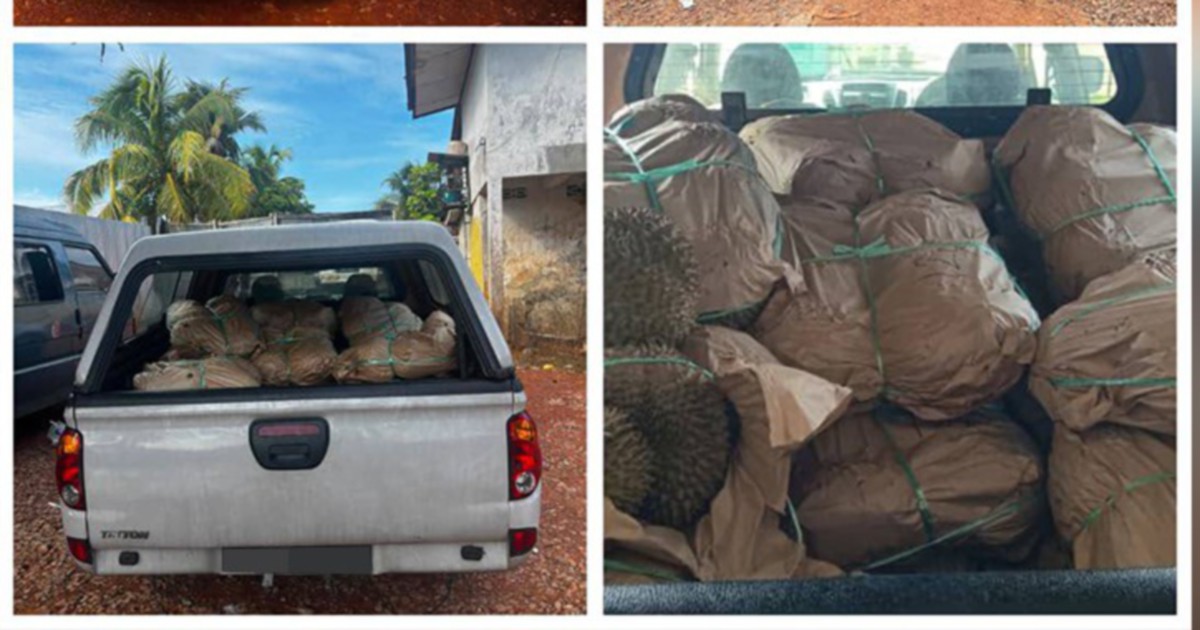
The General Operations Force has detained a 20-year-old driver and recovered a substantial haul of smuggled durians during an enforcement operation at an illicit entry point in Rantau Panjang, Kelantan. The bust, conducted at the Abe Li Posmen illegal jetty, resulted in the seizure of approximately 350 kilogrammes of the prized fruit alongside a four-wheel-drive vehicle estimated to be worth more than RM50,000.
This interception highlights the persistent challenge authorities face in combating the illicit movement of agricultural commodities across Malaysia's maritime borders. The durian trade, particularly along the Kelantan coast, remains vulnerable to organized smuggling operations that circumvent official checkpoints and tax obligations. The use of unmarked jetties by trafficking networks underscores how remote border areas continue to serve as conduits for contraband destined for either domestic black markets or cross-border destinations.
The scale of yesterday's seizure—350 kilogrammes represents a commercially significant quantity—suggests this operation may have been part of a coordinated logistics network rather than an isolated incident. The involvement of a high-value vehicle indicates the smuggling enterprise maintains sufficient capital to invest in proper transport infrastructure, pointing toward an organized distribution mechanism rather than opportunistic trafficking.
Durian smuggling has become increasingly sophisticated along Malaysia's maritime frontiers, particularly in the northeastern coast where proximity to international waters and multiple unsanctioned landing points create operational advantages for smugglers. These networks often exploit seasonal demand fluctuations and price differentials between regulated domestic markets and uncontrolled offshore channels. The Kelantan region, being a major durian-producing state, presents natural opportunities for diverting harvested fruit away from official supply chains.
From a regulatory perspective, the GOF's intervention demonstrates ongoing vigilance in border enforcement, yet the regularity of such busts suggests enforcement capacity struggles to keep pace with smuggling innovation. Illegal jetties like Abe Li Posmen represent infrastructure investments by criminal organizations designed to operate beyond the surveillance capabilities of customs and maritime authorities. Their persistence despite repeated enforcement actions indicates either insufficient resources for sustained monitoring or geographical constraints that limit comprehensive coverage.
The economic incentives driving this trade warrant consideration. Malaysia's durian market commands premium prices, particularly for premium varieties like Musang King and D24. Price spreads between official and black markets create substantial profit margins that justify the operational risks smugglers assume. When combined with weak enforcement probability at remote jetties, the cost-benefit calculation becomes favorable for trafficking networks seeking rapid capital accumulation.
For Malaysian consumers, durian smuggling operations indirectly affect market dynamics and consumer safety. Contraband fruit bypasses phytosanitary inspections and traceability requirements, potentially introducing agricultural hazards or undocumented pesticide residues into food supply chains. Additionally, the tax evasion component erodes government revenue that would otherwise fund agricultural development, rural infrastructure, and regulatory capacity—ultimately disadvantaging legitimate farmers and traders.
The arrest and vehicle impound sends a deterrent message to trafficking networks, yet the relatively modest penalty structure for agricultural smuggling may limit its impact. International comparisons suggest that effective border interdiction requires addressing both supply-side enforcement and demand-side reduction through consumer awareness of food safety risks associated with unmarked products.
Kelantan's strategic position as both a production hub and transit corridor makes it a recurring focus for smuggling operations. The state's extensive riverine infrastructure and maritime boundaries create multiple vulnerability points that authorities must manage with limited resources. The Abe Li Posmen jetty's illegal status suggests it has operated long enough to become established within smuggling networks, warranting investigation into whether corruption or administrative oversight has enabled its continued operation.
Looking forward, authorities may need to enhance maritime surveillance technology and increase monitoring frequency at identified high-risk jetties to disrupt smuggling logistics. Intelligence-sharing between customs, GOF units, and state authorities could help map smuggling networks and target upstream distribution points rather than solely apprehending drivers. Additionally, engaging durian farmer cooperatives and legitimate traders in reporting suspicious transportation patterns could strengthen community-based enforcement mechanisms.
This incident underscores the broader challenge Malaysian authorities face in managing porous borders and controlling valuable agricultural commodities in regions where enforcement infrastructure remains constrained. While individual seizures demonstrate operational capability, systematic reduction in smuggling volumes likely requires sustained investment in border security technology, intelligence networks, and coordination mechanisms across multiple agencies responsible for maritime and agricultural oversight.

