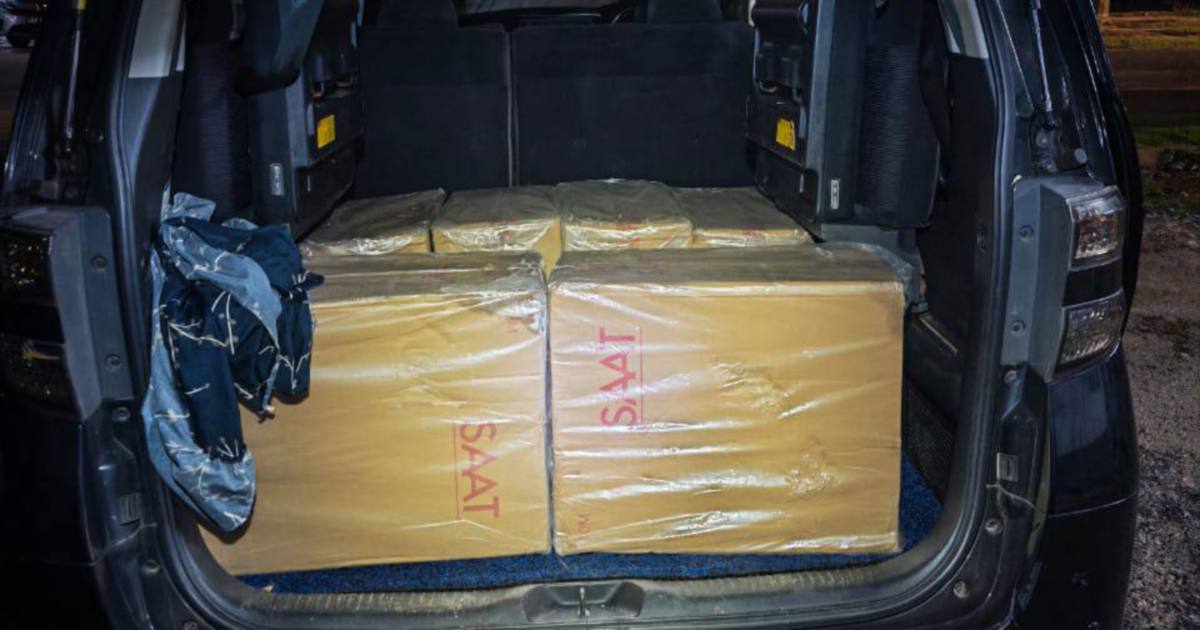
Authorities in Kelantan have moved swiftly to dismantle a smuggling operation after intercepting a Toyota Vellfire laden with an estimated 60,000 duty-unpaid cigarettes near Pasir Tumboh Bridge in Kota Baru. The General Operations Force (GOF), in a dawn operation, apprehended a 37-year-old driver and confiscated the contraband cargo, which carries an estimated market value of RM112,200. The seizure underscores the persistent challenge posed by illicit tobacco trafficking in the northern corridor of Peninsular Malaysia, where porous border areas and established smuggling networks continue to facilitate the movement of untaxed goods.
The interception at Pasir Tumboh Bridge represents another chapter in Malaysia's ongoing battle against the duty-unpaid cigarette trade, which generates significant losses to government revenue while undermining legitimate commercial operators. The confiscated cigarettes, had they entered the retail supply chain, would have deprived the Treasury of substantial excise duties and sales taxes. Beyond mere fiscal concerns, the proliferation of illicit cigarettes erodes the regulatory framework that governs public health measures, allowing untaxed products to circumvent warning labels, quality controls, and age-restricted sales protocols that legitimate distributors must observe.
Kota Baru's strategic location near the Thai border has historically rendered Kelantan a vulnerable point in Malaysia's supply chain security architecture. Cross-border smuggling operations typically exploit the region's geographical proximity to neighbouring countries, where cigarettes may be sourced at lower cost or sourced from jurisdictions with less stringent export controls. The GOF's capture of this particular shipment suggests that organised networks continue to route contraband through established trafficking corridors, often employing private vehicles that blend into regular traffic patterns to evade detection at checkpoints.
The arrest of the 37-year-old driver raises questions about the operational structure underpinning these smuggling networks. Drivers occupying roles in such enterprises are frequently lower-tier operatives within larger distribution systems orchestrated by criminal syndicates or commercial entities seeking to circumvent tax obligations. Law enforcement agencies typically pursue investigations beyond the point of initial arrest, seeking to dismantle the upstream logistics and financial networks that orchestrate these operations. The driver's cooperation and the evidence garnered from the vehicle may provide investigators with leads regarding the origin of the consignment, intended destinations, and the broader network facilitating such contraband movements.
The value attribution of RM112,200 reflects current duty structures on cigarettes in Malaysia, where excise taxation represents a significant component of the retail price. When illicit cigarettes enter the market, they undercut legitimate products substantially, distorting price competition and incentivising consumers to purchase untaxed alternatives. This dynamic creates cascading effects throughout the supply chain, depressing demand for lawfully produced and distributed cigarettes, reducing legitimate retailers' revenues, and narrowing the tax base that funds public health initiatives and general government expenditure. The cumulative impact of thousands of such seizures annually amounts to billions of ringgit in foregone revenue.
From a public health perspective, the proliferation of illicit cigarettes complicates regulatory enforcement and consumer protection efforts. Untaxed products frequently lack standardised packaging, authenticated manufacturing information, or compliance with maximum tar and nicotine specifications mandated by Malaysian authorities. Consumers purchasing these cigarettes may unknowingly be exposed to products of uncertain composition or origin. Additionally, the price advantage afforded by illicit cigarettes potentially increases affordability among younger and lower-income demographics, potentially elevating youth initiation rates and perpetuating smoking prevalence in vulnerable populations. Health authorities have long identified the illicit tobacco trade as a counterforce to tobacco control objectives.
The General Operations Force's enforcement capacity has been critical to maintaining Malaysia's border security and customs integrity. The GOF, operating under the Ministry of Defence, maintains specialised units dedicated to combating smuggling and detecting contraband at strategic junctures throughout the country. The Kota Baru operation reflects the agency's ongoing operational tempo and vigilance, though enforcement officials acknowledge that the volume of contraband intercepted represents only a fraction of illicit goods successfully transiting Malaysian borders. Intelligence assessments suggest that interception rates typically range between 10 to 25 per cent of total smuggled volumes, implying that substantially larger quantities evade detection.
Investigative follow-up from this seizure will likely extend beyond the immediate driver detention. Authorities typically seek to trace the vehicle's origin, examine its communication records and financial transactions, and cross-reference its movements against surveillance data from toll plazas, border checkpoints, and highway monitoring systems. Such investigative work often reveals broader trafficking patterns, enabling agencies to identify secondary targets and disrupt supply chains at multiple nodes. The vehicle's interior forensics may also yield fingerprints, DNA evidence, or documentation linking the driver to other individuals or entities involved in the smuggling enterprise.
The Kota Baru seizure comes as Malaysian enforcement agencies report escalating vigilance against smuggling networks that have adapted their tactics in response to increased enforcement visibility. Criminal organisations have increasingly employed private vehicles rather than commercial transport, fragmented shipments into smaller consignments distributed across multiple vehicles, and utilised secondary roads and unmonitored routes to circumvent formal checkpoints. These evolving methodologies have prompted customs and law enforcement agencies to enhance intelligence gathering, deploy advanced detection technologies, and expand inter-agency coordination frameworks to maintain interdiction effectiveness.
For Malaysian readers and the broader Southeast Asian business community, this enforcement action underscores the government's commitment to maintaining customs integrity and protecting legitimate commerce. Businesses operating in the tobacco distribution sector emphasise that enforcement actions targeting smugglers provide a more level competitive playing field for companies operating within regulatory parameters. However, industry observers note that smuggling networks remain resilient and profitable, suggesting that enforcement alone, without complementary policy measures addressing taxation levels and supply chain transparency, will struggle to contain the illicit trade comprehensively. Regional cooperation, particularly with Thailand and other cross-border neighbours, remains essential for addressing the transnational dimensions of this persistent enforcement challenge.

