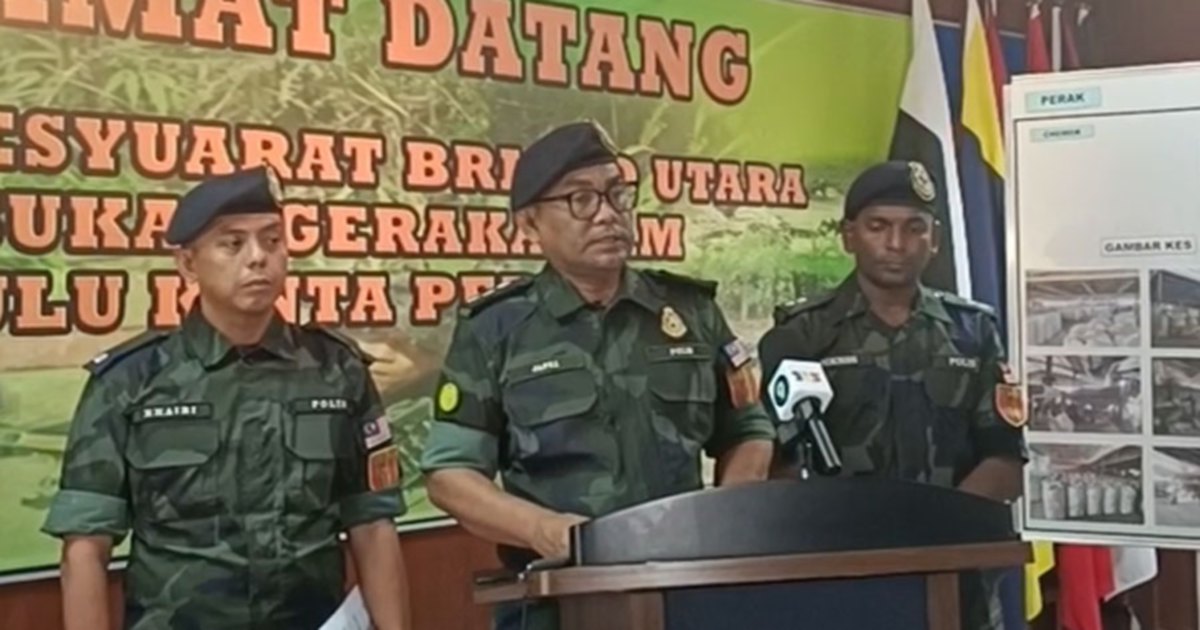
The General Operations Force Northern Brigade has moved against illegal mining and mineral processing operations across Perak and Kedah, resulting in the seizure of minerals and machinery valued at RM31.7 million and the arrest of 30 individuals. The enforcement action represents a substantial blow to what appears to be an organised network extracting and processing minerals outside of the formal regulatory framework in Malaysia's northern corridor.
Illegal mining has long been a persistent challenge for Malaysian authorities, particularly in states rich in mineral deposits like Perak and Kedah. The operation demonstrates renewed enforcement focus on this underground sector, which drains the nation's mineral wealth while denying the government legitimate tax revenue and creating environmental hazards. The scale of the haul—both in terms of the value of seized assets and the number of people detained—suggests this was not merely a small-scale operation but rather a coordinated network with significant infrastructure and resources invested in extracting and processing minerals for sale, likely either domestically or internationally.
The Northern Brigade's intervention reflects broader concerns about the scope of unregulated mining in Malaysia's major mining regions. Perak, historically one of Malaysia's richest sources of tin and other minerals, continues to attract illegal operators seeking to exploit remaining deposits or reprocess tailings from historical mining sites. Kedah, similarly positioned as a source of various mineral resources, faces comparable pressure from unlicensed extraction and processing activities. The authorities' ability to identify and target operations yielding RM31.7 million in assets indicates intelligence-gathering capacity, but the persistence of such activities across multiple locations underscores the ongoing challenge of staying ahead of illegal operators.
The detention of 30 people involved in the operation will likely lead to varied outcomes depending on individual roles and existing criminal records. Those involved in running processing facilities or managing larger-scale operations may face more serious charges than workers employed in field extraction. Malaysian authorities typically prosecute illegal mining offences under provisions addressing mineral extraction without permission, environmental violations, and in some cases organised crime legislation if the operation demonstrates structural sophistication.
Environmental implications of illegal mining extend beyond immediate site damage. Unregulated extraction and processing operations typically lack proper waste management, pollution control, and habitat restoration practices. Minerals processing generates substantial toxic residues that, when managed outside formal oversight, contaminate water supplies and agricultural land. For downstream communities in Perak and Kedah, such operations pose health risks that may only become apparent long after the illegal activities have concluded. The GOF's enforcement action therefore protects not only state revenue but also environmental integrity across regions that depend on water security and agricultural productivity.
The value of seized materials also reflects broader economic losses to Malaysia. Illegal minerals extracted represent resources that should contribute to government revenue through licensing fees and export duties. When operators bypass the formal system, they eliminate legitimate economic activity and tax contributions. The RM31.7 million figure likely represents only the current stockpile seized during this operation; cumulative losses from ongoing illegal mining across both states throughout the year may substantially exceed this amount.
Regional context matters for understanding this enforcement action. Southeast Asia as a whole has grappled with significant illegal mining activity, with operations in countries like Myanmar, Laos, and Cambodia generating international concern over environmental damage and transnational criminal involvement. Malaysian authorities face pressure to demonstrate competent control over their own resources and illegal supply chains that might otherwise feed regional trafficking networks. The GOF's Northern Brigade initiative signals commitment to maintaining regulatory authority over resource extraction within Malaysian territory.
The 30 arrests may also indicate organisational reach and complexity. Such numbers suggest a multi-tiered operation rather than scattered independent prospectors—likely involving site managers, equipment operators, processing workers, distribution contacts, and possibly financial handlers. Malaysian law enforcement has increasingly recognised illegal mining's connection to broader organised crime structures, where proceeds may be laundered through legitimate businesses or used to fund other illicit activities. Breaking up these networks requires following connections beyond individual mining sites.
Looking forward, the seized machinery and mineral stockpiles present administrative challenges. Confiscated equipment must be stored securely and eventually either auctioned, returned to legitimate owners if applicable, or destroyed. Mineral materials require proper classification and disposal or regulated sale. These logistics create ongoing costs for authorities even after enforcement action concludes. More strategically, dismantling one operation does not necessarily address the underlying economic incentives driving people toward illegal mining—poverty, lack of formal employment in resource-rich regions, and the relative ease of accessing deposits in remote areas.
The GOF's success in this operation reflects improved coordination between federal enforcement agencies and state-level cooperation, as managing cross-state investigations requires jurisdictional agreement and resource sharing. Future enforcement effectiveness will likely depend on maintaining this interagency momentum and potentially increasing monitoring capacity in high-risk mining zones. Technology deployment—satellite monitoring of illegal excavation, analysis of suspicious mineral sales patterns, and financial tracking of proceeds—could enhance the authorities' ability to detect and disrupt operations before they accumulate substantial asset bases.
Successful prosecution of the 30 detainees and public reporting of this enforcement action also serve a deterrent function, signalling to potential illegal operators that organised mining activities carry genuine risk of detection and serious legal consequences. However, deterrence remains incomplete without addressing why individuals engage in illegal mining in the first place, suggesting that comprehensive solutions must combine enforcement with economic development in mineral-rich regions and alternative livelihood support for workers drawn into the illegal sector.

