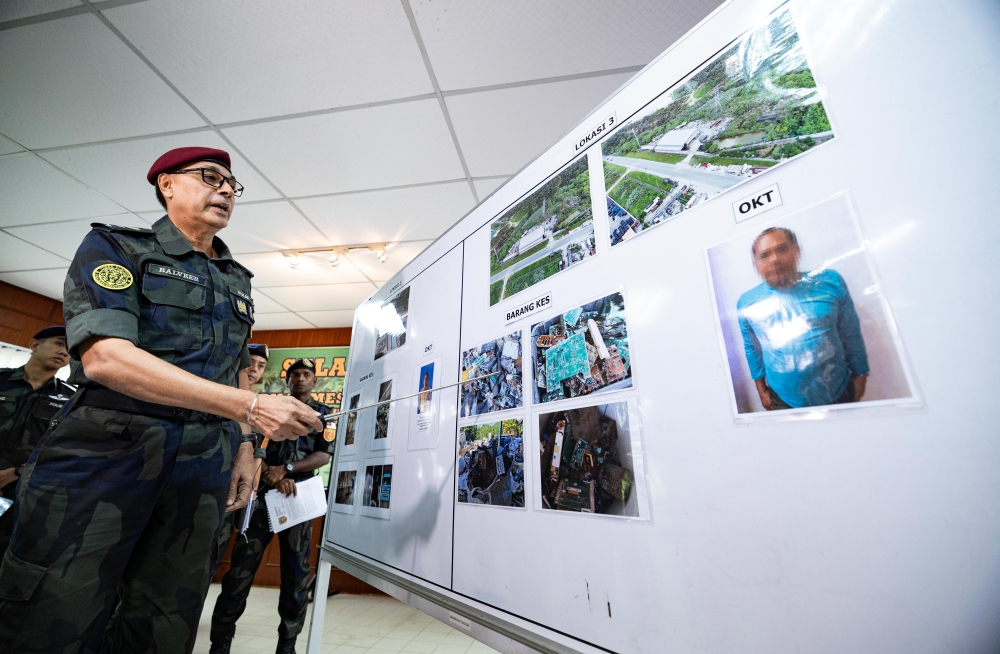
The General Operations Force Northern Brigade concluded a significant crackdown on illegal electronic waste operations in Ipoh on August 5, seizing contraband worth RM9.39 million and apprehending 14 individuals across multiple raids. The enforcement action recovered 120,220 kilogrammes of hazardous e-waste materials that had been improperly stored and processed outside regulatory frameworks, representing one of the more substantial busts targeting the region's underground waste trade.
This operation reflects intensifying pressure by Malaysian authorities on the illicit e-waste sector, which has become an entrenched environmental and public health concern across Southeast Asia. Electronic waste trafficking has flourished in recent years as consumer electronics reach end-of-life cycles, with criminal networks exploiting weak enforcement and inadequate monitoring to illegally extract precious metals and components from discarded devices. The Ipoh cases underscore how these networks operate with apparent impunity across multiple premises, suggesting sophisticated distribution and processing infrastructure rather than isolated operations.
The scale of the seizure—exceeding 120 tonnes—indicates that authorities were confronting an operation with substantial storage and handling capacity, likely involving warehousing facilities strategically positioned to move materials through state lines or toward export terminals. The valuation at RM9.39 million suggests the recovered waste contained significant quantities of copper, gold, silver, and rare earth elements that remain commercially valuable even in degraded form. These materials represent stolen opportunities for legitimate recycling industries, which operate under stringent environmental and labour standards that illegal operators systematically circumvent.
Illegal e-waste processing creates acute environmental hazards that extend well beyond the immediate operational sites. When circuit boards, batteries, and electronic components are dismantled without proper safety measures, toxic substances including lead, mercury, cadmium, and brominated flame retardants leach into soil and groundwater. In Malaysia's densely populated urban centres and industrial zones, such contamination threatens public water supplies and agricultural productivity. The health impacts on workers employed in unregulated facilities are equally severe, with exposure to carcinogenic dust and chemical fumes occurring without protective equipment or medical monitoring.
The arrest of 14 individuals raises questions about the organisational structure of these networks and the roles of different participants. Typically, such operations involve multiple tiers—from logistics coordinators who source discarded electronics through ostensibly legitimate collection channels, to facility operators who oversee crude processing, to traders who market extracted materials to downstream manufacturers. Dismantling individual nodes within these networks has repeatedly proven insufficient without simultaneous action against the demand side; manufacturers and refineries that knowingly accept materials from questionable sources provide the essential market pull sustaining the entire illicit chain.
Malaysia has signed international agreements including the Basel Convention, which restricts transboundary movement of hazardous waste, yet enforcement remains episodic and geographically uneven. Northern states including Perak, where Ipoh is located, have emerged as particular hotspots for e-waste processing, partly due to lower population density outside city cores and proximity to international borders. This geographic reality suggests that regional cooperation with Thailand and other neighbouring jurisdictions remains critical but underdeveloped. Without coordinated monitoring of cross-border material flows, illegal operators can simply relocate operations or redirect supply chains across state lines when one jurisdiction intensifies enforcement.
The RM9.39 million valuation also highlights the economic incentives driving these criminal enterprises. For operators requiring minimal capital investment in safety systems or environmental compliance, profit margins on extracted precious metals far exceed what legitimate recycling can provide. Workers and transporters at the bottom of the supply chain earn pittances while middlemen and investors capture substantial returns. This economic imbalance creates powerful recruitment pressures, particularly in communities experiencing economic stress, making it difficult for enforcement actions alone to suppress the underlying demand for informal employment.
Longer-term solutions require strengthening Malaysia's domestic recycling infrastructure to offer economically competitive alternatives to illegal processing. Current policies support extended producer responsibility, where manufacturers bear financial responsibility for end-of-life management of their products, yet implementation has lagged. Establishing regional e-waste processing hubs with modern technology and decent working conditions could absorb volumes currently processed illegally while creating formal employment and genuine environmental benefits. Singapore and South Korea have demonstrated that technologically advanced, tightly regulated recycling sectors can operate profitably while meeting international standards.
Consumer awareness represents another underexploited dimension. Many Malaysians disposing of old electronics remain unaware of how their devices will be processed or the environmental and health consequences of informal recycling. Educational campaigns linking personal purchasing decisions to end-of-life impacts, combined with accessible formal collection systems, could gradually reduce the waste streams available to illicit operators. Digital retailers and manufacturers could incentivise proper returns through deposit schemes or trade-in credits, formalising material flows before they reach criminal networks.
The investigation into these 14 suspects will likely reveal details about collection sources, processing techniques, and intended recipient organisations or export destinations. Such intelligence, when systematised across enforcement agencies, can progressively disrupt network operations. However, the broader implication of this raid is that Malaysia's e-waste challenge remains largely uncontained, with authorities responding reactively to discovered operations rather than proactively preventing their emergence. Sustained commitment to infrastructure development, regulatory harmonisation across states, and genuine international cooperation offers the only pathway toward transforming Southeast Asia's relationship with electronic waste from a vector for environmental and social harm into a managed resource stream.

