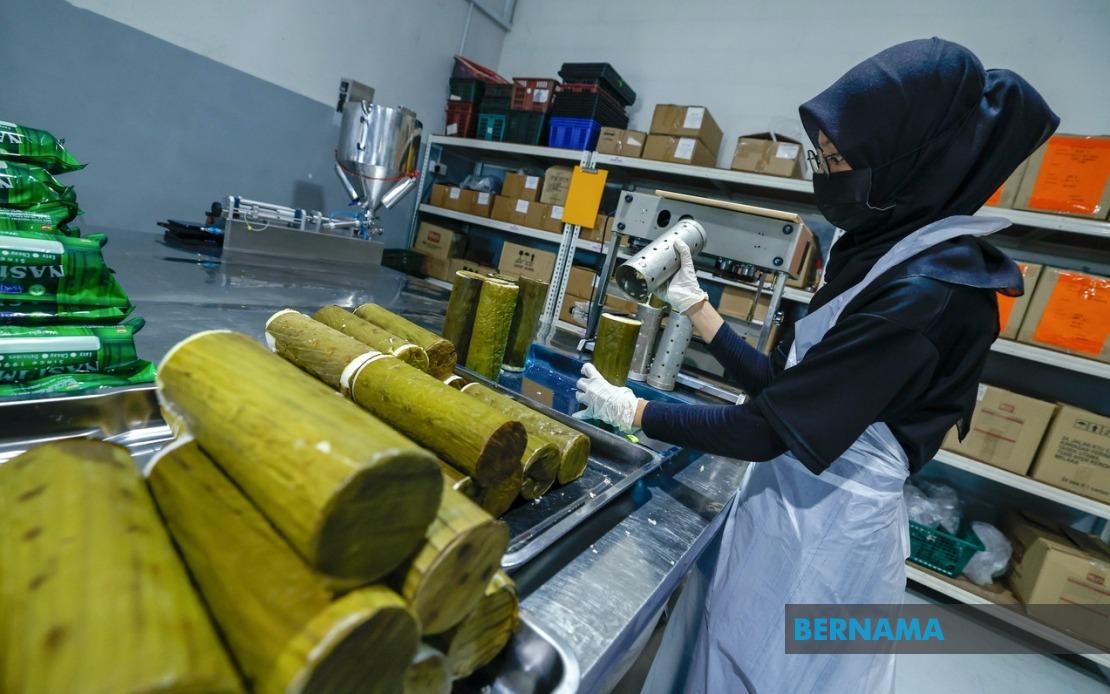
Streamlining access to finance has become a central pillar of the government's economic strategy, with Prime Minister Datuk Seri Anwar Ibrahim pledging to accelerate loan approvals for micro, small and medium enterprises across Malaysia. Speaking in Parliament, Anwar—who doubles as Finance Minister—emphasised that injecting capital into the MSME sector yields little benefit if entrepreneurs cannot navigate the financing approval process efficiently. The government recognises that even with substantial budget allocations earmarked for business support, bureaucratic delays and stringent lending criteria remain formidable barriers preventing capable entrepreneurs from accessing the funds they need to grow.
The administration has mobilised over RM15 billion in financing facilities and loan guarantees specifically designed to support MSMEs, with RM5 billion reserved exclusively for Bumiputera entrepreneurs. This represents a substantial commitment to levelling the playing field for businesses across different demographic groups. However, Anwar's remarks underscored a critical insight: simply making money available does not automatically translate into economic stimulus if the machinery distributing those funds operates at a snail's pace. The government has therefore shifted focus toward reducing approval timelines across multiple lending institutions, recognising that time is an asset small businesses cannot afford to lose during growth phases.
Bank Negara Malaysia serves as the regulatory guardian ensuring that commercial lenders comply with lending policies and that financing reaches deserving entrepreneurs through rigorous oversight. While private banks retain final authority over approval decisions—a principle the Prime Minister reaffirmed—the central bank monitors whether institutions are meeting their obligations to the broader financial ecosystem. This collaborative framework allows the government to influence lending behaviour without directly controlling individual loan decisions, a balance that respects market mechanisms while protecting small business interests. Anwar stressed that this regulatory architecture prevents financial institutions from using bureaucratic delays as a pretext for rejecting applications or imposing unreasonable conditions.
Tangible improvements in processing speeds have already materialised across several government-linked financing schemes. TEKUN Nasional, which disburses loans to entrepreneurs, now processes applications within five days—a dramatic compression that should significantly reduce the time entrepreneurs spend waiting for capital. Bank Rakyat has trimmed its approval period for micro-enterprise financing to just six working days, making it feasible for very small operators to access credit without experiencing prolonged operational uncertainty. SME Bank has established a 15 working day ceiling for loans between RM100,000 and RM1 million, a threshold that captures many growing small businesses seeking moderate capital injections. These improvements address a longstanding frustration among business owners, many of whom have reported approval delays stretching into months.
The accelerated timelines represent more than mere administrative efficiency; they reflect a deeper understanding of how cash flow constraints cripple small enterprises. An MSME waiting weeks for loan approval may miss market opportunities, lose competitive advantage to rivals with quicker access to capital, or accumulate operational losses that eventually force closure. By compressing approval windows to days rather than weeks or months, the government enables small business owners to respond quickly to market demand and manage working capital more effectively. This responsiveness matters particularly in competitive sectors like retail and manufacturing, where delays in securing inventory financing can mean lost sales and diminished market share.
When questioned about banks allegedly imposing restrictive conditions on transactions involving specific countries, Anwar acknowledged the historical complications arising from international sanctions, particularly affecting trade with Iran and Russia. The Prime Minister indicated that regulatory confusion, compounded by American and allied sanctions regimes, had previously made conducting legitimate business with these nations exceptionally difficult for Malaysian enterprises. Banks, operating in an environment of regulatory uncertainty and potential secondary sanctions, adopted ultra-cautious stances that effectively strangled trade flows even where no direct prohibition existed. This illustrates how external geopolitical factors can indirectly constrain MSME financing and business activity within Malaysia.
However, Anwar signalled a strategic shift in Malaysia's approach toward these relationships. The government has engaged directly with Iranian and Russian officials to streamline payment mechanisms and reduce friction in bilateral commerce, signalling political will to normalise trade despite sanctions pressure. During his recent meeting with Russian President Vladimir Putin, Anwar discussed practical measures to facilitate investment and trade, including efforts to resolve barriers preventing direct air service resumption between Russia and Malaysia. These discussions acknowledge that sanctions, while constraining, need not permanently sever economic relationships if creative solutions can bypass financial blockades. For Malaysian MSMEs seeking to diversify export markets or access new supply chains, such diplomatic efforts potentially unlock new opportunities that were previously foreclosed.
The government has also committed to expanding Amanah Ikhtiar Malaysia, a grassroots microfinance institution that historically focused overwhelmingly on women entrepreneurs. Although roughly 98 percent of AIM's borrowers remain female, Anwar confirmed the scheme remains formally open to men and youths, with government approval now secured to extend financing to eligible male applicants. This expansion recognises that microfinance should serve all capable entrepreneurs regardless of gender, while acknowledging that targeted support for underrepresented groups remains valuable. The administration has simultaneously pledged to tailor AIM products toward young entrepreneurs with specialised financing structures and reinforced repayment oversight mechanisms to ensure sustainable lending practices.
Recent performance metrics demonstrate that government-backed programmes are gaining traction among MSMEs. The SME Stabilisation Relief Facility, administered by Bank Negara Malaysia since May, has approved approximately RM1 billion in financing benefiting over 1,500 small and medium enterprises. The Business Financing Guarantee Scheme achieved approvals exceeding RM4.9 billion for more than 6,000 MSMEs during the first half of this year alone. These figures indicate that demand for MSME credit remains robust and that government-supported mechanisms are successfully reaching businesses that might struggle to secure financing through conventional commercial channels. The volume of approvals suggests that when bureaucratic barriers are lowered and guarantees reduce perceived lender risk, credit flows more readily into the small business ecosystem.
For Malaysian entrepreneurs, this shift toward faster processing and expanded financing avenues addresses a persistent constraint on business expansion. Small enterprises have historically cited access to capital as a critical bottleneck, and while ample financing has always existed in the system, extracting it required navigating opaque approval processes and negotiating with risk-averse lenders. By institutionalising faster timelines and standardising approval criteria across government-linked institutions, the administration reduces the information asymmetries and delays that previously disadvantaged unsophisticated borrowers. This democratisation of credit access should theoretically enable more promising business ideas to secure funding, regardless of whether their entrepreneurs possess extensive banking relationships or personal wealth.
The broader implications extend beyond individual business success to economy-wide productivity gains. When MSMEs can rapidly access working capital and investment financing, they expand employment, purchase supplies from upstream vendors, and supply goods and services to downstream consumers and businesses. This multiplier effect ripples throughout the economy, generating activity that far exceeds the initial loan disbursement. By removing friction from the financing process, the government catalyses a cascade of economic activity that benefits workers, suppliers, and consumers across supply chains. Malaysia's economic future depends partly on whether small businesses can scale efficiently, and accelerated financing access represents a concrete policy instrument toward that objective.
The government's strategy also acknowledges that one-size-fits-all lending standards often fail small enterprises with irregular revenues, limited collateral, or unconventional business models. By introducing specialised schemes for different borrower categories—microenterprises, youth entrepreneurs, Bumiputera businesses—authorities enable more nuanced credit assessment tailored to actual risk profiles. A microfinance programme recognises that a street vendor requires different terms than a manufacturing startup, yet both deserve access to formal credit. This segmentation should theoretically improve credit allocation efficiency and reduce unnecessary rejections of creditworthy borrowers who simply do not fit traditional banking profiles.
Moving forward, the government must ensure that faster approvals do not translate into lax underwriting that increases loan defaults and strains the financial system. The emphasis on improved oversight mechanisms and tailored repayment structures suggests awareness of this tension. MSMEs often lack sophisticated financial management, and poorly structured loans can burden entrepreneurs with unsustainable obligations that ultimately lead to business failure and creditor losses. Balancing accessibility with prudent lending remains the central challenge confronting policymakers as they attempt to unleash credit flows while maintaining financial stability. The coming months will reveal whether Malaysia's accelerated approval timelines succeed in genuinely expanding productive investment or simply increase the volume of problematic lending.

