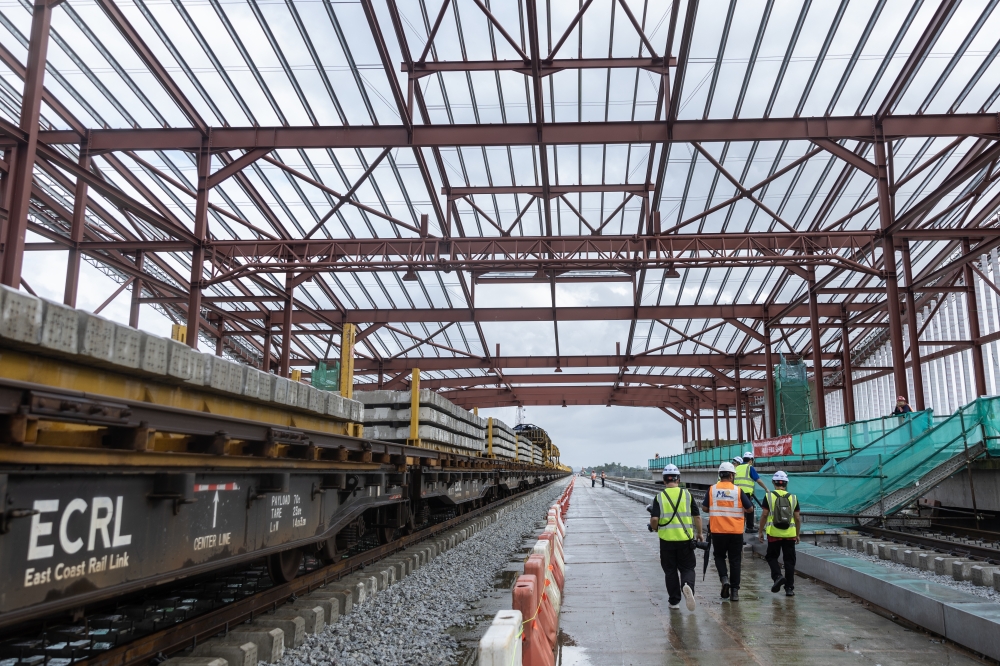
The Malaysian government has sanctioned a substantial RM207 million investment programme comprising 46 separate development projects earmarked for the Pasir Puteh parliamentary constituency in Terengganu. This coordinated initiative reflects Putrajaya's strategy to harness the transformative potential of the East Coast Rail Link (ECRL) infrastructure, which has reshaped regional connectivity and commerce across the peninsula's eastern corridor.
The approved project portfolio demonstrates a deliberate approach to capitalizing on the ECRL's completion and operational phases. Rather than concentrating resources on a handful of flagship initiatives, the government has distributed funding across a diverse range of undertakings designed to address multiple development priorities simultaneously. This diversification suggests policymakers recognize that sustainable economic growth requires attention to infrastructure, social services, and local business enablement in equal measure.
Pasir Puteh's geographic positioning along the ECRL corridor positions the constituency uniquely to benefit from enhanced rail connectivity linking major economic centres across the east coast. The ECRL's freight and passenger capabilities have opened new logistics possibilities and travel options for residents and businesses alike. By coordinating development projects with this transport infrastructure, Putrajaya appears intent on creating a multiplier effect where improved connectivity drives localized prosperity through better access to markets, employment, and services.
The scale of investment—RM207 million distributed across nearly five dozen projects—indicates substantial financial commitment to the region's transformation. For Malaysian constituencies, particularly those in less densely populated areas, such targeted funding often proves decisive in determining whether development gains are concentrated in major urban centres or distributed more equitably across parliamentary divisions. Pasir Puteh's allocation suggests the government views the constituency as strategically important for broader regional development objectives.
The project approval process reflects broader patterns in how Malaysia approaches infrastructure-led development. Rather than viewing the ECRL as a standalone transport facility, policymakers have adopted an integrated framework recognizing that rail corridors function most effectively when surrounded by complementary investments in local amenities, business infrastructure, and community facilities. This holistic approach acknowledges that modern infrastructure requires supporting ecosystems to deliver genuine economic benefits to residents and investors.
For Terengganu state, the Pasir Puteh initiative forms part of a larger tapestry of ECRL-related developments. The east coast has experienced significant policy attention in recent years as the federal government seeks to reduce economic disparities between regions and create new growth poles beyond Kuala Lumpur and the Klang Valley. The ECRL itself represents one of Malaysia's most ambitious recent infrastructure undertakings, and complementary projects like those in Pasir Puteh extend the rail link's economic impact inland from its core corridor.
Business communities in affected areas frequently view such project approvals with keen interest, recognizing that government investment often signals areas poised for commercial opportunity. Local entrepreneurs, suppliers, and service providers may position themselves to participate in upcoming development work or to service expanded populations and economic activity. The announcement thus carries implications extending beyond direct project beneficiaries to encompassing the broader commercial ecosystem within and around Pasir Puteh.
The timing of project announcements merits consideration within Malaysia's political context. Development allocations often feature prominently in government communications, particularly during periods when constituency development becomes a focus of political engagement. Federal governments historically use targeted investment programmes to demonstrate responsiveness to regional needs and to build political support in key areas. For Pasir Puteh specifically, the timing and scale of approvals may reflect calculations about the constituency's electoral importance or the government's broader strategic objectives in Terengganu.
From a Southeast Asian perspective, Malaysia's approach to leveraging major infrastructure projects through complementary investments offers instructive lessons. As the region continues to expand transport connectivity through initiatives like the ASEAN Master Plan on Connectivity, the question of how effectively nations translate infrastructure improvements into localized economic gains remains pertinent. Malaysia's experience with the ECRL and associated regional development projects provides practical insights into implementation challenges and political economy considerations that other nations contemplate when undertaking comparable initiatives.
The Pasir Puteh project portfolio encompasses multiple development categories, suggesting an attempt to address varied constituency needs comprehensively. Different project types—whether focused on economic infrastructure, social services, or quality-of-life improvements—serve distinct but complementary purposes in creating environments where communities can flourish and businesses can invest with confidence. This multifaceted approach contrasts with narrower development models concentrating exclusively on megaprojects or single-sector initiatives.
Looking forward, implementation will prove as significant as approval. Government project portfolios frequently encounter delays, cost variations, and execution challenges that affect their ultimate impact on intended beneficiary communities. The success of Pasir Puteh's RM207 million programme will ultimately depend on how efficiently these 46 initiatives progress from approval through completion, and whether the promised benefits materialize as anticipated in planning documents and government statements.
The initiative also reflects broader developmental philosophy emphasizing regional balance within Malaysia's economy. As federal resources remain constrained and competing demands for investment capital persist, decisions about allocation across constituencies reveal government priorities regarding inclusive growth, spatial equity, and strategic national development. Pasir Puteh's substantial allocation indicates the constituency ranks among priority areas for federal investment attention during this planning period.

