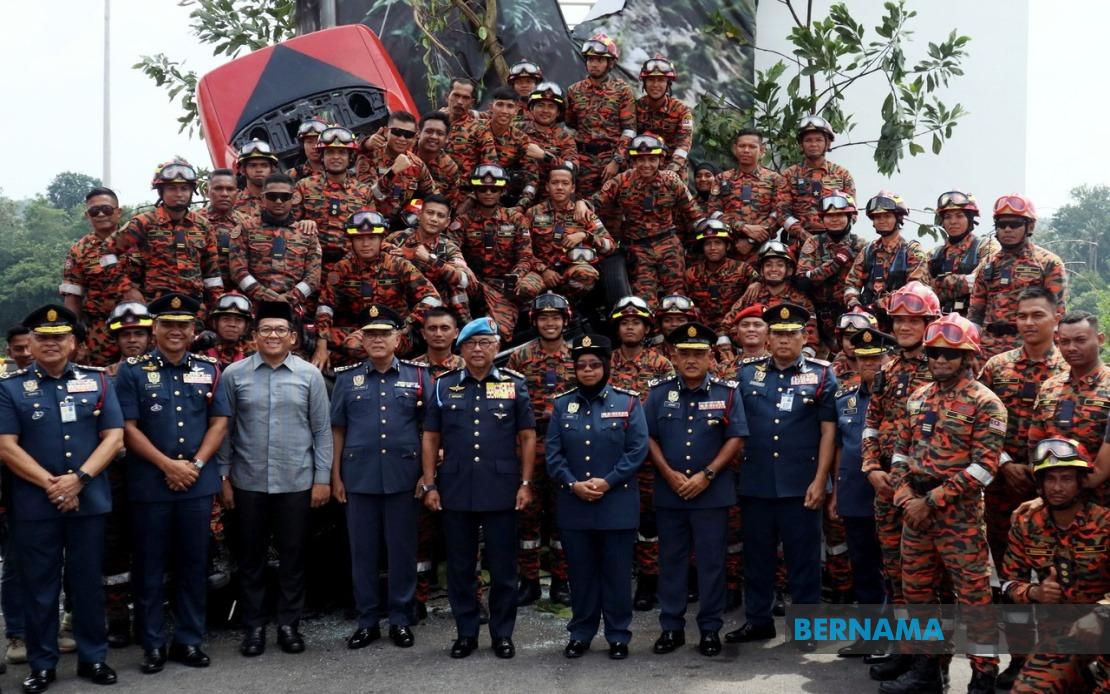
The federal government has committed RM278.9 million annually to the Malaysian Fire and Rescue Department (JBPM) for implementing 86 development projects across the country under the First Rolling Plan of the 13th Malaysia Plan (13MP), according to an announcement made in Pahang on 2 July. The funding envelope encompasses both fresh initiatives and continuation of existing programmes, reflecting a sustained investment in emergency response infrastructure as Malaysia pursues its medium-term development objectives.
Housing and Local Government deputy minister Datuk Aiman Athirah Sabu disclosed that this year's allocation would support 27 newly launched projects alongside 59 ongoing programmes nationwide. This blend of new and existing initiatives underscores a phased approach to expanding fire and rescue capabilities, allowing for the completion of legacy projects while simultaneously addressing emerging infrastructure needs across different regions. The distribution strategy suggests a deliberate effort to ensure service provision improvements are delivered systematically rather than concentrated in any single administrative period.
Pahang has emerged as a particular focus of investment activity, with seven facility development projects advancing under the 12th Malaysia Plan and the initial phase of the 13MP. These encompass the acquisition of the Gohtong Jaya Fire and Rescue Station building and associated quarters, construction of facilities at Benta and Tioman with residential components, and enhancement works at Bentong and Kuantan stations. Additionally, the Triang station is undergoing reconstruction while preliminary groundwork has commenced for the Tanjung Lumpur location. This concentrated development effort in Pahang reflects either particular infrastructure deficits in the state or the strategic prioritisation of fire and rescue capacity in a region with significant industrial and tourism activity.
The Sungai Lembing Fire and Rescue Station, officially opened during the announcement, represents the tangible outcome of this investment approach. Constructed at a cost of RM6 million on a seven-acre site, the facility constitutes Pahang's 29th fire and rescue station and commenced operations on 15 February to serve approximately 15,000 residents in Sungai Lembing and neighbouring communities. The station's establishment demonstrates how infrastructure allocation translates into on-ground service delivery improvements, particularly in areas that may previously have experienced longer emergency response times due to geographical distance from existing facilities.
Beyond its primary fire and rescue function, the Sungai Lembing station has been conceptualised as a multi-purpose community hub. Officials envision it evolving into a comprehensive centre offering fire safety education, skills training, and community awareness programmes designed to cultivate a culture of public self-reliance in emergency situations. This broader vision suggests that the JBPM is moving beyond traditional reactive service provision towards preventative community engagement, potentially reducing incident frequency through knowledge dissemination and capability building among the public.
The station's establishment aligns strategically with parallel efforts to revitalise Sungai Lembing as a heritage tourism destination. Deputy Economy Minister Datuk Mohd Shahar Abdullah, who represents the Paya Besar constituency, contextualised the fire and rescue facility within a comprehensive development ecosystem encompassing heritage conservation, cultural tourism, and infrastructure modernisation. These initiatives include restoration of the PCCL Cinema, ecotourism product development, creation of a digital museum, tunnel upgrading, and a bid for UNESCO World Heritage Site designation.
This integration of emergency services infrastructure with heritage and tourism development reflects a holistic approach to regional revitalisation that recognises safety as foundational to sustainable tourism growth. Tourist destinations and heritage areas, which attract both local and international visitors, require robust emergency response capacity to manage incidents and maintain visitor confidence. By positioning the new fire and rescue station as part of Sungai Lembing's broader modernisation narrative, officials emphasise that heritage preservation and contemporary safety standards are complementary rather than competing objectives.
The timing and presentation of the Sungai Lembing station opening also carry political significance, with the event attended by the Sultan of Pahang Al-Sultan Abdullah Ri'ayatuddin Al-Mustafa Billah Shah, the state Menteri Besar Datuk Seri Wan Rosdy Wan Ismail, and the State Legislative Assembly Speaker. This high-level attendance reflects the project's importance within state-level development priorities and suggests strong alignment between federal and state governments on infrastructure investment. Such coordination mechanisms are critical for efficient project implementation in Malaysia's federal system, where both tiers of government hold distinct but overlapping responsibilities for public service delivery.
For Malaysian readers and regional observers, this funding allocation signals continued federal commitment to emergency services modernisation despite competing budgetary demands across multiple sectors. The RM278.9 million annual ceiling represents a substantial but not unprecedented investment that must be evaluated against broader public expenditure frameworks and the relative priority assigned to fire and rescue infrastructure versus education, healthcare, and economic development initiatives. The project distribution pattern, emphasising multiple new facilities alongside ongoing improvements, reflects lessons learned about achieving sustainable service coverage improvement through measured, multi-year investment rather than episodic funding cycles.
The strategic emphasis on Pahang, a state encompassing the Klang Valley's eastern periphery, industrial corridors, and significant tourist attractions, suggests recognition that fire and rescue capacity constraints could impede both economic development and tourism sectors. A well-resourced fire and rescue service supports business confidence, insurance arrangements, and public safety perception—all factors influencing investment location decisions and tourism competitiveness. Southeast Asian economies increasingly recognise that infrastructure investments in services like emergency response yield indirect returns through business environment improvements and risk reduction.
The positioning of fire and rescue stations as community knowledge centres rather than purely operational facilities reflects evolving international best practice in emergency management, emphasising prevention and preparedness alongside response capabilities. This philosophy, reflected in Malaysia's approach through the Sungai Lembing station model, aligns with regional commitments to disaster risk reduction and resilience building that have become increasingly prominent in Southeast Asian policy frameworks following major natural disaster experiences.
Moving forward, the implementation success of these 86 projects will likely influence future allocations and methodologies for fire and rescue infrastructure development across Malaysia. Monitoring project completion rates, cost management, and the effectiveness of community engagement programmes at stations like Sungai Lembing will provide valuable data for refining development strategies. As Malaysia progresses through successive rolling plans under the 13MP framework, stakeholders will assess whether distributed, multi-year facility development genuinely improves service delivery outcomes and public safety metrics, or whether alternative investment concentrations might yield superior results in specific regions or circumstances.

