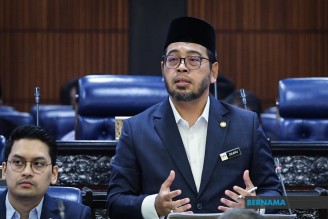
Parliament devoted an extended session to debating the future direction of Tabung Haji following the release of damaging findings about the pilgrimage fund's mismanagement. The government presented its strategy to fundamentally restructure the institution's governance architecture, signalling its determination to prevent a recurrence of the financial crisis that nearly crippled the agency and threatened its depositors' savings.
The focal point of the government's response centres on proposed amendments to the Tabung Haji Act 1955, which will introduce clear separation of duties between investment management and religious operations. Under the new framework, the Securities Commission will assume responsibility for overseeing all investment activities, whilst the Minister in the Prime Minister's Department handling Religious Affairs will retain authority over pilgrimage operations. This division aims to eliminate the previous arrangement where a single governance structure attempted to manage fundamentally different functions, creating conflicts of interest and accountability gaps.
Minister in the Prime Minister's Department (Religious Affairs) Dr Zulkifli Hasan explained that a dedicated task force, chaired by Tabung Haji chairman Tan Sri Abdul Rashid Hussain and featuring Bank Negara Governor Datuk Seri Abdul Rasheed Ghaffour and Securities Commission chairman Datuk Mohammad Faiz Azmi, was convened to evaluate the Royal Commission of Inquiry's extensive findings. This high-level composition underscores the seriousness with which authorities are approaching the institutional overhaul, bringing together expertise from Malaysia's central bank, financial regulator, and the fund itself.
The Royal Commission had documented catastrophic investment losses across fourteen separate ventures, with seven of these positions recording total wipeouts. Most alarmingly, Tabung Haji's entanglement with Putrajaya Perdana Bhd indirectly exposed the pilgrimage fund to the 1Malaysia Development Bhd scandal, one of the world's largest financial frauds. Finance Minister II Datuk Seri Amir Hamzah Azizan disclosed that cumulative losses approached RM13 billion, whilst the government faced potential liabilities of approximately RM74.5 billion had depositor panic withdrawals spiralled into a full-scale run on the institution during the crisis period.
The government's proposed legal changes represent a significant tightening of board composition standards. The amended legislation will explicitly prohibit sitting politicians from holding directorships at Tabung Haji, addressing a structural weakness where political influence may have compromised investment decision-making. Additionally, profit distributions, known as hibah, will henceforth be determined exclusively against independently audited financial accounts rather than projected or manipulated figures, introducing transparency and mathematical rigour to the fund's benefit allocations.
During parliamentary debate, lawmakers advanced additional reform proposals that suggest broader concerns about Malaysia's entire non-bank financial sector. Aminolhuda Hassan from Petaling Jaya's Sri Gading constituency proposed creating a single regulatory authority for major non-bank financial institutions, arguing that Malaysia currently lacks a unified supervisory framework overseeing prudential standards, systemic risk, and governance across institutions including the Employees Provident Fund, Permodalan Nasional Bhd, the Retirement Fund, the Armed Forces Fund Board, and Tabung Haji. This proposal highlights recognition among policymakers that fragmented regulation across different agencies may have enabled Tabung Haji's mismanagement to persist undetected.
For Malaysian Muslims, the reforms carry profound implications. Tabung Haji functions not merely as an investment vehicle but as the primary savings mechanism through which ordinary Malaysians accumulate funds for one of Islam's five pillars. The institution's near-collapse consequently threatened millions of depositors' ability to fulfil the haj obligation. The restructuring aims to restore public confidence in an institution that commands moral and religious significance alongside its financial role, making the credibility of these reforms essential to ensuring future participation.
The Securities Commission's expanded mandate over Tabung Haji investments reflects a deliberate choice to subordinate the fund to Malaysia's mainstream financial regulatory apparatus. This shift suggests authorities determined that specialised oversight designed specifically for Islamic or pilgrimage-oriented institutions proved inadequate. By integrating Tabung Haji into the SC's regulatory portfolio, the government positions the fund within a framework accustomed to scrutinising large institutional investors and enforcing standards for complex financial instruments.
Bentong MP Young Syefura Othman raised concerns about Tabung Haji's excessive dependence on UJSB sukuk income, which reportedly supplied nearly 26 per cent of annual revenue. This concentration risk suggests the fund had narrowed its income sources dangerously, potentially driven by difficulty generating returns elsewhere. Addressing this dependency will require deliberate portfolio diversification and development of alternative revenue streams, preventing the institution from remaining hostage to performance of a single asset class.
The 211-page Royal Commission report, released publicly on 29 July, documented systemic deficiencies spanning from 2014 through 2020, establishing that mismanagement was neither recent nor isolated but rather reflected sustained institutional failures across multiple years. The report advanced 25 recommendations for improvement, with Tabung Haji management subsequently implementing three-quarters of these by early August, demonstrating some responsiveness though questions remain about implementation depth and compliance timelines.
For Southeast Asian observers, Malaysia's handling of the Tabung Haji crisis offers lessons in how regional governments confront institutional failure within culturally sensitive domains. Unlike purely commercial institutions, funds managing religious obligations carry heightened political sensitivity, complicating the transparency and accountability measures authorities seek to impose. The Malaysian government's decision to conduct a public Royal Commission and share findings transparently, rather than managing the issue quietly, suggests an evolving approach to institutional accountability that balances religious and cultural considerations with governance demands.
The comprehensive nature of these reforms—spanning legislation, regulatory authority, board composition restrictions, and investment oversight—indicates the government recognises that incremental adjustments would prove insufficient. Rebuilding Tabung Haji credibility requires demonstrable structural change that addresses root causes of previous failures. Whether these reforms ultimately prevent future crises will depend substantially on implementation rigour and the Securities Commission's capacity to oversee an institution whose investment behaviour had previously escaped meaningful scrutiny. The coming months will reveal whether the government's stated commitments translate into sustained institutional discipline.

