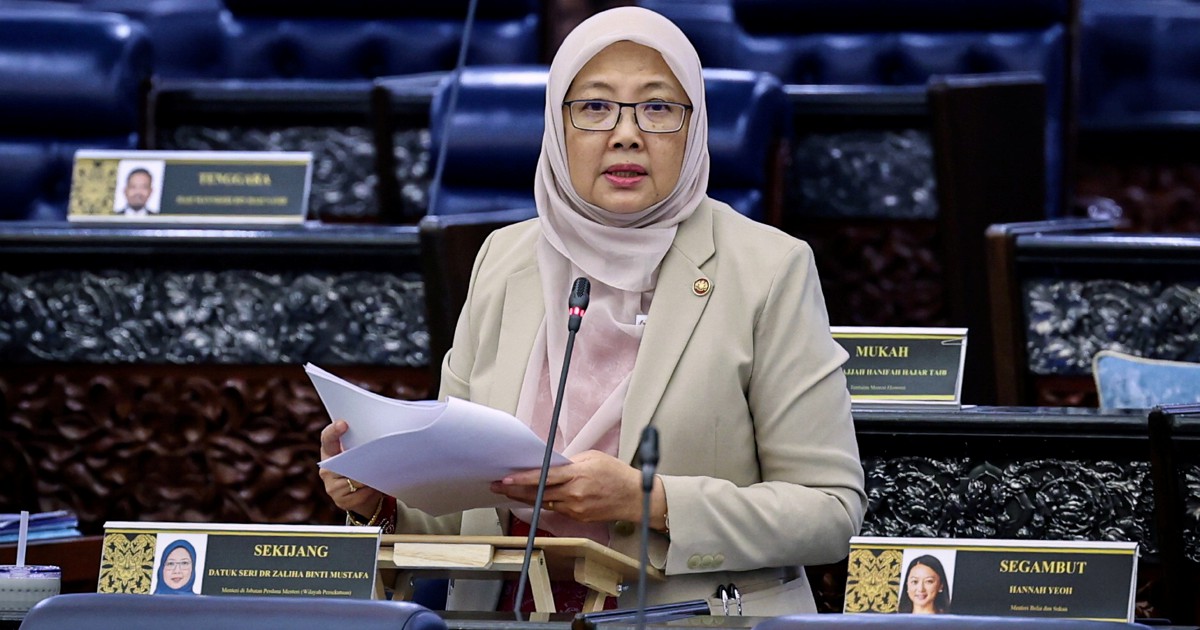
Datuk Dr Zaliha Mustafa, leading the Government Backbenchers Club, has condemned the decision by Perikatan Nasional MPs to leave the chamber during a special sitting of the Dewan Rakyat convened to discuss findings from the Royal Commission of Inquiry into Lembaga Tabung Haji. The walkout during what was meant to be a substantive parliamentary examination of the hajj authority's governance and financial management represents a significant breach of parliamentary convention and legislative responsibility, according to the backbenchers' representative.
The RCI report into Tabung Haji has become a focal point of political scrutiny in recent months, with various parliamentary committees and government bodies examining the institution's administrative structures and financial dealings. The special sitting was formally scheduled to allow MPs from both government and opposition benches to scrutinize the commission's findings, question officials, and debate potential reforms to the pilgrimage savings scheme that affects hundreds of thousands of Malaysian account holders.
Zaliha's rebuke highlights growing tensions between the government coalition and PN, which has been operating as a significant opposition force despite maintaining a parliamentary presence. The tactical decision to absent themselves during the debate suggests political calculation on the part of PN leadership, though the precise reasons for the withdrawal remain subject to interpretation. Such parliamentary maneuvers often reflect broader disagreements over legislative priorities or disagreement with the substance of the inquiry itself.
Tabung Haji manages savings and investments for Muslims preparing for the hajj pilgrimage, administering funds belonging to approximately two million account holders across Malaysia. The institution's governance and financial performance have intermittently attracted scrutiny over several years, with periodic concerns raised about investment returns, operational efficiency, and administrative transparency. The RCI was established to provide an independent, comprehensive examination of these matters and to recommend improvements to institutional frameworks.
The decision to conduct a special parliamentary sitting underscores the importance placed by government leaders on the RCI findings and their desire for legislative engagement with the report's conclusions. Such specially convened sittings typically indicate significant matters of public interest or governance concern requiring urgent parliamentary attention. The government coalition appears to have viewed the occasion as an opportunity to demonstrate accountability and engage in substantive debate regarding the hajj savings scheme's future direction.
The incident illustrates broader parliamentary dynamics in Malaysia's current political configuration, where the coalition government operates with varying degrees of cooperation and opposition from different political blocs. PN's presence as an organized parliamentary force creates a complex legislative landscape where different parties employ various tactics to advance their political interests or register disagreement with government positions. The walkout strategy represents a form of parliamentary protest that, while available to opposition members, generates controversy regarding legislators' responsibilities to participate in national debates.
Zaliha's role as Government Backbenchers Club chairman positions her as a representative voice for government MPs not serving in ministerial or shadow cabinet roles. The backbenchers' club traditionally serves as an internal forum for government coalition members to discuss concerns and provide feedback on parliamentary affairs. Her public criticism of the PN walkout reflects sentiment among government-supporting MPs regarding opposition participation in parliamentary business and legislative decorum.
The Tabung Haji inquiry carries particular significance for Malaysian Muslim voters, given the institution's role in facilitating one of Islam's five pillars. Hajj represents both a spiritual obligation and substantial financial commitment for participating Muslims, many of whom rely on Tabung Haji's savings schemes to accumulate the necessary funds. Governance failures or financial mismanagement within the institution therefore directly affect citizens' ability to fulfil religious duties and could potentially jeopardize accumulated savings.
The RCI's investigation likely examined several operational aspects, potentially including investment strategies, administrative costs, governance structures, and internal controls. Commission inquiries of this nature typically take months to conduct, involving examination of institutional records, interviews with officials and stakeholders, and detailed financial analysis. The resulting report presumably contains findings and recommendations intended to strengthen institutional oversight and protect account holders' interests.
Parliamentary debates on RCI reports traditionally provide opportunities for elected representatives to question government officials responsible for implementing recommendations and to discuss legislative or regulatory changes deemed necessary. Opposition participation in such debates, while sometimes critical or challenging to government positions, contributes to the democratic examination of public institutions. The absence of a significant opposition bloc therefore undermines the deliberative function that such special sittings are intended to serve.
The timing and nature of the PN walkout may reflect several possible considerations: disagreement with the RCI's findings or methodology, domestic political positioning within the PN coalition, strategic calculation regarding parliamentary participation, or broader tensions with the government coalition. Without explicit statements from PN leadership outlining their rationale, the exact motivations remain subject to speculation among political observers and media analysts.
Moving forward, the incident may influence how parliament conducts future debates on significant inquiries and reports. It also reflects the broader challenge of maintaining parliamentary consensus on matters affecting public institutions, particularly when different political parties hold divergent views regarding governance priorities or opposition strategies. The Tabung Haji inquiry itself remains significant regardless of parliamentary procedure, as the institution's effectiveness directly affects Malaysian Muslims' ability to save for and undertake hajj pilgrimages.

