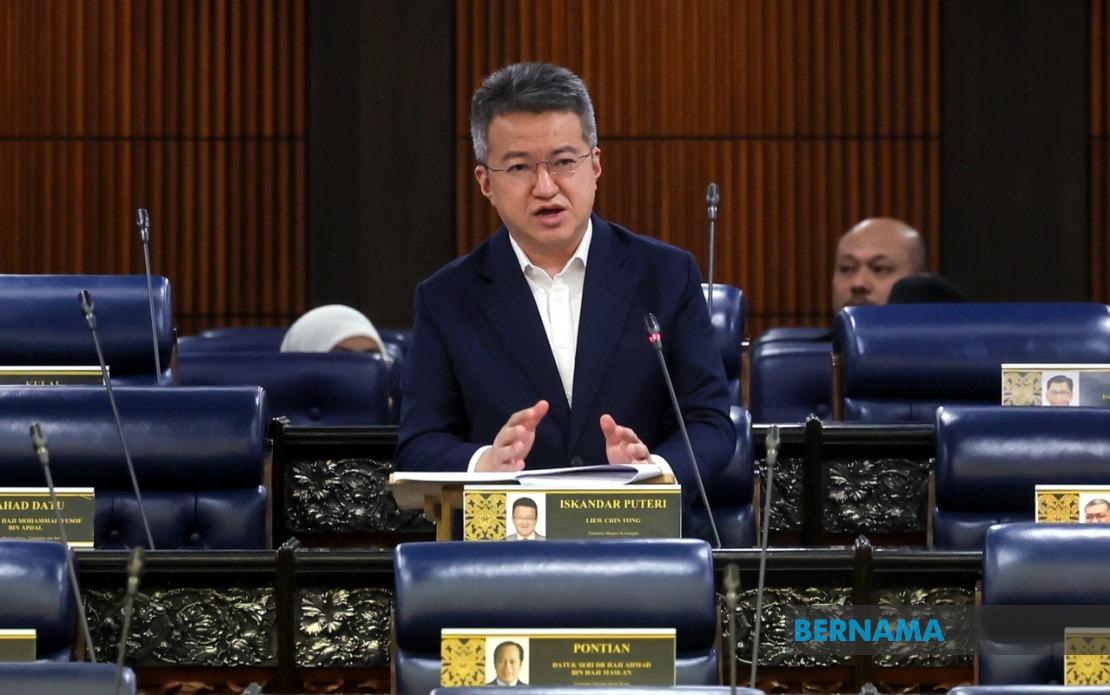
Malaysia's Ministry of Finance has allocated RM15.77 million to the Malaysian Human Rights Commission (SUHAKAM) for 2025, marking a significant boost to the institution's annual budget. The funding increase of RM2.2 million compared to the previous year's RM13.55 million underscores the government's continued commitment to supporting human rights oversight in the country. Deputy Finance Minister Liew Chin Tong announced the allocation during parliamentary proceedings, confirming that the grant encompasses both SUHAKAM's direct operations and the Office of the Children's Commissioner (OCC), which falls under the commission's purview.
The 2025 allocation reflects adjustments made during the Budget 2024 review cycle, with the government taking into account SUHAKAM's spending patterns and overall fiscal capacity. Liew emphasised that since SUHAKAM's establishment, the government has maintained an unbroken record of funding the institution, demonstrating institutional stability despite periodic budgetary fluctuations. This consistent support mechanism has allowed the commission to sustain its mandate without facing sudden financial disruptions that could impair its investigative and advocacy functions.
The grant encompasses multiple operational dimensions critical to SUHAKAM's functioning. Fixed components include commissioners' allowances and emoluments, ensuring continuity of leadership and staffing. Beyond personnel costs, the funding covers essential administrative expenses such as rental obligations, utility bills, and other infrastructure requirements necessary for the commission's offices to remain operational across the country. These foundational expenses form the bedrock enabling SUHAKAM to maintain its investigative and complaint-handling functions.
Beyond baseline operational requirements, the 2025 allocation funds SUHAKAM's strategic programming and annual initiatives. These comprehensive activities encompass human rights awareness campaigns, investigation of complaints, institutional training programmes, and engagement with civil society organisations and international human rights bodies. The inclusion of programme funding within the larger allocation reflects governmental recognition that SUHAKAM's value extends beyond mere administrative presence to active promotion and protection of human rights standards across Malaysian society.
During the parliamentary exchange, Liew addressed concerns raised by lawmakers regarding financial provisions for the Office of the Children's Commissioner within SUHAKAM's broader budget framework. The OCC, responsible for safeguarding children's rights and investigating child-related complaints, operates as an integrated component of SUHAKAM rather than as a separately funded entity. This integrated approach simplifies budget administration while ensuring that children's rights advocacy receives appropriate resource allocation within the commission's overall structure.
The funding decision also carries implications for Malaysia's international standing on human rights governance. As ASEAN nations continue strengthening institutional frameworks for rights protection, adequate resourcing of independent commissions like SUHAKAM demonstrates governmental commitment to meeting international standards and benchmarks. For Malaysian civil society organisations and international observers monitoring the country's human rights trajectory, consistent government funding signals institutional resilience and suggests that political will exists to support oversight mechanisms, even when investigations may produce politically inconvenient findings.
Simultaneously, Deputy Finance Minister Liew outlined government initiatives addressing another critical social protection gap: retirement security for informal sector and gig economy workers. The continuation of the i-Saraan programme through Budget 2026 represents a targeted intervention acknowledging that Malaysia's rapidly expanding informal economy leaves millions of workers vulnerable to inadequate retirement savings. The programme incentivises voluntary contributions to the Employees Provident Fund (EPF) through government matching contributions, establishing a subsidy mechanism that bridges the gap between workers' voluntary savings capacity and the income replacement needed for dignified retirement.
The existing i-Saraan structure provides matching contributions equivalent to 20 per cent of individual annual contributions, capped at RM500 annually or RM5,000 across a worker's lifetime. This formula balances fiscal sustainability with meaningful incentive levels, recognising that informal sector workers often operate on narrow profit margins limiting discretionary savings capacity. By matching contributions at a substantial rate, the government effectively multiplies worker savings while maintaining fiscal discipline through lifetime caps that prevent open-ended budgetary exposure.
Recognising the distinct circumstances of platform-based workers, the government will introduce i-Saraan Plus beginning in 2026, specifically targeting e-hailing and p-hailing drivers. These workers, numbering in the hundreds of thousands across Malaysia and the broader region, face unique vulnerabilities as independent contractors lacking traditional employment protections. The enhanced matching rate under i-Saraan Plus—reaching RM600 annually or RM6,000 lifetime—acknowledges both the precarious income variability characteristic of platform work and the urgent need to prevent a future crisis of destitute gig workers lacking retirement resources.
Beyond these targeted programmes, the Employees Provident Fund is examining broader mechanisms to extend contribution systems to informal and gig workers. These examinations address fundamental structural questions about how Malaysia's retirement architecture can adapt to increasingly fluid labour markets where traditional employer-employee relationships represent a diminishing share of overall economic activity. For Malaysian workers—particularly younger generations entering platform economies rather than formal employment—these policy innovations suggest emerging recognition that twenty-first-century retirement security requires institutional innovation matching the pace of economic transformation.
The combined SUHAKAM funding and informal sector initiatives revealed through parliamentary debate illustrate the Malaysian government's simultaneous attention to institutional independence and social protection. While SUHAKAM's increased allocation demonstrates commitment to human rights oversight, the expansion of retirement programmes for informal workers reflects expanding recognition that rights protection encompasses not merely civil-political dimensions but extends to economic and social securities essential for dignified living standards. For neighbouring Southeast Asian countries observing Malaysia's policy approaches, these developments suggest evolving frameworks for balancing institutional autonomy with inclusive social protection in middle-income economies experiencing rapid structural economic transformation.

