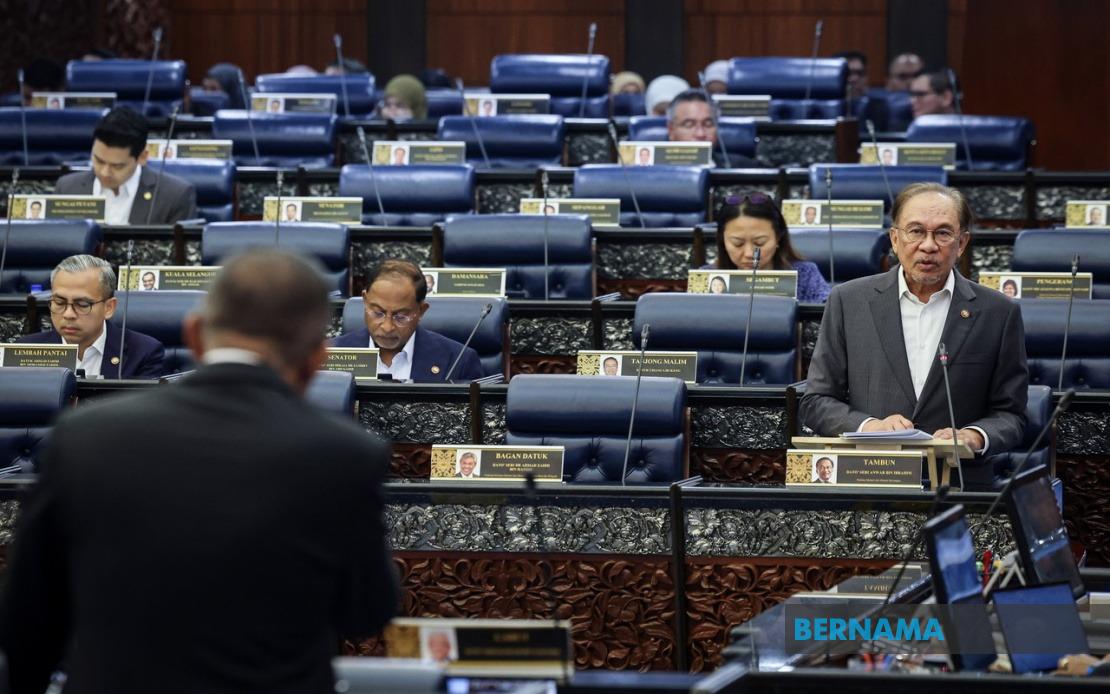
Prime Minister Datuk Seri Anwar Ibrahim has unveiled a substantial financing package aimed at bolstering Malaysia's micro, small and medium enterprise sector, with Syarikat Jaminan Pembiayaan Perniagaan (SJPP) approving RM4.9 billion in loans for more than 6,000 businesses in the opening six months of 2026. The announcement, made during Minister's Question Time in Parliament, reflects the MADANI government's prioritisation of small business viability in an increasingly complex economic landscape.
SJPP, a wholly owned subsidiary of the Ministry of Finance, functions as a crucial intermediary in Malaysia's credit ecosystem, providing loan guarantees that reduce risk for financial institutions and improve approval prospects for entrepreneurs who might otherwise struggle to access traditional banking channels. By channelling nearly RM5 billion through this mechanism, the government is effectively lowering barriers to capital for businesses that typically operate on slimmer margins and possess fewer collateral assets than larger corporations.
The financing initiative addresses what has emerged as a persistent structural challenge in Malaysia's business environment: the funding gap that constrains MSME growth and operational resilience. Small enterprises frequently cite access to affordable credit as a fundamental obstacle, with conventional lenders often demanding stringent documentation, substantial collateral, or established track records that newer or informal businesses cannot readily provide. The RM4.9 billion deployment represents a deliberate policy intervention designed to bridge this gap and ensure that capital constraints do not unnecessarily stifle entrepreneurial activity.
Prime Minister Anwar emphasised that these approvals form part of a broader governmental strategy to simultaneously reduce operational costs for small businesses while enhancing the financial foundation upon which they operate. The approach recognises that mere cost reduction, whilst valuable, remains insufficient without concurrent improvements to working capital availability. Businesses require both affordable operations and adequate liquidity to invest in inventory, equipment maintenance, staff training, and market expansion—elements essential for long-term competitiveness.
The government has mobilised more than RM15 billion across various loan and financing guarantee programmes to support MSME working capital requirements, indicating a sustained and multi-layered commitment to the sector. This expansive framework acknowledges that different business categories and circumstances demand tailored financial solutions rather than a one-size-fits-all approach. By deploying diverse instruments, policymakers attempt to capture businesses at different developmental stages and operating conditions.
Within this broader portfolio, RM5 billion has been specifically reserved for Bumiputera enterprises, recognising both constitutional imperatives and the government's historical commitment to indigenous business participation in the economy. This reserved allocation ensures that businesses operating under Bumiputera frameworks—a category encompassing companies with majority indigenous ownership—receive dedicated access to concessional financing terms. The ringfenced allocation addresses concerns that Bumiputera businesses, despite policy preferences, sometimes experience relative disadvantage in competing for general credit pools against better-positioned competitors.
The context for these announcements reflects genuine challenges confronting Malaysia's small business sector. Global economic volatility, elevated input costs, supply chain disruptions, and shifting consumer behaviour patterns have collectively compressed margins and reduced profitability across many MSME categories. Retailers, manufacturers, service providers, and traders have all reported pressure from rising energy costs, labour expenses, and logistics expenses, whilst demand remains uncertain. The government's financing initiatives therefore arrive at a moment when many entrepreneurs face genuine liquidity pressures.
For Malaysian readers and business observers, these developments carry several implications. Firstly, the continued prioritisation of MSME financing demonstrates political commitment to inclusive economic growth beyond large corporate sectors. Secondly, the scale of deployment—nearly RM5 billion in a single six-month period—signals accelerated implementation of previously announced schemes rather than mere rhetorical support. Thirdly, the existence of dedicated Bumiputera allocations confirms ongoing preferential treatment within government programmes, a dimension that affects both eligible businesses and those outside these categories.
Regionally, Malaysia's approach mirrors broader Southeast Asian trends toward state-supported MSME financing, as neighbouring economies similarly grapple with small business vulnerability. However, the effectiveness of such programmes depends critically on implementation quality, loan officer training, and realistic repayment expectations that do not inadvertently burden struggling enterprises with unsustainable debt obligations. Monitoring how businesses utilise this capital and how many achieve sustainable repayment will prove essential to assessing the initiative's ultimate impact.
The announcement also reflects Parliament's function as a forum for government accountability, with opposition lawmakers such as Lee Chuan How pressing ministers on policy responses to sectoral challenges. This parliamentary engagement encourages substantive policy articulation and creates documentation of government commitments that can later be evaluated against actual outcomes. Such scrutiny, whilst sometimes appearing ritualistic, serves a genuine role in maintaining policy transparency and forcing administrative articulation of underlying strategies.

