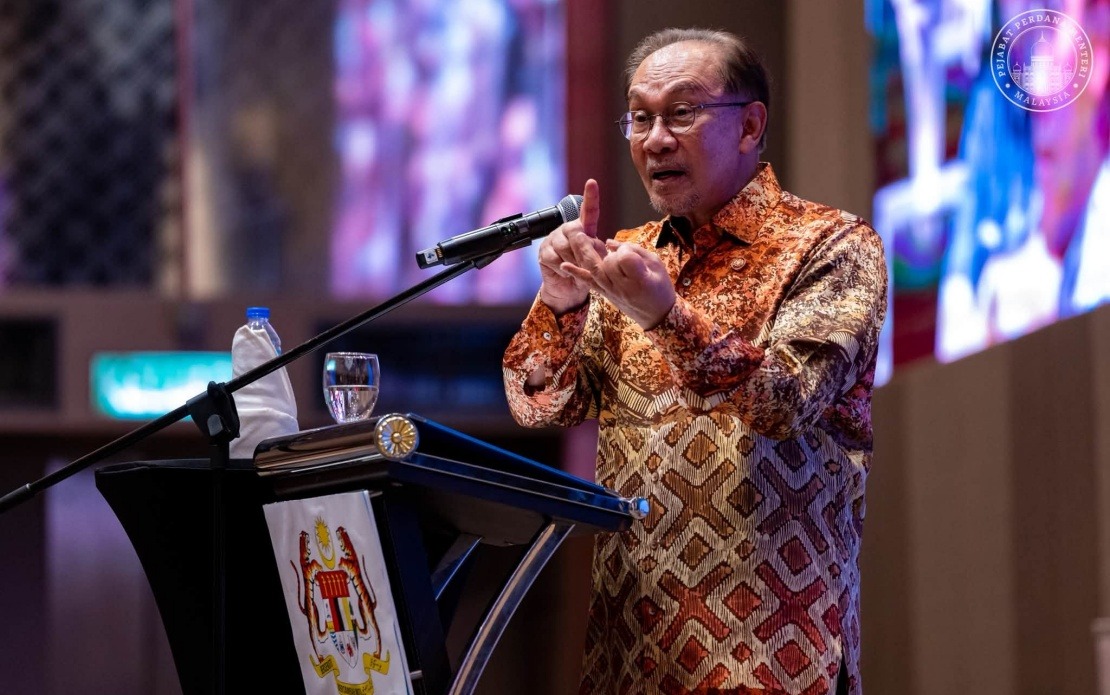
Prime Minister Datuk Seri Anwar Ibrahim has reaffirmed the government's commitment to supporting Malaysian youth in confronting the multifaceted challenges of the modern world. Speaking through a Facebook statement following his participation in engagement sessions with young people in Klang, Selangor, the Prime Minister emphasized that authorities will mobilize all available resources to help address the concerns and difficulties facing the younger generation across the country.
The Prime Minister's remarks came after he attended the "Temu Anwar" session and presided over the Opening Ceremony of the 2026 International Youth Assembly (HAMKA) in Klang. These platforms provided direct interaction between government leadership and youth representatives, allowing the Prime Minister to hear firsthand the perspectives, concerns, and recommendations of young Malaysians on pressing national issues. The engagement reflects an ongoing effort by the administration to maintain dialogue channels with the younger demographic, whose needs and aspirations are increasingly shaping national policy conversations.
Anwar Ibrahim's statement acknowledges a fundamental reality confronting today's youth: they inhabit an increasingly fragmented information environment where competing worldviews and ideological tensions are prevalent. He emphasized that while disagreement and intellectual debate are inevitable and even healthy components of democratic discourse, such exchanges must remain grounded in evidence, logical reasoning, and respectful conduct. The Prime Minister cautioned against allowing sentiment, animosity, or factional allegiances to dominate youth discourse, recognizing that polarization driven by emotion rather than substance poses risks to social cohesion and constructive problem-solving.
The government's pledge to assist within available capacity reflects a pragmatic acknowledgment of fiscal constraints while signaling political will to prioritize youth-focused initiatives. This formulation suggests recognition that addressing youth challenges requires a combination of policy innovation, resource allocation, and institutional adaptation rather than unlimited spending. For Malaysian policymakers, youth support encompasses multiple dimensions including employment opportunities, mental health services, digital literacy, civic engagement platforms, and access to quality education—areas where fiscal discipline must be balanced against genuine investment in human capital.
The Prime Minister drew particular symbolic significance from the International Youth Assembly's name, HAMKA, which references Abdul Malik Karim Amrullah, the influential early 20th-century Islamic scholar and prolific writer. Anwar highlighted Amrullah's contributions as a thought leader, orator, and intellectual warrior who profoundly shaped younger generations' understanding of knowledge and civic participation. By invoking this historical figure, the Prime Minister situated contemporary youth engagement within a broader tradition of intellectual discourse and generational mentorship in Malaysian Islamic thought, suggesting that modern youth challenges should be addressed through cultivating critical thinking and encouraging young people to articulate their viewpoints confidently.
Amrullah's legacy, as referenced by the Prime Minister, embodied several principles particularly relevant to current youth development priorities. The scholar's emphasis on knowledge acquisition speaks to Malaysia's ongoing need for educational excellence and skills development among young people entering an increasingly competitive global economy. His reputation as a powerful communicator underscores the importance of developing articulate, confident youth leaders capable of representing Malaysian interests and values in international forums. His willingness to challenge conventional wisdom through written and spoken advocacy demonstrates the value the government places on youth who engage constructively with societal issues rather than retreating from civic responsibility.
The timing of the Prime Minister's engagement with youth leadership carries significance within Malaysia's broader political trajectory. Youth constitute a substantial demographic bloc whose political preferences and civic engagement patterns will influence the nation's direction for decades. By actively soliciting youth input and publicly committing to act on their concerns, the government demonstrates recognition that sustainable governance requires intergenerational dialogue and demonstrated responsiveness to younger citizens' priorities. The sessions in Klang represent instances where government machinery moves toward youth rather than expecting young people to navigate bureaucratic structures independently.
Contemporary Malaysian youth face distinctive pressures that shaped the conversations at the assembly. Economic uncertainty, employment precarity, housing affordability, mental health challenges, climate anxiety, and questions about Malaysia's international standing amid great power competition all weigh on younger generations. Additionally, the rapid evolution of digital communication has created new platforms for both community building and social fragmentation, requiring government adaptation of traditional engagement strategies. The Prime Minister's acknowledgment that youth navigate a "complex world" implicitly recognizes that previous generations' solutions may require fundamental reconsideration for contemporary applicability.
The government's commitment, while expressed in general terms, implicitly signals several policy directions. Supporting youth through complex challenges likely encompasses expanding mental health services, improving employment pathways through skills training and entrepreneurship support, addressing housing affordability through targeted policies, and creating legitimate platforms for civic participation. It also suggests the government recognizes that youth concerns transcend traditional portfolio boundaries, requiring cross-agency coordination and innovative approaches rather than siloed departmental responses. The Prime Minister's framing suggests youth policy should be elevated as a strategic priority rather than peripheral concern.
For Southeast Asian observers, Malaysia's approach to youth engagement reflects broader regional trends where governments increasingly recognize that demographic change and generational expectations demand responsive governance models. Youth-led movements across Southeast Asia have demonstrated that younger citizens possess distinct policy preferences and civic engagement styles compared to older generations. Governments that ignore these differences risk disconnection from substantial demographic groups whose participation remains essential for social stability and economic dynamism. Malaysia's deliberate cultivation of youth dialogue mechanisms positions the country within this regional conversation about future governance models.
The invocation of historical intellectual figures like Amrullah suggests the government views youth development through a cultural and values-based lens, not merely instrumental economic or security frameworks. This approach recognizes that young people seek meaning, purpose, and connection to traditions while simultaneously questioning inherited assumptions. The challenge for policymakers involves honoring this balance—providing youth with historical and cultural grounding while creating space for innovation and fresh perspectives. The government's openness to youth advice and its commitment to act on reasonable recommendations signals an attempt to navigate this delicate equilibrium.
Moving forward, the substantive test of the Prime Minister's commitment will lie in concrete policy outcomes and resource allocation decisions that demonstrably address youth concerns articulated at sessions like the Klang assembly. Young Malaysians will assess whether government rhetoric about supporting their navigation of complex challenges translates into tangible improvements in employment prospects, mental health support accessibility, housing affordability, educational quality, and political voice. The International Youth Assembly and similar engagement platforms gain credibility only when governments visibly act on insights gathered, closing the feedback loop between youth input and policy implementation.

