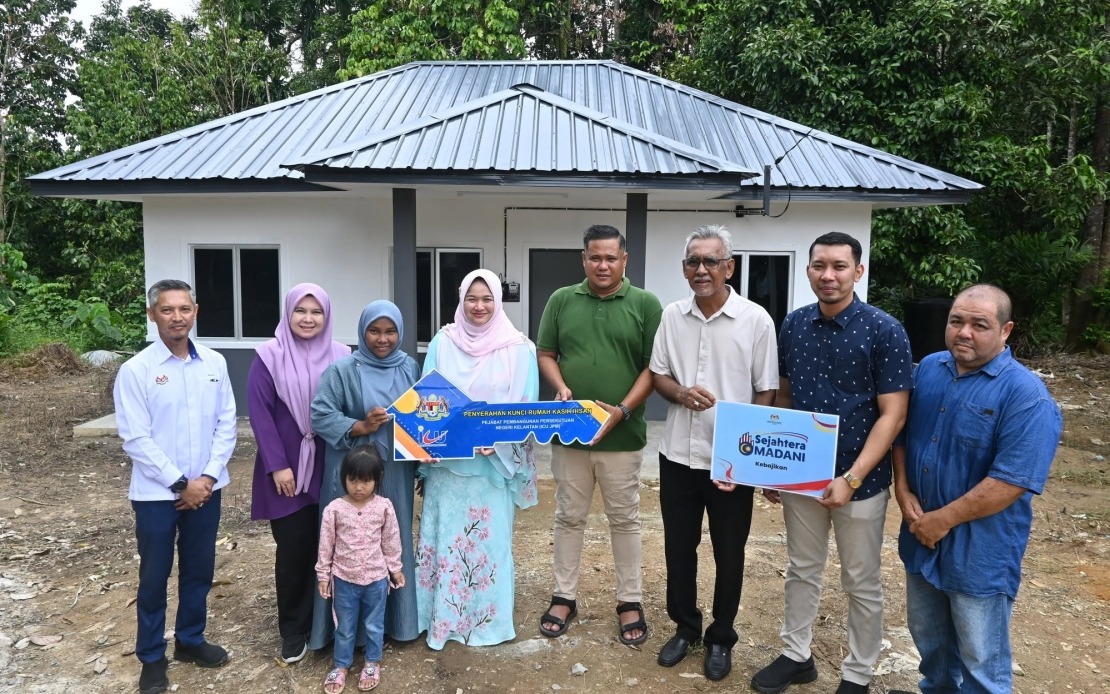
Prime Minister Datuk Seri Anwar Ibrahim's administration has advanced its social welfare agenda by distributing Rumah Kasih Ihsan homes to beneficiaries in Jeli, Kelantan, marking another milestone in the government's stated objective to ensure all citizens enjoy secure and dignified housing. The initiative, overseen by the Kelantan Implementation Coordination Unit (ICU) under the Prime Minister's Department (JPM), reflects a strategic approach to addressing housing shortages among lower-income households in rural areas of the country.
The handover ceremony, conducted on August 19, saw the presentation of housing assistance to two recipients in the Jeli district. Yusof Mohamed Nawawi from Kampung Renyut received formal approval for the construction of a new residence that will replace his existing accommodation with a structure meeting contemporary safety and comfort standards. Meanwhile, Shamsul Bahri Che Musa received the keys to his completed home, with both families presented with food baskets as part of the government's holistic welfare support package. Dr Wan Nur Ibtisam Wan Ismail, director of the Kelantan ICU JPM, presided over the formal proceedings, underscoring the administrative machinery's involvement in executing this social initiative.
The Rumah Kasih Ihsan programme represents a deliberate policy intervention targeting households in precarious living conditions, particularly in less developed regions. By focusing on Kelantan, a state that has historically faced infrastructure and development challenges, the government signals recognition of regional disparities in living standards that persist despite Malaysia's overall economic progress. The programme's emphasis on replacing or upgrading existing dwellings addresses not merely the quantitative shortage of housing stock but the qualitative dimension—ensuring that homes provide genuine sanctuary, protection from the elements, and environments conducive to family stability and economic participation.
From the government's perspective, the Rumah Kasih Ihsan initiative operates as a counterpoint to criticism that development priorities favour urban centres and commercial interests over rural welfare. The PMX Coordination Team's involvement indicates that housing delivery has been integrated into the Prime Minister's office's immediate strategic portfolio, suggesting political commitment rather than routine bureaucratic processing. This positioning potentially enables faster decision-making and resource mobilization compared to traditional ministry-level programmes, though questions about scalability and long-term sustainability remain germane for policymakers.
The philosophical framing articulated by the Kelantan ICU JPM—that adequate housing serves as a foundation for prosperity and dignity rather than merely providing shelter—reflects contemporary development thinking that recognises housing security as instrumental to breaking cycles of poverty. Studies from regional economies demonstrate correlations between housing stability and children's educational outcomes, adult employment prospects, and household health metrics. By constructing this narrative around dignity and hope rather than charity or subsidy, the government attempts to reframe housing assistance as an investment in human capital and social cohesion.
For Kelantan specifically, the initiative arrives within a complex political landscape where the state government operates under Pas administration while the federal government pursues centralised programmes through the Prime Minister's Department. This institutional arrangement creates both opportunities and complications: federal funding and coordination capacity can supplement state resources, yet jurisdictional tensions occasionally complicate implementation. The Kelantan ICU's explicit mention in the programme's attribution suggests deliberate effort to demonstrate federal-state coordination functioning despite partisan differences, messaging that carries significance in Malaysia's federalist political economy.
The provision of complementary food baskets alongside housing handover reflects an integrated approach to household welfare that recognises interdependencies between shelter, nutrition, and overall living standards. However, observers might question whether one-time material assistance adequately addresses the multifaceted vulnerabilities facing Jeli's lower-income households. Questions about employment opportunities, access to educational and healthcare facilities, and prospects for economic advancement in the district remain substantive policy concerns extending beyond housing provision alone.
Regionally, Malaysia's Rumah Kasih Ihsan initiative positions the country within a broader Southeast Asian conversation about government responsibility for housing security. Comparable programmes operate across Thailand, Indonesia, and the Philippines, each reflecting different governmental philosophies regarding the state's role in residential provision. Malaysia's targeted approach emphasises selectivity and quality outcomes rather than mass production, distinguishing it from some neighbouring models that prioritise quantity within constrained budgets.
The transferability of the Jeli model to other Malaysian states remains an open question. Rural Kelantan's demographic composition, existing housing stock, labour market dynamics, and administrative capacity differ meaningfully from urban areas like Selangor and Kuala Lumpur, or from different rural contexts in Sarawak and Sabah. Scaling the programme nationwide would require substantial fiscal commitments and potentially significant modifications to accommodate regional variations. The government's budgetary constraints and competing spending priorities—infrastructure, education, healthcare—mean that housing assistance must compete within broader fiscal frameworks.
Looking forward, the Rumah Kasih Ihsan programme's effectiveness will be measured not merely by the number of homes constructed but by whether recipients experience tangible improvements in household stability, economic opportunity, and social integration. Longitudinal tracking of beneficiary outcomes would provide evidence regarding the programme's genuine developmental impact. Furthermore, the visibility of this initiative—emphasised through the Prime Minister's personal endorsement via social media—suggests that housing welfare constitutes an important electoral and policy messaging priority for the current administration.
The inclusion of Jeli in the Rumah Kasih Ihsan rollout also reflects the government's stated commitment to inclusive development that addresses geographic disparities historically favouring more developed regions. As Malaysia navigates economic transitions and seeks to reconcile growth with equity, programmes targeting vulnerable populations in peripheral areas represent tangible expressions of that aspiration. Whether sustained funding and political commitment will ensure the initiative's continuity and expansion across subsequent budget cycles remains a question that will ultimately determine its transformative potential for communities like those in Jeli.

