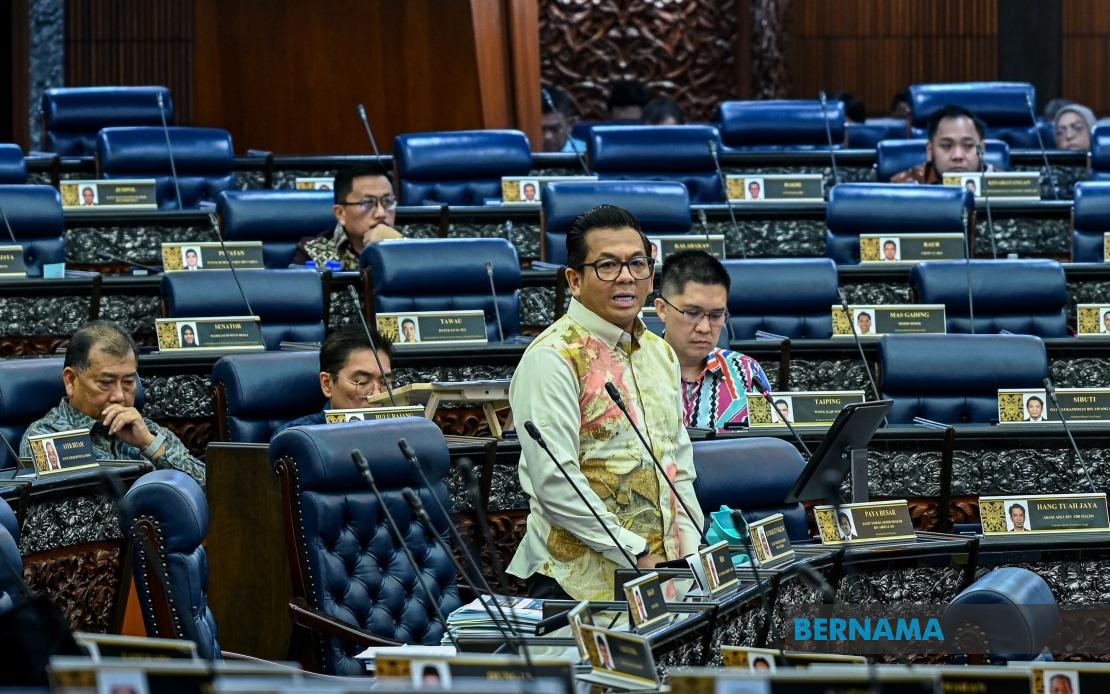
The Malaysian government is turning to granular household spending data to craft policies that acknowledge the widening chasm between how much Malaysians need to spend in cities versus rural areas. Deputy Economy Minister Datuk Mohd Shahar Abdullah outlined this evidence-based approach during parliamentary questioning on July 16, revealing how the Basic Living Expenditure (PAKW) framework—developed by the Department of Statistics Malaysia—has become central to the administration's strategy for tackling cost-of-living pressures that affect households differently depending on their location.
The PAKW represents a conceptual shift in how policymakers understand household economics across the country. Rather than applying a single national poverty line or spending benchmark, the framework accounts for the reality that a family in Kuala Lumpur faces fundamentally different price pressures and consumption needs than one in rural Kelantan or Sabah. These differences stem not merely from price variations for identical goods, but from divergent consumption patterns shaped by local infrastructure, availability of services, and lifestyle requirements. A city dweller may spend heavily on public transport or urban housing, while a rural resident's budget priorities lie elsewhere.
Mohd Shahar presented concrete figures to illustrate these geographical disparities. The PAKW value in Kuala Lumpur reaches RM5,639 monthly, reflecting the higher cost structure of Malaysia's capital and economic hub. In contrast, Kelantan's PAKW stands at RM4,254, some 25 percent lower, while Sabah's RM4,511 falls between these extremes. These variations represent more than mere statistical curiosities; they fundamentally shape which households are deemed vulnerable, how assistance programmes are calibrated, and where government resources should concentrate. A income threshold that lifts families out of hardship in Kelantan may prove inadequate in central Kuala Lumpur.
To make this data accessible beyond government corridors, the Department of Statistics Malaysia launched the myPAKW.dosm.gov.my online calculator, enabling ordinary Malaysians to track their own spending patterns against these regional benchmarks. This transparency mechanism serves multiple purposes: it allows households to understand their financial position relative to peers in similar locations, helps them identify spending inefficiencies, and provides civil society with factual grounds to advocate for or against particular policies. The calculator represents an attempt to democratise economic data that was previously confined to policy circles.
The impetus for developing PAKW emerged from parliamentary concerns about a 2023–2025 economist field study focused on developing solutions for inflation and rising prices, with particular attention to urban-rural disparities. Legislator Wan Hassan Mohd Ramli from Dungun raised this issue, prompting the government to detail how it is responding to research findings. The timeframe of this inquiry is significant: it spans a period of elevated global inflation and domestic cost pressures that have tested the resilience of Malaysian households across income strata.
Mohd Shahar framed the government's response around two pillars: acknowledging the disparities through targeted data collection, and implementing interventions calibrated to local realities. He stressed that the government recognises urban spending patterns diverge substantially from rural ones, necessitating policies that do not treat all Malaysians as facing identical economic challenges. This recognition moves beyond rhetorical acknowledgment; it translates into specific policy choices embedded within Malaysia Plans and regular adjustments to official poverty measures.
The Poverty Line Income (PLI) serves as a barometer of this evolving approach. The national PLI climbed to RM2,705 in 2024, a dramatic increase from RM980 in 2016. This near-tripling over eight years reflects both genuine changes in subsistence costs and a methodological shift toward more realistic baselines. However, such figures mask regional variation: the PLI in expensive urban centres likely exceeds the national average, while rural areas fall below it. The government's willingness to revise PLI under each Five-Year Plan cycle suggests an institutional acknowledgment that static poverty lines become increasingly disconnected from reality.
Beyond income support, Mohd Shahar highlighted human capital development as the government's preferred lever for tackling cost-of-living pressures. Training programmes designed to lift both the income floor—helping low-wage workers earn better pay—and the income ceiling, enabling upward mobility, feature prominently in each Five-Year Malaysia Plan. This reflects a strategic preference for addressing root causes through wage enhancement rather than relying solely on subsidies or cash transfers. The logic is that sustainably improving living standards requires workers to earn incomes sufficient to meet local costs, rather than depending on government interventions to bridge perpetually widening gaps.
The integration of PAKW insights into Five-Year Plans demonstrates how Malaysia is attempting to institutionalise evidence-based policymaking across electoral cycles. Twice per plan cycle, the government updates its interventions in light of changing economic realities. This rhythm, while not rapid enough to respond to sudden shocks, allows for course corrections more frequent than waiting for five-year plan reviews alone. For a Southeast Asian economy facing persistent inflationary pressures and demographic shifts that may alter spending patterns, such flexibility offers advantages over rigid, decennial policy frameworks.
For Malaysian workers and households, this approach carries important implications. Those in lower income brackets may find their eligibility for targeted assistance—subsidies, housing programmes, or other support—now determined by location-specific baselines rather than national averages. This could mean better-tailored help in some cases, though it also risks creating administrative complexity and potential inequities if not implemented carefully. Rural residents in cheaper areas might find themselves ineligible for programmes available to urban counterparts with identical nominal incomes, an outcome that demands transparent communication about policy rationale.
Regionally, Malaysia's embrace of granular economic data and location-sensitive policymaking offers a model that other Southeast Asian nations grapple with similar urban-rural divides might study. Countries across the region face comparable challenges as cities boom while rural areas stagnate economically, yet many still rely on crude national statistics that obscure these realities. Malaysia's institutional investment in statistical capacity and its willingness to make such data public positions it ahead of regional peers in this dimension.
Looking forward, the effectiveness of this framework depends on translating data insights into policies that genuinely improve living standards without inadvertently creating new inequities. The PAKW provides the diagnostic; implementation determines whether the government can craft interventions that acknowledge both the real costs Malaysians face and the varied resources available across regions. As inflation remains a persistent concern and wage stagnation affects many workers, the challenge of closing the urban-rural cost gap while simultaneously raising incomes remains the true test of this evidence-based approach.

