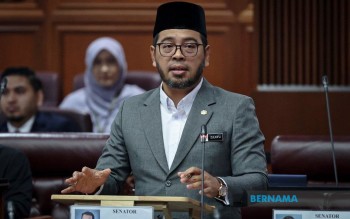
Malaysia's government has committed over RM10 billion to rescue Tabung Haji from financial collapse, addressing a crisis rooted in systemic mismanagement and embezzlement that threatened the viability of one of the nation's most important Islamic financial institutions. Dr Zulkifli Hasan, Minister in the Prime Minister's Department (Religious Affairs), disclosed the magnitude and rationale of the intervention during a special sitting of Parliament on August 11, clarifying that the bailout was designed to stabilize the institution's finances rather than to acquire or liquidate its assets.
The depth of Tabung Haji's financial deterioration became apparent when audits revealed that the organisation's deficit had ballooned to more than RM10 billion by the final quarter of 2018. This gap between total liabilities and available assets represented an existential threat to an institution that serves as the primary savings vehicle for millions of Malaysian Muslims preparing for the hajj pilgrimage. With only three months remaining before the year's end, policymakers faced an urgent decision: allow the institution to collapse or intervene decisively to prevent catastrophic losses for depositors and stakeholders.
The decision to proceed with a comprehensive bailout and restructuring programme reflected the recognition that Tabung Haji occupies a unique position within Malaysia's financial landscape. Beyond its role as a savings mechanism, the institution embodies religious and cultural significance for the Muslim community. Its failure would have represented not merely a financial setback but a breach of public trust in an organisation tasked with safeguarding the religious aspirations and financial security of ordinary Malaysians undertaking one of Islam's five pillars. The government determined that preserving institutional continuity and restoring solvency served both immediate depositors and broader national interests.
Dr Zulkifli emphasised that misconceptions had circulated regarding the nature and consequences of the bailout. Certain parties, he noted, had irresponsibly claimed that assets had been transferred to non-Muslim or Chinese interests, allegations designed to inflame communal tensions and exploit public anxiety about the crisis. These claims were fundamentally misleading. Rather, restructured assets would be held by Urusharta Jamaah, a wholly-owned subsidiary of the Minister of Finance Incorporated, ensuring they remained under government stewardship and subject to public accountability frameworks.
The specifics of how assets came to be managed through Urusharta Jamaah reflected a deliberate strategy to separate distressed portfolios from operating functions while maintaining clear government oversight. This structural approach allowed the government to absorb losses associated with mismanagement without forcing depositors to bear the full cost of previous operational failures. It represented a pragmatic acknowledgment that Tabung Haji's problems were not attributable to inherent flaws in Islamic savings mechanisms but rather to governance failures and institutional malfeasance that could be remedied through proper administration.
Understanding the context that necessitated such an extraordinary intervention requires examining the trajectory of mismanagement that had accumulated within Tabung Haji's operations. The organisation had engaged in speculative investments, risky venture capital placements, and projects that departed significantly from its core mandate of managing hajj savings. Decision-making processes became increasingly opaque, and oversight mechanisms failed to constrain imprudent risk-taking. Embezzlement cases further depleted resources and damaged institutional credibility. By 2018, the accumulation of poor decisions and fraudulent conduct had rendered the organisation technically insolvent.
For Malaysian depositors, particularly lower and middle-income Muslims who depend on Tabung Haji as their primary savings instrument, the bailout offered reassurance that their deposits would not be wiped out through institutional failure. The alternative—allowing Tabung Haji to collapse—would have triggered a devastating loss of savings for millions of families and potentially prompted broader loss of confidence in Malaysia's Islamic financial sector. The government's intervention, though expensive, prevented a far costlier scenario involving cascading financial losses and social disruption.
The restructuring plan accompanying the bailout targeted restoration of long-term sustainability rather than merely halting immediate collapse. This forward-looking dimension distinguished the intervention from a simple emergency rescue. By recapitalizing the institution and removing distressed assets, the government created conditions for Tabung Haji to resume operations with a strengthened balance sheet and, presumably, reformed governance structures. The objective was to enable the institution to function normally again, serving its depositors without requiring repeated public subsidies.
The political economy of managing the crisis also merits consideration. The Pakatan Harapan Government that authorised the bailout inherited Tabung Haji's problems from previous administrations but faced the consequences nonetheless. Proceeding with restructuring required substantial budgetary resources during a period of fiscal constraint. Failure to act, however, would have been politically untenable given the potential impact on millions of ordinary Malaysians. The decision reflected a calculation that the reputational and financial costs of inaction far exceeded those of intervention.
Debunking false narratives about asset sales to particular religious or ethnic groups served another crucial function beyond mere factual correction. In a diverse society where religious sensibilities intersect with economic concerns, misleading claims about institutional assets can readily catalyse intercommunal suspicion. Dr Zulkifli's clarification that assets remained within government-controlled structures and would not be sold to outside parties addressed legitimate concerns about transparency and accountability in the management of public resources entrusted to an Islamic institution.
Moving forward, the effectiveness of the bailout will ultimately depend on implementation of governance reforms that prevent recurrence of the mismanagement and fraud that necessitated the intervention. The Royal Commission of Inquiry whose findings prompted the parliamentary briefing presumably identified specific operational and oversight deficiencies requiring correction. Without institutional reform accompanying financial restructuring, Tabung Haji risks accumulating new problems even as previous ones were being resolved. The RM10 billion commitment therefore represents not a solution in itself but rather a foundation upon which sustainable improvement must be built through disciplined administration and strengthened controls.

