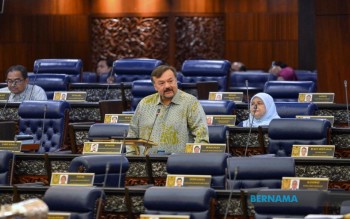
The Malaysian government has moved swiftly to bolster its support for micro and small enterprises, approving more than RM500 million in financing for over 30,000 entrepreneurs during the seven-week window from May 15 to June 26, 2026. Finance Minister II Datuk Seri Amir Hamzah Azizan disclosed the scale of these interventions while addressing the Dewan Rakyat, underlining the administration's commitment to sustaining local business viability against mounting operational pressures and inflationary headwinds.
This substantial disbursement represents one tranche of the government's wider RM5 billion Micro Financing Facility Programme, a strategic initiative designed to cushion micro enterprises navigating the dual pressures of rising input costs and challenging market conditions. The financial institutions channelling these funds—encompassing Amanah Ikhtiar Malaysia (AIM), Agrobank, Bank Simpanan Nasional (BSN), Bank Rakyat, MARA, and TEKUN Nasional—collectively form a comprehensive ecosystem aimed at ensuring that even the smallest business operators retain access to working capital and expansion credit.
Concurrently, the government has activated the RM5 billion MADANI Government Assistance Guarantee Scheme, administered through Syarikat Jaminan Pembiayaan Perniagaan Bhd (SJPP), to broaden the financial runway available to micro, small and medium enterprises seeking bank financing. This guarantee mechanism proves particularly significant because it reduces the collateral burden and documentation barriers that traditionally obstruct smaller borrowers from securing conventional bank loans. Between mid-May and mid-June 2026, SJPP itself approved RM219 million in financing guarantees covering more than 300 MSMEs, with particular concentration in agriculture, construction, logistics and tourism—sectors historically sensitive to global economic volatility and domestic demand fluctuations.
The Finance Minister's parliamentary statement was prompted by Datuk Andi Muhammad Suryady Bandy (BN-Kalabakan), who sought assurances regarding immediate protective measures for street traders, hawkers and small business operators grappling with persistent global economic uncertainty. Amir Hamzah's response reflected a multi-layered approach that extends beyond simple credit provisioning to encompass debt restructuring and targeted relief mechanisms designed to preserve business continuity through lean periods.
SJPP is actively collaborating with participating financial institutions to facilitate loan rescheduling and restructuring arrangements, allowing distressed borrowers to adjust repayment timelines to match cash flow realities. This intervention proves crucial in preventing cascading insolvencies among interconnected small business networks, particularly the supply chains anchored to larger enterprises and government procurement contracts. The provision of targeted repayment assistance further signals governmental recognition that the challenge facing MSMEs transcends mere access to fresh capital—many established operators require breathing room to navigate temporary revenue disruptions.
Paralleling these guarantee and restructuring efforts, Bank Negara Malaysia launched the RM5 billion SME Stabilisation Relief Facility (SME SRF) in mid-May 2026, which by the reported date had approved nearly RM1 billion in financing across more than 1,500 MSMEs. This dedicated facility represents central bank acknowledgement that traditional commercial lending criteria may prove too stringent during periods of economy-wide stress, necessitating targeted interventions alongside market-based credit allocation.
The cumulative financial commitment across these three major schemes—the Micro Financing Facility Programme, the MADANI Government Assistance Guarantee Scheme, and the SME Stabilisation Relief Facility—totals RM15 billion, though actual drawdown rates suggest significant unutilised capacity. Approximately RM4 billion remains available for future applications under these programmes, indicating that bottlenecks in access likely stem from awareness gaps, documentation requirements or eligibility criteria rather than absolute funding constraints.
For Malaysian small business operators, the seven-week approval rate of RM500 million suggests a monthly disbursement pace of roughly RM70-75 million, a velocity that, if sustained, could distribute the remaining RM4 billion within additional six to eight months. However, temporal patterns in government disbursement often prove uneven, with front-loading during programme launches followed by declining velocity as initial applicant pools exhaust themselves and awareness among harder-to-reach segments lags.
The sectoral concentration of SJPP-guaranteed financing—agriculture, construction, logistics and tourism—reflects both economic vulnerability mapping and strategic policy priorities. Agriculture remains chronically dependent on credit access given seasonal cash flow volatility; construction has contracted amid property market headwinds; logistics faces margin compression from regional competition and fuel price volatility; tourism continues recovery from pandemic disruptions. These four pillars of the Malaysian economy collectively employ millions of workers through small and medium operators, making their stability a prerequisite for broader employment resilience.
Regional context amplifies the significance of these interventions. Throughout Southeast Asia, small business operators face intensifying competition from digital commerce, regional supply chain diversification, and rising labour costs in middle-income economies. Thailand, Indonesia and Vietnam have similarly deployed aggressive MSME financing programmes in recent years. Malaysia's RM15 billion aggregate commitment positions it competitively within this regional landscape, though implementation fidelity and capital allocation efficiency ultimately determine whether these schemes strengthen or merely postpone structural adjustment pressures.
The government's emphasis on guarantee schemes rather than pure subsidies reflects orthodox fiscal discipline, requiring participating financial institutions to bear residual credit risk and maintain prudent lending standards. This hybrid approach balances accessibility expansion against moral hazard—excessive lending to unviable enterprises typically generates future writeoffs that ultimately burden public finances through banking sector deterioration.
Looking forward, the durability of these support measures depends significantly on macroeconomic conditions beyond government control. Should global growth accelerate and regional demand strengthen, current support may prove sufficient; conversely, sustained external headwinds could necessitate programme extension or expansion. For Malaysian policymakers monitoring labour market stability and urban informal sector resilience, these financing initiatives represent a critical stabilisation tool before unemployment pressures force more costly social interventions.

