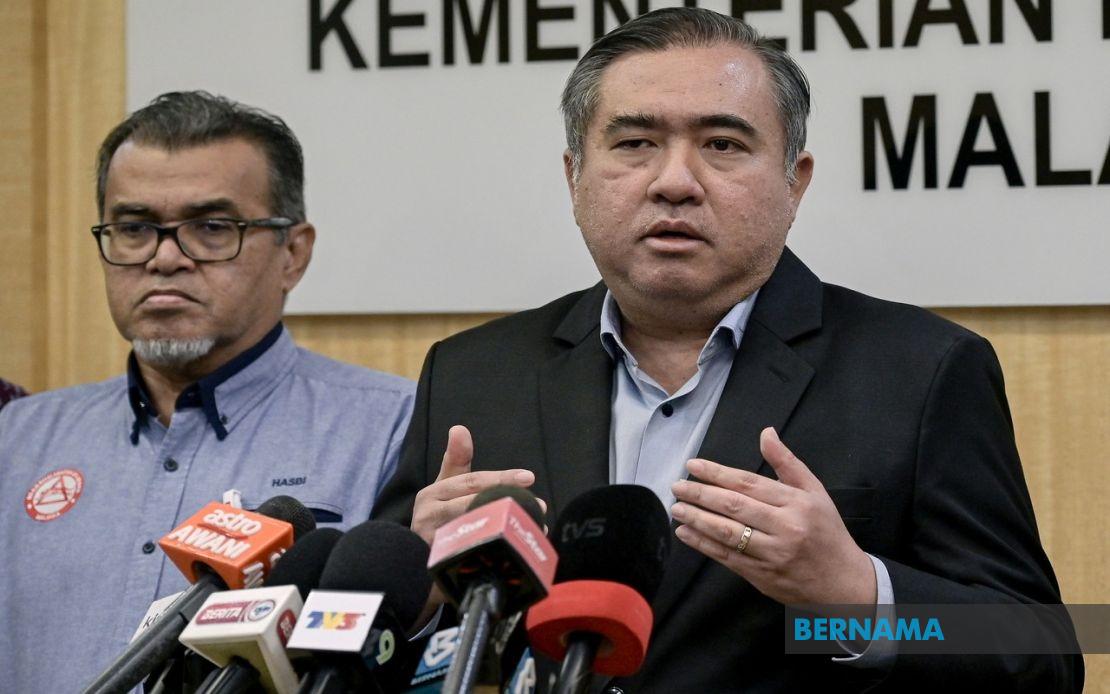
Malaysia's Transport Minister Anthony Loke has drawn a distinction between regulatory oversight and operational control, stating that the government exercises restraint when it comes to internal management decisions at port companies, even where international executives are appointed to senior positions. Speaking at a press conference in Putrajaya on July 17, Loke addressed mounting international media attention on the appointment of Sultan Ahmed Sulayem, the former chairman and chief executive of DP World, to lead MMC Ports Holdings Bhd, a significant development in Malaysia's maritime logistics sector that had sparked questions about government involvement.
Loke's statement reflects a careful calibration of Malaysia's approach to regulating strategic infrastructure. While the nation's policy mandates that companies holding port concessions or other strategic national assets must be majority-owned by Malaysian shareholders—a threshold set at 51 per cent—the minister emphasised that this requirement does not extend to management-level appointments. This separation between ownership and operational control is, according to Loke, a deliberate policy choice designed to attract global expertise and international best practices to Malaysia's ports without compromising national economic interests.
The question of foreign leadership at Malaysian ports is not without precedent. Loke cited the Port of Tanjung Pelepas, one of the nation's key maritime gateways, as an example of a facility where a foreign national serves as chief executive officer. The existence of such arrangements suggests that previous administrations have similarly permitted international talent to assume operational control, provided that Malaysian investors retain controlling stakes. This pragmatic approach reflects the reality that port management increasingly requires specialists with global supply-chain expertise, particularly as Malaysia seeks to position its maritime hubs competitively within Southeast Asia's busy shipping corridors.
The clarification became necessary following reports that Sultan Ahmed Sulayem had assumed the executive chairmanship of MMC Ports Holdings Bhd following the sudden resignation of the previous group chief executive officer, Azman Shah Mohd Yusof. The transition, while a routine corporate development in most jurisdictions, attracted international scrutiny—and apparently generated domestic questions—about whether such an appointment required or reflected government approval. Loke's response aimed to dispel any notion that the Transport Ministry either authorized or directed the change, positioning it squarely as an internal corporate matter within the purview of MMC Ports Holdings Bhd's board of directors.
Yet Loke added an important caveat: while management decisions require no government approval, any alterations to the ownership structure of port operators must be formally communicated to the authorities. The minister noted that the ministry channels such notifications through the Public-Private Partnership Unit (UKAS), a mechanism designed to ensure government visibility over changes in shareholding across strategic national assets. This distinction—approving transactions versus approving appointments—reflects how Malaysia balances openness to foreign investment and expertise with vigilance over control of critical infrastructure.
When asked directly about whether the ministry had received notification of any changes in share ownership at MMC Ports Holdings Bhd, Loke responded that no such communication had been received. This absence of notification carries significance; it suggests either that no material change in ownership has occurred or that any such changes remain at an early stage. The minister's emphasis on this point underscores the importance the government attaches to transparency in ownership structures, even as it delegates operational decisions to company boards.
The broader context of this clarification is Malaysia's evolving relationship with foreign capital and expertise in port management. As global supply chains grow increasingly complex and competition for container traffic intensifies across Southeast Asia, Malaysian ports must offer not only competitive tariffs and efficient infrastructure but also world-class management. The appointment of an executive of Sultan Ahmed Sulayem's stature—a figure with decades of experience in one of the world's leading port operators—signals ambitions to elevate MMC Ports Holdings Bhd's performance and regional standing. The government's readiness to permit such appointments, provided Malaysian ownership is preserved, reflects confidence that strategic control and professional management can coexist.
Loke's remarks also situate Malaysia within a global debate over how nations can harness foreign expertise while maintaining sovereignty over critical assets. Many countries employ similar ownership thresholds—whether 51 per cent or other percentages—as a way to ensure that key decisions ultimately rest with domestic stakeholders, even if day-to-day operations are led by international professionals. The Transport Minister's articulation of this approach may reassure both foreign investors, who want clarity that competence rather than nationality determines hiring decisions, and domestic constituents, who expect safeguards over assets considered vital to national interests.
For Malaysian readers and Southeast Asian observers, the statement carries implications for how the country will position itself in the next phase of global maritime competition. With China's Belt and Road Initiative creating new trade corridors and port capacity expanding throughout the region, Malaysia's ports must operate at peak efficiency to capture growing volumes. By signalling openness to appointing the most capable leaders regardless of nationality, while maintaining Malaysian majority ownership, the government appears intent on combining the best of both approaches—retaining control while securing excellence.
The clarification also reflects how Malaysia navigates its relationship with the international business community. Large multinational corporations considering investments in Malaysian infrastructure need assurance that hiring and operational decisions will be made on merit and market logic, not subject to arbitrary government intervention. Loke's statement provides that assurance while simultaneously affirming the government's commitment to protecting Malaysian economic interests through ownership requirements. This balance is delicate but necessary if Malaysia is to attract the sort of world-class talent and investment that port operators increasingly require.
Looking ahead, the apparent transition at MMC Ports Holdings Bhd under Sultan Ahmed Sulayem may serve as a test case for how well Malaysia's regulatory framework accommodates both foreign expertise and national control. If the appointment proves successful in enhancing operational performance and market competitiveness, it will likely embolden other strategic industries to pursue similar talent acquisition strategies. Conversely, any perceived conflicts between international leadership and Malaysian interests could prompt renewed debate over the appropriate boundaries of foreign involvement in strategic sectors. For now, Transport Minister Loke has drawn those boundaries clearly: ownership is non-negotiable, but management excellence is paramount.

