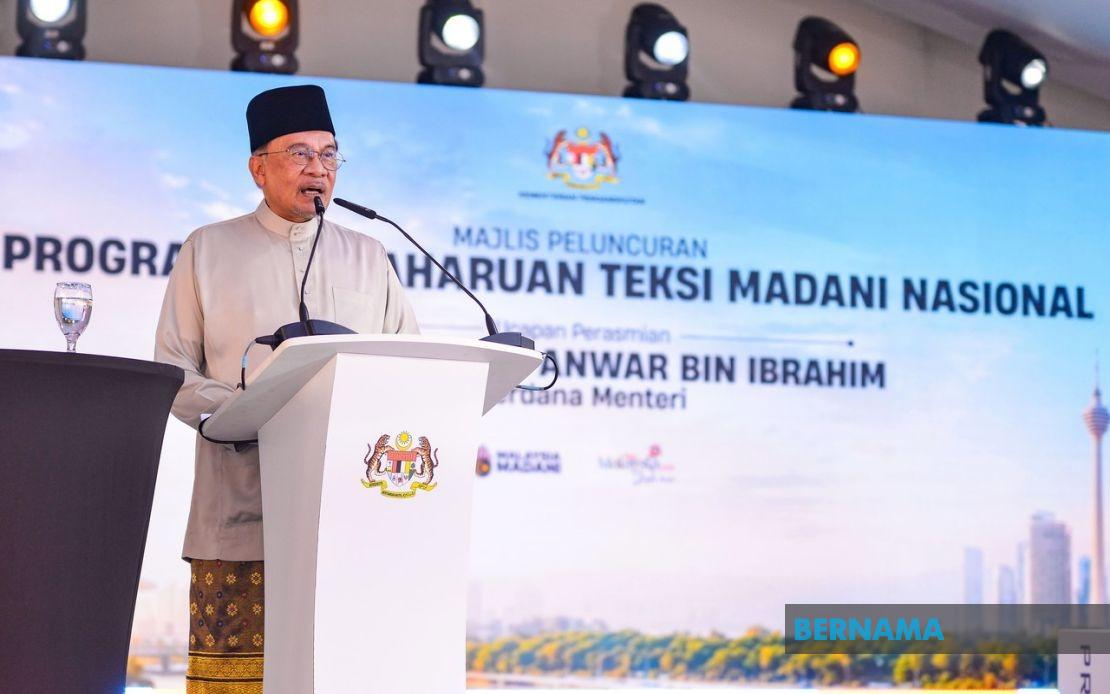
Malaysia's taxi industry is receiving a significant financial boost as Prime Minister Datuk Seri Anwar Ibrahim announced an additional RM10 million for the Vehicle Replacement Matching Grant Programme at the launch of the National MADANI Taxi Reform Programme in Kuala Lumpur. The new allocation nearly doubles the initial RM10 million earmarked in Budget 2026, reflecting strong demand from taxi operators seeking to upgrade their ageing fleets. The decision underscores the government's recognition that the sector requires substantial support to remain competitive and meet evolving service standards across major Malaysian cities.
The doubling of funds comes in response to encouraging uptake of the original Budget 2026 allocation, which Anwar noted demonstrated widespread interest among taxi drivers in fleet modernisation. This pattern of demand-driven budget adjustment suggests the government intends to maintain momentum behind its broader taxi reform initiative. For an industry that has long struggled with ageing vehicles and operational challenges, the expanded funding represents meaningful recognition of its role in urban mobility and economic activity. Anwar, speaking in his dual capacity as Prime Minister and Finance Minister, framed the additional allocation as a testament to the administration's commitment to prioritising practical support for working Malaysians.
Central to the government's strategy is a newly negotiated partnership with Proton and the Transport Ministry to create dedicated financing mechanisms specifically for taxi operators seeking to purchase the Proton S70. This arrangement aims to lower entry barriers for drivers interested in the domestic vehicle model, potentially boosting demand for Malaysian automotive production while simultaneously refreshing the taxi fleet. The collaboration reflects a deliberate effort to align industrial policy with sector development, ensuring that investment in taxi modernisation simultaneously supports domestic carmakers. The Proton S70, positioned as a mid-range offering with modern safety and comfort features, could represent a significant upgrade for operators currently maintaining older vehicles.
The financing scheme's architecture remains significant for Southeast Asian transport planners. By developing purchase arrangements tailored to taxi drivers' economic circumstances, rather than requiring them to access standard consumer financing, the government acknowledges the unique cash flow patterns of transport operators. Taxi drivers typically operate on tight margins with irregular income streams, making conventional vehicle loans challenging. A dedicated scheme addressing these realities could accelerate fleet renewal while reducing financial strain on individual operators, creating a more stable economic environment for the sector.
The National MADANI Taxi Reform Programme represents a comprehensive governmental approach extending beyond vehicle replacement. The initiative encompasses broader modernisation objectives aimed at elevating service quality, improving driver welfare, and enhancing passenger experience across Malaysia's taxi networks. By combining financial assistance for vehicle acquisition with complementary reforms addressing operational standards, the government is attempting to address multiple systemic challenges simultaneously. This holistic approach suggests recognition that simply replacing vehicles without addressing underlying operational, regulatory, and competitive issues would yield limited long-term benefits.
The launch event itself, held at the symbolic venue of Dataran Merdeka, carried deliberate political messaging. The presence of Transport Minister Anthony Loke, Minister in the Prime Minister's Department (Federal Territories) Hannah Yeoh, and Chief Secretary to the Government Tan Sri Shamsul Azri Abu Bakar underscored the initiative's cross-ministerial importance and high-level government commitment. This assembly of senior officials indicated that taxi reform occupies a prominent position within the broader MADANI framework, the government's overarching development philosophy emphasising prosperity, inclusivity, and sustainability.
For Malaysia's urban centres, the implications of accelerated taxi fleet modernisation are substantial. Newer vehicles typically produce lower emissions, enhancing air quality in congested metropolitan areas, while improved safety features reduce accident risks for both drivers and passengers. Enhanced comfort and reliability in taxi services could encourage greater public transport usage, reducing private vehicle congestion. These environmental and social benefits extend beyond individual operators to affect entire city ecosystems, potentially improving livability and sustainability metrics across major urban areas.
The taxi sector's economic significance warrants the government's substantial investment. Operating across Malaysia's urban landscape, taxi networks provide employment for tens of thousands of drivers while supporting broader transport infrastructure. When taxi services deteriorate due to ageing fleets and inadequate maintenance resources, the ripple effects extend throughout urban economies. Visitors and residents relying on dependable taxi transport for daily mobility face reduced service quality, potentially dampening tourism appeal and urban productivity. Conversely, modernisation initiatives that enhance reliability and safety generate positive externalities throughout the economy.
International context adds further relevance to Malaysia's taxi reform trajectory. Globally, major cities have implemented varying strategies for managing taxi sector transitions amid disruption from ride-hailing applications and evolving mobility demands. Some jurisdictions have attempted suppressive regulation, while others, including several Southeast Asian neighbours, have pursued modernisation and integration strategies. Malaysia's approach emphasising financial support for vehicle replacement and partnership with domestic manufacturers represents a middle path focused on revitalising traditional taxi services rather than eliminating them. This strategy acknowledges both the sector's enduring importance and the need for adaptation.
The government's willingness to quickly allocate additional funding beyond the original budget provision suggests an emerging operational philosophy prioritising flexibility and responsiveness. Rather than adhering rigidly to pre-announced allocations, decision-makers appear prepared to commit supplementary resources when genuine demand demonstrates programme value. This adaptive approach could establish a template for other sectoral initiatives, potentially enabling more efficient resource allocation across government priorities. For taxi drivers and industry associations, it signals receptiveness to evidence-based advocacy and demonstrates that policy implementation remains responsive to ground-level feedback.
Looking forward, the integration of Proton vehicles into taxi fleets through dedicated financing creates manufacturing opportunities for Malaysia's automotive sector while modernising transport services. If execution succeeds in meaningfully accelerating fleet replacement, subsequent rounds of reform might incorporate additional technological elements such as cashless payment integration, GPS-based dispatch systems, or enhanced passenger safety features. The current initiative thus potentially functions as both immediate relief and foundational infrastructure for more comprehensive future modernisation. The expanded RM20 million allocation, while substantial, may prove merely the initial chapter in a longer-term taxi sector transformation narrative.

