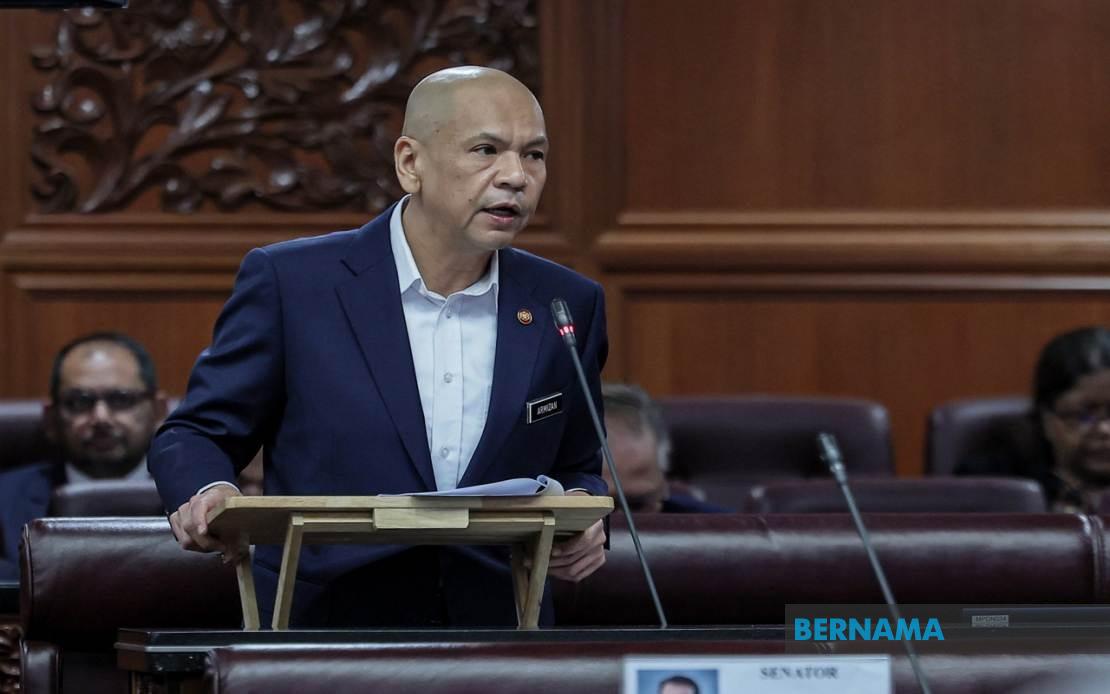
The Malaysian government's flagship Rahmah MADANI Sales Programme has reached a significant milestone with nearly 16,000 events held nationwide in the first half of 2025, according to Datuk Armizan Mohd Ali, the Minister of Domestic Trade and Cost of Living. The comprehensive rollout of 15,881 sales sessions between January and June demonstrates the administration's commitment to bringing affordable goods directly to consumers across the country, fulfilling its pledge to address mounting cost-of-living pressures that have affected household budgets throughout the nation.
The programme's geographic coverage is notably comprehensive, extending to all 600 state constituencies and every single Federal Territory zone, including Putrajaya, Kuala Lumpur, and Labuan. This nationwide penetration marks a departure from previous ad hoc discount initiatives, reflecting a deliberate shift toward systematic, planned interventions in consumer markets. Armizan's confirmation during a parliamentary question-and-answer session underscores the government's view that this structured approach to price relief has garnered positive reception from various stakeholder groups, validating the resource investment required for such widespread implementation.
The trajectory of programme expansion reveals accelerating momentum in government support. The number of sales sessions nearly doubled year-on-year, increasing from 6,870 in 2023 to 12,419 in 2024, with projections indicating a further sharp increase to 25,708 events by end of 2025. Initially, the government had targeted 23,040 sessions for this year, but Prime Minister Datuk Seri Anwar Ibrahim raised this ceiling to 30,000 in May following renewed regional tensions in West Asia. This upward revision reflects policymakers' assessment that inflationary pressures stemming from global supply chain disruptions and energy market volatility require intensified domestic intervention to shield consumers from price spikes.
The question raised by Datuk Iskandar Dzulkarnain Abdul Khalid, the Kuala Kangsar representative from Perikatan Nasional, touched on a central concern among opposition parliamentarians: whether the government possessed the operational capacity to sustain and increase programme frequency without compromising quality or incurring unsustainable fiscal costs. Armizan's response detailed five strategic pillars underlying the programme's scaling, beginning with its institutionalisation as a permanent annual fixture since 2024. Rather than treating price relief as an emergency measure or temporary political gesture, the government has allocated dedicated activity codes and specific budget allocations, signalling long-term commitment and enabling predictable financial planning.
The second structural innovation involves establishing firm annual targets and scheduling frequencies for each constituency and zone, eliminating the unpredictability that characterised previous bargain sales initiatives. By mapping out a structured calendar rather than deploying sporadic discounts, the government reduces uncertainty for both retailers and consumers, allowing households to anticipate shopping opportunities and plan accordingly. This methodical approach mirrors professional supply-chain management, treating popular consumption events with the same planning rigour as commercial enterprises deploy in their operations.
Private sector collaboration forms the third strategic pillar, recognising that government alone cannot execute such a sprawling programme without commercial partner support. As of late June, the ministry had secured 2,695 retail partners drawn from supermarket chains, independent shops, and cooperative societies. This expansive network reflects successful negotiation with business stakeholders, persuading them that participation serves mutual interests: retailers gain customer foot traffic and positive brand association, whilst the government extends reach and credibility by partnering with established commercial channels that consumers already trust.
The fourth approach emphasises flexible delivery mechanisms tailored to diverse populations and occasions. Sales events occur through three distinct channels—traditional in-store promotions, open-air bazaar-style gatherings, and mobile units reaching isolated areas. The government further aligns timing with seasons, paydays, and back-to-school periods, acknowledging that consumer purchasing patterns fluctuate with income cycles and calendar events. This nuanced approach recognises that urban dwellers, rural populations, and remote communities have different shopping preferences and accessibility constraints, necessitating varied delivery models to ensure genuine nationwide participation.
Perhaps most significantly for consumer convenience, the fifth innovation involves publishing a comprehensive PJRM calendar from 2025 onwards, providing the public with precise advance notice of sale dates, times, and locations for their respective constituencies and zones. This transparency represents a substantial shift from historical practice, where citizens often learned of bargain sales through word-of-mouth or discovered them opportunistically. By furnishing a predictable schedule, the government transforms Rahmah MADANI from a surprise bonus into a reliable planning tool, enabling households to coordinate shopping expeditions around guaranteed discount opportunities.
The programme's expansion occurs against a backdrop of persistent inflation pressures affecting middle and lower-income Malaysians. Food prices, transportation costs, and utility bills have strained household budgets, making government-subsidised discount events valuable for families stretching limited resources. Retailers participating in the scheme report strong traffic and positive consumer sentiment, suggesting that the initiative successfully bridges the gap between public demand for affordable goods and commercial incentives for participation. The consistent growth trajectory indicates that rather than cannibalising consumer spending elsewhere, these sales generate incremental purchasing by enabling price-sensitive shoppers to buy goods they otherwise might defer.
The programme's expansion capacity requires substantial coordination across multiple government agencies, state authorities, and private partners. Armizan's detailed enumeration of five strategic approaches suggests that initial ad hoc implementation revealed operational inefficiencies, leading to deliberate restructuring. The shift toward permanent institutionalisation, predetermined scheduling, retail partner formalisation, and multi-channel delivery reflects lessons learned from pilot phases. This iterative improvement demonstrates governmental responsiveness to implementation challenges, even as it maintains the political objective of cost-of-living relief.
For Malaysian consumers and policymakers alike, the Rahmah MADANI programme's expansion represents a substantive response to economic headwinds, albeit one achieving limited inflation reduction compared to monetary policy tools. Households now possess more predictable opportunities to secure discounted essentials, whilst retailers gain additional customer access. Whether such demand-side price relief proves sufficient to offset structural inflationary pressures from global supply chains remains an open question, but the programme's rapid expansion reflects government conviction that visible, accessible support measures effectively address public anxieties about affordability, even when aggregate economic impact remains modest.

