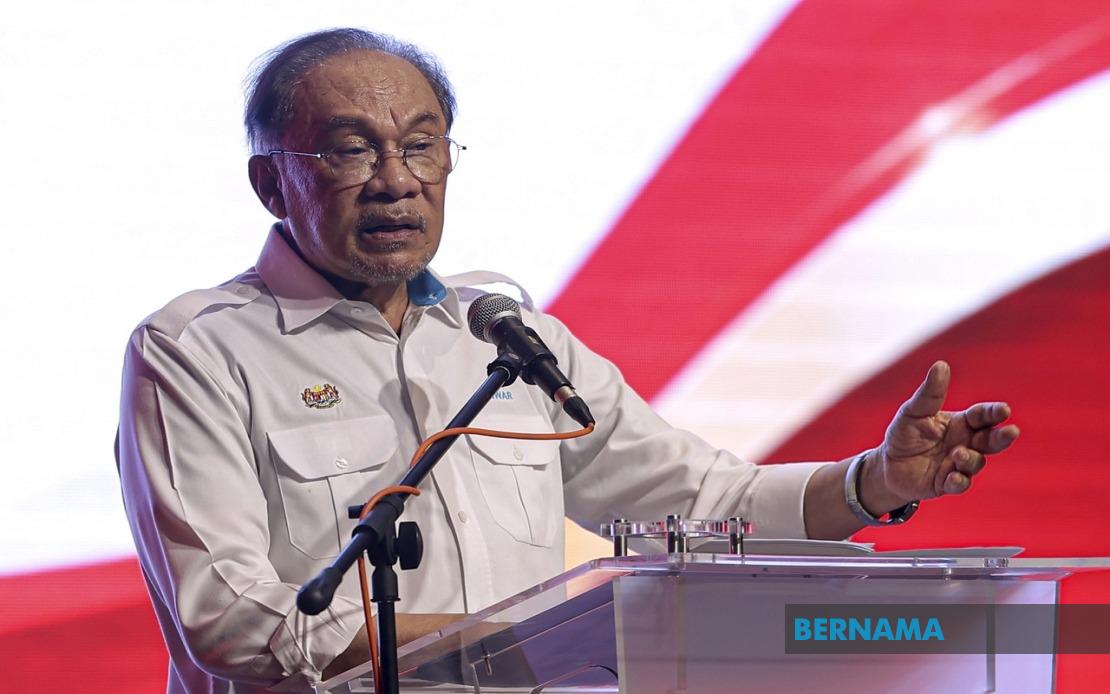
Malaysia's return to the Formula One calendar after nine years marks a significant milestone in the nation's sporting ambitions, with Prime Minister Datuk Seri Anwar Ibrahim signalling the government's commitment to democratising access to the high-profile event. Speaking in Port Dickson during an engagement with Negeri Sembilan Village Development and Security Committee leaders, Anwar outlined plans to introduce affordably-priced MADANI tickets for the Gulf Air Bahrain Grand Prix, scheduled for October 2 to 4 at the Sepang International Circuit. This initiative represents an attempt to translate the Malaysia MADANI governance philosophy into tangible policy, ensuring that citizens from varying economic backgrounds can experience the world championship spectacle.
The concept of MADANI tickets directly reflects the government's broader ideological framework emphasising collective well-being and inclusive participation in major undertakings. Rather than positioning F1 solely as an elite spectacle accessible primarily to wealthy patrons and corporate clients, the administration seeks to expand the tent and invite ordinary Malaysians into the experience. Anwar acknowledged during the gathering that citizens have explicitly requested such tiered pricing, recognising that international sporting events often price out middle and lower-income segments of society. The government's willingness to study this proposal demonstrates responsiveness to public sentiment and an understanding that mega-events carry greater legitimacy when their benefits extend across demographic layers.
The Prime Minister was candid about the practical trade-offs inherent in discounted ticket pricing, explicitly stating that purchasers of MADANI-priced seats should not anticipate premium vantage points. He humorously cautioned that affordable ticket holders would be seated "a little further away" from the action rather than commanding the expensive front-row positions typically reserved for corporate sponsors and high-paying customers. This transparent communication manages expectations while still presenting the offer as genuine value. For Malaysian families and motorsport enthusiasts operating on modest budgets, obtaining legitimate access to a Formula One Grand Prix—even from general seating areas—represents a remarkable opportunity that would otherwise be financially prohibitive given typical international pricing structures for such events.
Sepang International Circuit's hosting of this grand prix concludes a nine-year hiatus from the F1 calendar following the Malaysian Grand Prix's discontinuation in 2017. The previous iteration ran annually from 1999 through 2017, establishing the circuit as an established venue in F1's international rotation. However, escalating hosting costs and increasingly burdensome licensing fees rendered the arrangement economically unsustainable for Malaysian stakeholders. The return to the calendar now reflects either improved financial terms negotiated with Formula One Management or increased governmental willingness to subsidise hosting expenses. Anwar's framing emphasises that Malaysia's selection among competing nations reflects recognition of the country's stability, peacefulness, robust economy, and extensive diplomatic relationships—factors that presumably provided Malaysia competitive advantage over rival bidding nations.
The Prime Minister articulated a comprehensive vision of F1's cascading economic benefits extending across multiple sectors of the Malaysian economy. Tourism arrivals would surge with international spectators, race teams, officials, and media descending upon the country. Aviation capacity would tighten as Malaysia Airlines, AirAsia, and other carriers accommodate heightened passenger demand. The hospitality sector—hotels, restaurants, transportation services—would operate at maximum capacity and premium pricing during the three-day event window. Local businesses throughout the Klang Valley and surrounding regions would experience commercial uplift from visitor expenditure. This multiplier effect represents the genuine rationale for government investment in hosting prestigious international events: the economic stimulus extends far beyond the motorsport venue itself into interconnected commercial ecosystems.
The context of Malaysia's F1 return carries deeper significance within Southeast Asia's broader competition for sporting prestige and international soft power. Singapore has hosted the Formula One night race since 2008, establishing itself as the region's premier motor racing destination. Thailand has pursued various motorsport initiatives. Indonesia and Vietnam have invested in circuit infrastructure and racing development. Malaysia's reclamation of F1 hosting status therefore represents a reassertion of the nation's position within regional sporting hierarchies and global event calendars. For a middle-income country navigating complex geopolitical and economic currents, hosting marquee international sporting events provides tangible demonstration of capability, stability, and attractiveness to global audiences and investment flows.
The government's explicit consideration of inclusive ticketing models suggests awareness that mega-event hosting increasingly faces domestic political scrutiny regarding equitable access and public benefit distribution. Citizens of host nations frequently criticise arrangements where international events generate revenues captured primarily by corporate entities and international governing bodies, with local populations priced out of participation. By proactively designing MADANI ticket tiers, the Malaysian government attempts to preempt such criticism and build broader public enthusiasm for the F1 investment. This approach acknowledges that sporting events sustained principally by corporate and foreign spectators risk generating public resentment rather than national pride among domestic constituencies.
The October timing positions the grand prix during Malaysia's school holidays, potentially facilitating family attendance and extending viewership beyond typical adult motorsport audiences. The Sepang circuit's location within the greater Kuala Lumpur metropolitan area provides accessibility advantages compared to more remote international venues. These practical considerations enhance the plausibility of attracting substantial domestic attendance, which appears central to the government's justification for hosting and reinvigorating public enthusiasm for the sport following the thirteen-year absence since the Malaysian Grand Prix's last staging in 2017.
Anwar's announcement occurred within a broader political context where the MADANI framework serves as the defining conceptual architecture for the current administration's governing approach. Translating this philosophy into concrete policy outcomes across diverse governmental functions—whether motorsport, healthcare, education, or housing—becomes essential for maintaining political credibility and demonstrating tangible delivery on ideological commitments. The F1 grand prix thus becomes not merely a sporting event but a test case for whether Malaysia MADANI represents substantive governance transformation or primarily rhetorical repackaging of existing approaches. The visibility and prestige of the Formula One platform amplifies the symbolic importance of equitable access initiatives, potentially establishing precedents influencing how future mega-events are structured and packaged for domestic consumption.
As Malaysia prepares for the October grand prix, the government faces implementation challenges translating the MADANI ticket concept into practical ticketing architecture. Questions remain regarding the precise pricing differential between standard and MADANI tiers, the quantity of MADANI allocations, distribution mechanisms ensuring genuine public access rather than capture by connected elites, and coordination with international F1 organisers potentially unfamiliar with or sceptical of tiered pricing models. The success of this initiative will substantially influence both public perception of the grand prix and broader assessment of whether Malaysia MADANI represents meaningful policy innovation or primarily symbolic gesturing.

