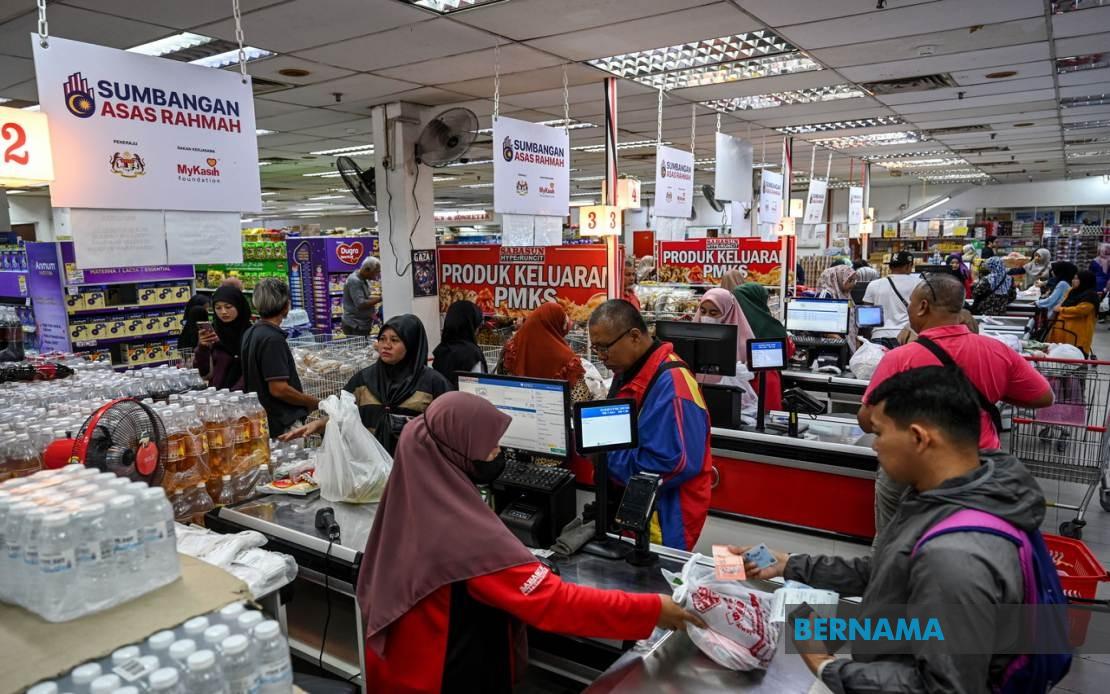
Prime Minister Datuk Seri Anwar Ibrahim has signalled openness to expanding the scope of Malaysia's two major cash assistance programmes for lower-income households, contingent on whether the national economy strengthens sufficiently to accommodate higher spending. Speaking during a community engagement event in Ipoh, the Prime Minister stated that the government continues to evaluate options for increasing payouts under both the Sumbangan Tunai Rahmah (STR) and Sumbangan Asas Rahmah (SARA) schemes, which have formed the cornerstone of the MADANI administration's social safety net approach since assuming office.
The announcement reflects ongoing consultations between the Prime Minister's office and the Treasury on fiscal sustainability and budgetary allocation priorities. Anwar disclosed that he had recently met with Treasury secretary-general Tan Sri Johan Mahmood Merican to discuss the mechanics and feasibility of expanding assistance levels for current beneficiaries. Such deliberations are now feeding into preparations for the forthcoming Budget, where spending decisions across all major government programmes will be formalized. The timing of these discussions underscores the government's recognition that relief measures require careful calibration against broader macroeconomic considerations and competing fiscal demands.
For Malaysian households already enrolled in either the STR or SARA programmes, the Prime Minister's remarks carry practical implications. These schemes have provided crucial income support to millions of Malaysians facing cost-of-living pressures, particularly as inflation and rising expenses for utilities, transportation, and food have strained household budgets. An increase in assistance quantum would translate directly into improved purchasing power for vulnerable groups, though the precise scale of any enhancement remains undetermined pending economic performance metrics and treasury assessments of available fiscal space.
The conditional framing of potential increases—emphasizing the dependency on economic conditions—reflects the government's balancing act between supporting citizens and maintaining fiscal discipline. Malaysia's economic outlook has shown resilience in recent quarters, but global headwinds including geopolitical tensions, commodity price volatility, and potential slowdowns in key trading partners remain sources of uncertainty. By tying assistance expansion to economic performance, the government signals both commitment to helping the vulnerable and pragmatic awareness of budgetary constraints that may limit how generous increases can be.
Beyond cash transfers to households, Anwar also underscored the MADANI administration's commitment to supporting state security apparatus and volunteer personnel who contribute to national safety. The Prime Minister announced sustained commitment to the Malaysian Volunteer Corps Department (RELA), allocating RM3 million for welfare provisions this year—the same allocation as the previous year, though Anwar acknowledged this figure remains insufficient given RELA members' critical roles in responding to security incidents and natural disasters. This parallel emphasis on supporting security volunteers reflects a broader government philosophy of investing in the human infrastructure that maintains public order and disaster response capacity.
The RELA allocation signals recognition that volunteer-based security apparatus rely heavily on regular welfare support to maintain morale and retention. RELA members often undertake demanding work in hazardous conditions, from border security operations to community policing and emergency response, frequently without the comprehensive benefits packages available to professional military or police personnel. By ringfencing dedicated welfare funding, the government aims to demonstrate tangible appreciation for their sacrifice while addressing practical challenges these volunteers face in sustaining their commitment to national service.
For Southeast Asian observers, Malaysia's approach to means-tested cash transfers and welfare programme expansion offers instructive lessons about navigating the tension between social spending and fiscal prudence. As regional economies grapple with inflation and cost-of-living crises affecting large population segments, the question of how to sustainably expand targeted assistance remains pertinent across ASEAN. Malaysia's framework of conditioning benefit increases on demonstrated economic capacity provides a model that balances political commitments to vulnerable populations with fiscal reality.
The upcoming Budget will prove decisive in determining whether the government's stated openness to higher STR and SARA payments translates into concrete enhancement. Treasury officials and the Prime Minister's economic advisers will need to reconcile multiple pressures—demands for enhanced social spending, infrastructure investment commitments, debt servicing obligations, and maintenance of sufficient fiscal buffers for economic shocks. The articulation of criteria determining whether economic conditions are sufficiently favourable will similarly shape public expectations and political discourse surrounding the final Budget outcome.
Looking ahead, the trajectory of these assistance schemes carries significance extending beyond immediate beneficiary populations. How successfully the government expands social spending without compromising long-term fiscal sustainability will influence investor confidence, currency stability, and Malaysia's creditworthiness in international capital markets. The MADANI administration's demonstrated capacity to enhance welfare provision responsibly—expanding programmes when conditions permit while exercising restraint during uncertainty—may become a defining characteristic of its economic stewardship and social contract with voters.

