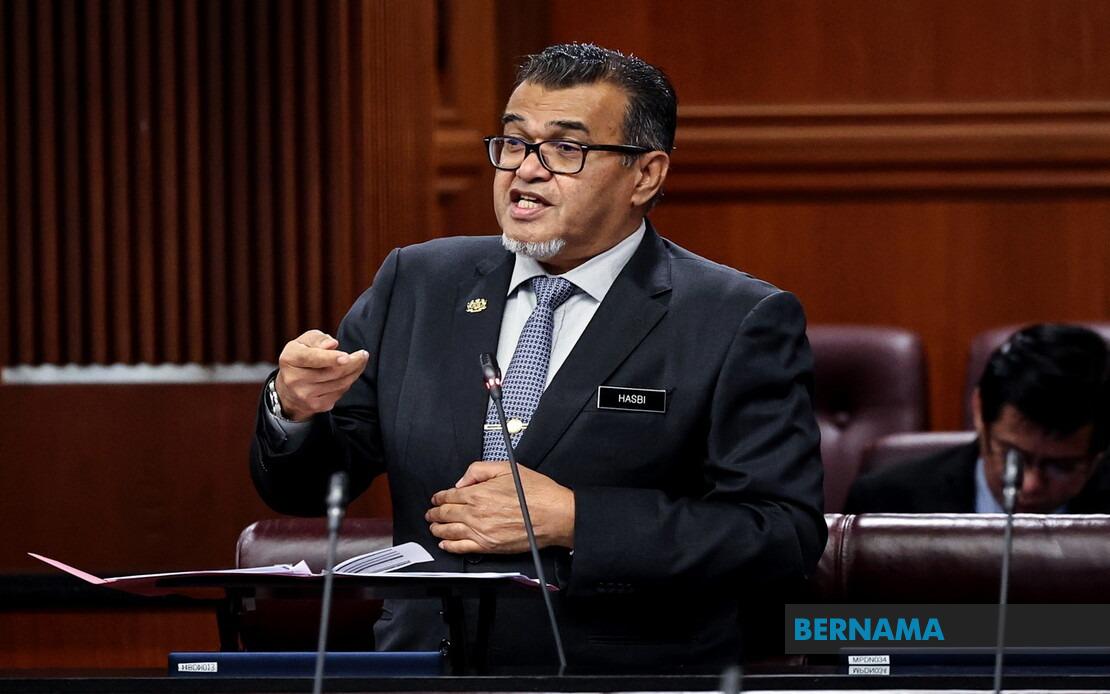
The Malaysian government is moving to strengthen its legal arsenal against railway crime, with Deputy Transport Minister Datuk Hasbi Habibollah confirming that Parliament will soon consider comprehensive amendments designed to crack down on trespassing, vandalism, and theft targeting rail infrastructure. Speaking during question time in the Dewan Rakyat, Hasbi outlined a multifaceted approach that recognises the inadequacy of current legislation in deterring offenders and protecting one of the nation's critical transport assets.
The problem demanding legislative attention is substantial. Over the past three years, authorities have documented 393 separate cable theft incidents affecting approximately 19,756 metres of cable infrastructure, translating to an estimated RM16.3 million in losses. These figures underscore the scale of systematic theft plaguing Malaysia's railway network and the growing sophistication of criminals targeting valuable copper and aluminium conductors. Cable theft remains particularly damaging because it disrupts service reliability, compromises safety systems, and imposes significant costs on operators and commuters alike.
Current penalties demonstrably fail to deter wrongdoing. Trespassing on railway property carries only RM500 to RM1,000 in fines—a negligible punishment relative to the value of stolen materials and the profits criminals realise through black-market sales. Hasbi emphasised that the incoming amendments would fundamentally reshape the penalty framework, introducing substantially heavier sentences particularly for cable theft involving security-critical infrastructure. This recalibration aims to shift the cost-benefit calculation that criminals perform, making the risks of prosecution and conviction outweigh potential gains.
Beyond legislative reform, the government is pursuing a supply-side strategy targeting the scrap metal ecosystem that transforms stolen cables into profit. By strengthening coordination with the Royal Malaysian Police and engaging directly with scrap dealers and operators, authorities seek to disrupt the entire criminal value chain. Hasbi characterised this approach as essential to breaking market incentives for theft, recognising that stealing cable becomes economically unviable when disposal channels are restricted or monitored. This intelligence-led enforcement model reflects growing appreciation for tackling organised crime at its root rather than merely catching individual offenders.
Technological investment complements legislative and enforcement efforts. The Railway Assets Corporation has installed 1,146 intelligent CCTV units across high-risk locations at a cost of RM14 million, leveraging artificial intelligence to detect unusual activity and accelerate response times. This surveillance infrastructure concentrates resources where theft concentrates geographically, allowing monitoring of remote or vulnerable sections that traditional patrols cannot cover efficiently. AI-powered systems improve detection accuracy and reduce false alarms, increasing operational efficiency compared to conventional CCTV.
Aerial surveillance adds another dimension to the security perimeter. Drone operations extend coverage into terrain difficult to access by foot or vehicle, particularly relevant for railways traversing challenging topography across Peninsular Malaysia, Sabah, and Sarawak. Drones enable rapid reconnaissance of suspected hotspots and provide real-time intelligence to ground teams responding to reports of theft in progress, improving the likelihood of catching offenders during the act.
The acquisition of 20 scrambler motorcycles for Auxiliary Police represents a tactical innovation addressing the fundamental challenge of coverage and response speed. Rail corridors often traverse rural areas where foot patrols prove impractical and vehicle patrols slow. Motorcycles allow rapid movement along trackside paths and respond quickly to incident reports, strengthening the visible enforcement presence that deters opportunistic theft and aids apprehension of offenders. This expansion of patrol capacity demonstrates a commitment to saturating high-risk zones with security presence.
For Malaysian commuters and freight users, these measures should translate into more reliable services and reduced operational disruptions caused by cable theft and vandalism. The rail network underpins economic efficiency across the Klang Valley, Penang, and other urban corridors, making service reliability directly consequential for business productivity and commuter experience. Supply chain predictability improves when transport infrastructure operates without unexpected failures stemming from deliberate sabotage.
The legislative amendments represent acknowledgment that reactive enforcement cannot succeed against systematic theft without structural deterrence. By raising penalties, tightening the supply chain for stolen goods, and deploying integrated surveillance and patrol systems, the government signals seriousness about protecting public assets. The timeline for parliamentary consideration remains modest—reforms are expected this year—though parliamentary schedules sometimes slip. Implementation effectiveness will ultimately depend on enforcement consistency, prosecutorial commitment, and whether penalties are sufficient to maintain deterrence as criminal networks adapt tactics.
Regionally, Malaysia's approach mirrors initiatives underway across Southeast Asia, where railway theft and vandalism threaten transport sustainability. Neighbouring countries including Thailand and Indonesia have grappled with similar challenges, suggesting that coordinated regional approaches might eventually emerge. The integration of technology, intelligence-led enforcement, and supply-chain disruption reflects international best practice in critical infrastructure protection, positioning Malaysia competitively as other governments wrestle with comparable threats to transport networks.

