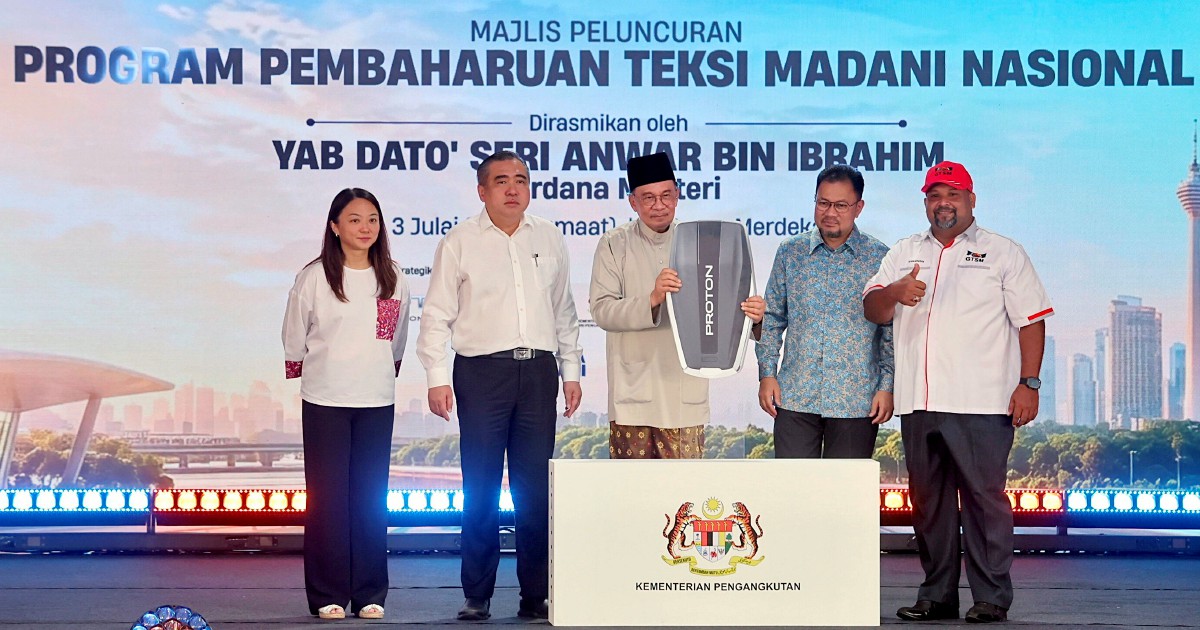
Prime Minister Datuk Seri Anwar Ibrahim has announced cabinet approval for an additional RM10 million in matching grant funding to accelerate the replacement of ageing taxis across Malaysia. The enhancement to the existing scheme represents a significant injection of capital aimed at rejuvenating a sector that has struggled to meet contemporary standards and passenger expectations whilst maintaining financial viability.
The matching grant model operates as a cost-sharing mechanism between government and participating taxi operators, effectively doubling the impact of each ringgit allocated to the replacement initiative. By structuring the programme as a matching fund, the government incentivises active participation from cab owners whilst maintaining fiscal discipline. This approach spreads the financial burden across both public coffers and private stakeholders, creating a more sustainable pathway for fleet modernisation than outright government subsidies alone.
Malaysia's taxi industry has faced mounting challenges in recent years as competition from ride-hailing platforms such as Grab and Uber has intensified, whilst an ageing vehicle fleet compromises service quality and environmental standards. Many operators struggle with the dual pressures of stagnant or controlled fares and rising operational costs, making vehicle replacement an aspirational rather than achievable goal for smaller players. The government's intervention through targeted financing mechanisms acknowledges these structural constraints whilst avoiding the pitfalls of open-ended subsidy systems.
Taxi operators have long petitioned for assistance with fleet renewal, arguing that outdated vehicles undermine competitiveness against digital platforms offering newer, more comfortable transportation options. Vehicles operating beyond their intended lifecycle accumulate maintenance expenses whilst offering diminishing reliability and customer appeal. The replacement scheme directly addresses grievances about unfair competitive dynamics whilst supporting broader government objectives around modernising transport infrastructure and reducing emissions from older combustion engines.
The timing of this funding announcement reflects broader policy adjustments as the government rebalances its relationship with traditional transport sectors facing digital disruption. Rather than resisting technological change or attempting to insulate the taxi industry from competition, the administration is instead enabling structural transformation by facilitating infrastructure upgrades. This pragmatic approach recognises that sustainability ultimately depends on operators possessing viable equipment rather than on regulatory protection alone.
Regional parallels exist across Southeast Asia, where similar schemes in Singapore and Thailand have supported taxi fleet modernisation during periods of platform-driven market disruption. Malaysia's phased approach through matching grants avoids the inefficiencies observed in other markets where vehicles purchased through fully-subsidised programmes sometimes remained underutilised or poorly maintained. By requiring operators to contribute their own capital, the government ensures serious commitment and ongoing stewardship of renewed assets.
The RM10 million allocation must be understood within the context of broader transport financing commitments. Whilst substantial in local terms, the sum remains modest relative to the total size of Malaysia's taxi fleet and the cumulative replacement need. Implementation will likely require careful prioritisation, with authorities potentially targeting routes and operators where replacement generates maximum benefit in terms of service reliability, passenger satisfaction, and emissions reduction.
Geographical distribution of funding will prove crucial, given that urban centres like Kuala Lumpur, George Town, and Johor Bahru face different fleet age profiles and replacement pressures compared to secondary cities. Operators in major tourist corridors may prioritise vehicle renewal for competitive reasons, whilst those in smaller towns might require additional incentive structures. The matching grant framework allows flexible application across diverse operating environments rather than imposing uniform requirements.
The announcement carries implicit acknowledgement of taxi operators' financial precarity. Many incumbents operate on thin margins, making voluntary capital expenditure difficult without external support. By making vehicle replacement financially feasible through matching grants, the government simultaneously stabilises operator livelihoods and protects consumer interests through improved service standards. This balancing act reflects sophisticated understanding of how transport policy affects not merely mobility but economic viability across supply chains.
Looking forward, the success of this expanded scheme will inform broader transport sector policy. If taxi operators rapidly uptake available matching grants and demonstrate genuine commitment through their own contributions, the government may consider further tranches of funding. Conversely, tepid response would signal either that funding levels remain inadequate or that structural barriers beyond financing prevent fleet modernisation, potentially necessitating alternative policy approaches.
The programme's environmental implications merit consideration alongside economic dimensions. Replacing ageing vehicles with modern alternatives typically reduces fuel consumption and emissions per passenger-kilometre, contributing incrementally to national climate commitments. Whilst taxi replacement alone cannot solve Malaysia's transport emissions challenge, it represents targeted intervention within a sector where government influence remains meaningful, contrasting with the intractability of private vehicle choices.
Industry observers will monitor implementation details closely, including application procedures, approval criteria, and timeline for fund disbursement. Clear guidelines and streamlined administration will prove essential to translating government commitment into tangible fleet improvements. Transparency regarding beneficiary selection and asset tracking will also help establish accountability and prevent misallocation of public resources.
This funding commitment demonstrates the administration's willingness to support traditional sectors navigating digital disruption through targeted infrastructure investment rather than protectionist measures. As Malaysia advances its transport agenda, balancing modernisation with social considerations will remain central to policymaking.

