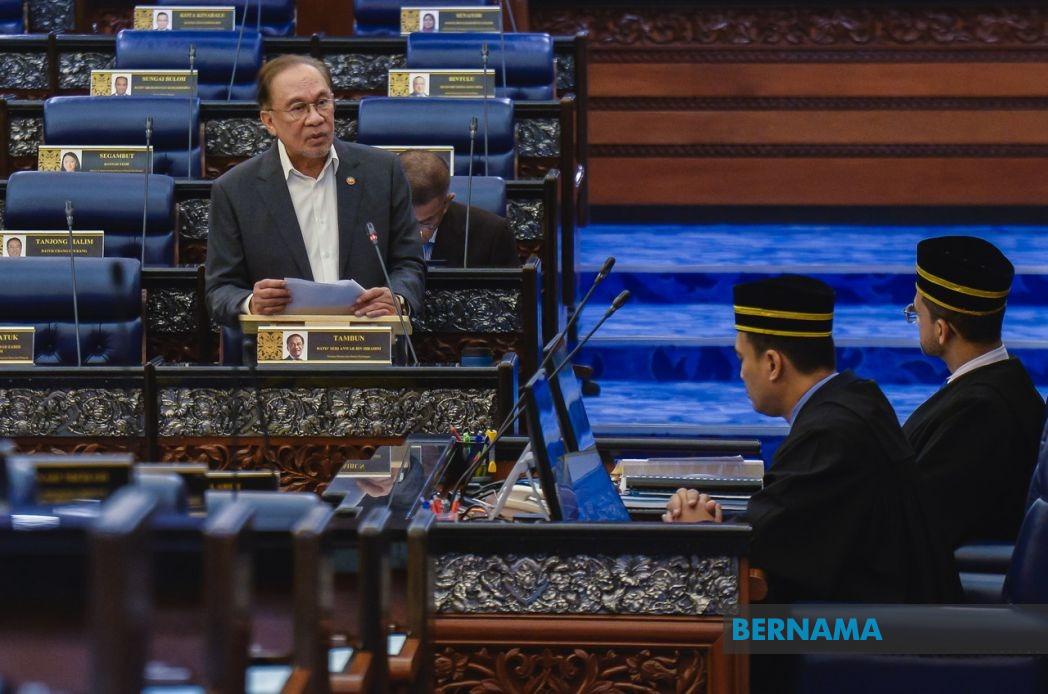
Prime Minister Datuk Seri Anwar Ibrahim moved to dispel misconceptions about government restrictions on activities in Federal Land Development Authority settlements, emphasizing during parliamentary questioning that no blanket ban exists on programmes being held in these communities. His remarks came in response to queries raised in the Dewan Rakyat and represent an attempt to clarify what he characterised as misunderstandings about the administration's approach to FELDA areas.
The clarification addresses concerns that had surfaced regarding the cancellation or prevention of events in FELDA zones, with particular reference to the FELDA Settlers' Day programme that was originally scheduled for Kluang in Johor on June 20 and 21. Anwar explicitly denied having issued any directive to cancel this specific event, positioning the government's stance as one that distinguishes between permitting community activities and restricting the use of state resources for partisan political purposes.
Under Malaysian electoral law, a clear distinction exists between the right of political figures to organise and conduct public programmes and the prohibition against utilising government machinery and resources to advance campaign objectives. Anwar articulated this principle by noting that state governments retain full autonomy to hold events within FELDA settlements, provided such activities do not constitute an abuse of official government apparatus. The restriction, he emphasised, targets the manner in which programmes are conducted rather than their existence.
The Prime Minister specifically referenced the authority of menteri besars to enter FELDA communities and organise their own events without interference, suggesting that elected state leaders face no impediment in this regard. He extended this reasoning to matters of land administration, acknowledging that state governments possess the prerogative to issue land titles within their jurisdictions, though such actions must remain consistent with electoral regulations. This distinction between substantive governmental powers and campaign-related constraints forms the intellectual core of his defence.
FELDA settlements occupy a particular place within Malaysia's rural development landscape, representing decades of federal investment in land colonisation schemes intended to uplift smallholder farmers and their families. The sensitivity surrounding these communities extends beyond their economic function to encompass their political significance as constituencies where rural voters have historically demonstrated considerable influence during general elections. Control of the narrative regarding development initiatives and government support in these areas therefore carries implications for both policy implementation and electoral competition.
Anwar's government has articulated a broader development agenda for FELDA communities, framed as corrective intervention following what the administration characterises as years of inadequate attention and mismanagement. Among the concrete initiatives mentioned are the establishment of dialysis centres within settlements and the expansion of development infrastructure through federal government bodies. Deputy Prime Minister Datuk Seri Dr Ahmad Zahid Hamidi has been positioned alongside Anwar in championing this revitalisation effort, suggesting a coordinated cabinet-level commitment to addressing alleged deficiencies in FELDA support.
The historical context enriches understanding of the current dispute. Many FELDA settlements have experienced stagnation in recent decades, with ageing infrastructure, limited economic diversification, and demographic challenges as settlers retire or migrate to urban areas. Previous administrations' approaches to these communities varied, and the current government appears to be leveraging the development agenda as both a legitimate policy initiative and a means of reasserting federal government presence and relevance in these territories. This dual purpose explains why clarifications about programme restrictions become politically significant.
The distinction Anwar draws between administrative programmes and election campaigning reflects broader constitutional and legal principles governing government conduct during electoral periods. In Malaysian practice, the line between public administration and campaign activity becomes contested terrain, particularly when political figures in office undertake public events that serve simultaneously as governance activities and party political functions. Elections Commission guidelines and statutory regulations attempt to define this boundary, though application remains subject to interpretation and dispute.
For FELDA settlers themselves, the practical implications of this clarification matter considerably. Many depend on government-organised programmes for information dissemination, service delivery, and community engagement. If programmes are cancelled or restricted, whether for campaign-related reasons or others, the impact falls directly on beneficiary communities. Conversely, settlers' perception of whether they receive equitable treatment across different political administrations influences electoral behaviour, creating incentives for both government and opposition to demonstrate commitment to these constituencies through visible developmental activity.
The broader political context reflects tensions within Malaysia's coalition politics, where component parties and state governments sometimes operate under different leadership and pursue competing agendas. A state government controlled by one coalition partner might attempt to organise activities that a federal government led by different parties views with suspicion regarding electoral intent. Anwar's clarification attempts to establish objective criteria—focusing on resource use rather than partisan identity—to adjudicate such disputes, though this approach may itself face challenges in practical application.
Regional observers note that FELDA governance touches on enduring questions about federal-state relations, land administration authority, and the proper boundary between legitimate political activity and government machinery. Southeast Asia's federal and quasi-federal systems grapple with similar tensions, making Malaysia's approach instructive for comparable contexts. The resolution of these questions shapes not merely immediate electoral dynamics but also long-term confidence in institutional governance and rule-based adjudication of political disputes.
Looking ahead, Anwar's government faces the challenge of demonstrating through actual programme delivery that its development commitments to FELDA communities reflect substantive policy rather than rhetorical positioning. The credibility of clarifications regarding restrictions on activities depends ultimately on whether settlers perceive genuine improvement in services and support. Whether opposition-controlled state governments will accept the distinction between programme prohibition and campaign-machinery restriction remains an open question, particularly if electoral competition intensifies in coming years.

