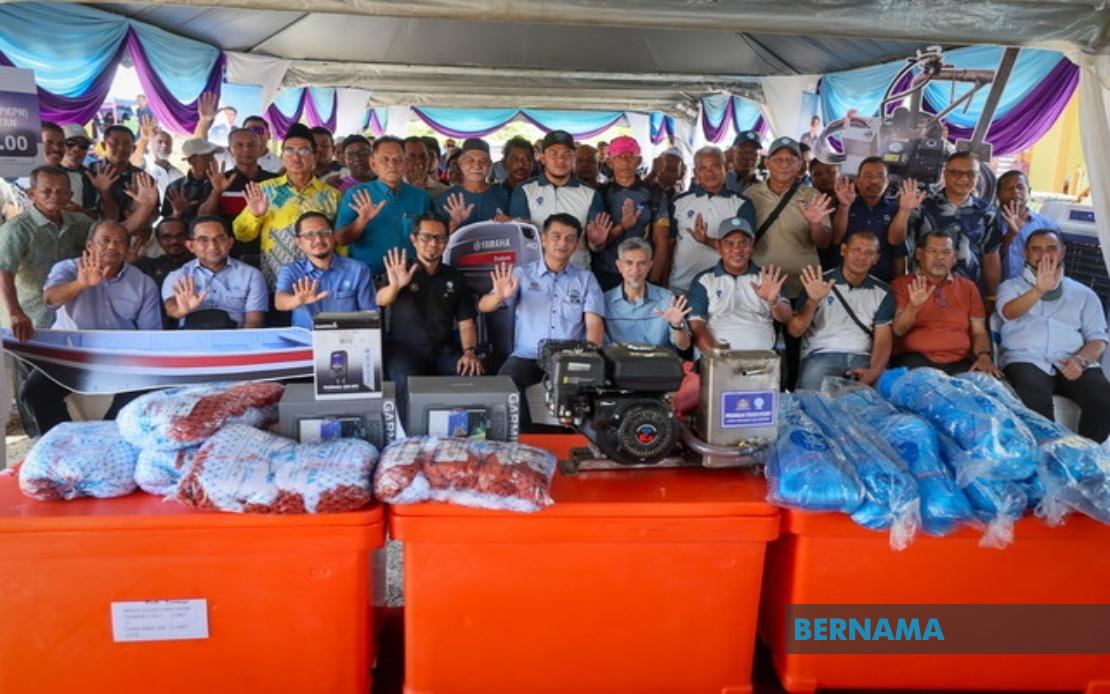
The Malaysian government is directing RM10 million toward the Special Fishermen Housing Project (PKPN) in 2024, marking a significant push to uplift living conditions within the nation's fishing communities. The Fisheries Development Authority of Malaysia (LKIM), which oversees the initiative, has structured the funding into two distinct streams: renovation of existing homes and construction of new residential units for qualified fishermen across the country. Muhammad Faiz Fadzil, chairman of LKIM, outlined the strategy during an engagement session with Kelantan fishermen, revealing how the agency intends to deploy resources strategically across regions with differing economic capacities.
The breakdown of this year's allocation demonstrates a pragmatic approach to housing improvement. Approximately RM6.8 million has been designated for repairing 344 fishermen's homes nationwide, representing the bulk of the expenditure and reflecting the immediate need to address deteriorating housing stock within established fishing communities. In contrast, RM3.1 million is being channelled toward constructing 36 entirely new residential units, a smaller but symbolically important component that signals government intent to expand housing capacity for growing or displaced fishing families. This division acknowledges that while many fishermen require urgent repairs to existing dwellings, a parallel stream of new construction addresses longer-term demographic and resettlement needs.
Progress on the repair component is advancing steadily, with Muhammad Faiz noting that work has reached 80 percent completion and should be finalised by August or September 2024. The construction of new houses, however, faces more complex hurdles. Rather than simple construction delays, the slowdown reflects intricate land ownership and inheritance issues that require careful navigation and documentation. These obstacles underscore broader challenges within Malaysia's rural property landscape, where informal tenure arrangements and multi-generational claims complicate formal development projects. Such impediments, while frustrating, reflect genuine complexities that cannot be rushed without risking legal disputes or displacement of vulnerable households.
The funding structure varies significantly between peninsular and East Malaysian states, accounting for regional cost differences and economic disparities. Peninsular Malaysia receives RM84,000 per unit for new housing construction, whilst Sabah and Sarawak receive RM95,000 per unit, reflecting higher construction and logistics costs in these regions. For repair work, the government is providing up to RM20,000 per house regardless of location, a standardised approach that may prove adequate for basic structural improvements but might fall short in areas with severe deterioration. Kelantan, a major fishing centre, has received RM388,000 in dedicated allocation this year, demonstrating focused support for one of Malaysia's primary fishing hubs.
Beyond bricks and mortar, LKIM is simultaneously pursuing a transformative vision for the fishing sector itself. Recognising that traditional fishing faces mounting pressures from resource depletion and volatile operational costs, the agency is actively encouraging fishermen to transition toward aquaculture ventures. This pivot represents a critical strategic recognition that conventional fishing alone cannot sustain the economic wellbeing of Malaysia's fishing communities indefinitely. Rising fuel expenses, despite government subsidies, continue to compress profit margins for boat operators, whilst fish stocks in Malaysian waters face mounting pressure from decades of intensive harvesting and environmental degradation.
The government has set an ambitious target: by 2030, aquaculture should account for 40 percent of Malaysia's total fish production. This aspiration, whilst technologically achievable, represents a significant departure from the historical reliance on wild capture fisheries. Achieving this target requires substantial investment in training, infrastructure, and working capital for fishermen willing to take entrepreneurial risks in farming seafood. LKIM recognises that fishermen cannot be expected to self-finance this transition, particularly those operating at subsistence margins. The allocation of RM400,000 to the Kelantan State Fishermen's Association (PENEKA) specifically for tank-based prawn farming demonstrates this commitment, providing seed capital for pilot operations that can demonstrate viability and generate returns.
The aquaculture initiative carries implications extending beyond household income stabilisation. Tank-based prawn farming and similar ventures require minimal water resources compared to traditional fish ponds, making them viable in water-scarce regions and reducing pressure on natural water bodies already stressed by pollution and overuse. These systems also generate employment opportunities in related sectors—equipment suppliers, feed manufacturers, processing facilities—creating economic multiplier effects throughout fishing communities. Furthermore, aquaculture production can be scheduled and regulated more predictably than wild-catch fisheries, facilitating food security planning and export consistency, valuable advantages in competitive international seafood markets.
The initiative's expansion to other states signals that Kelantan's aquaculture project serves as a proof-of-concept model. LKIM's willingness to build on early successes and replicate them across Malaysia suggests a learning-oriented approach that can adapt to local conditions and resource availability. Different regions possess varying suitability for different aquaculture species; coastal areas might optimise for brackish-water prawn farming whilst inland freshwater regions could develop tilapia or catfish operations. This flexibility allows the programme to align with natural resource endowments whilst building diverse income streams across the fishing community.
The combined housing and sectoral diversification strategy reflects an evolved understanding within Malaysian policymaking that social welfare and economic resilience are mutually dependent. Providing adequate housing addresses immediate human dignity concerns, reducing financial stress on families and enabling more stable home environments where children can study and adults can recover from physically demanding work. Simultaneously, encouraging aquaculture participation addresses long-term economic sustainability by developing skill sets and income sources less vulnerable to resource depletion and price volatility. This dual approach avoids the trap of temporary relief without structural change, instead building foundations for intergenerational economic stability within fishing communities.
For Malaysian policymakers overseeing rural development and sectoral transition, this initiative offers lessons applicable beyond fisheries. As economic structures evolve and traditional livelihoods face pressures from depletion or globalisation, targeted housing investment combined with skills development and entrepreneurial support can facilitate dignified transitions. The RM10 million commitment, whilst significant, represents a strategic investment in social stability and economic resilience that may yield outsized returns through improved community health, education outcomes, and productive participation in emerging sectors. Monitoring implementation will be crucial; success will require addressing the identified land ownership complications, ensuring equitable distribution of opportunities across fishing communities, and building genuine capacity within participants to succeed in aquaculture ventures.

