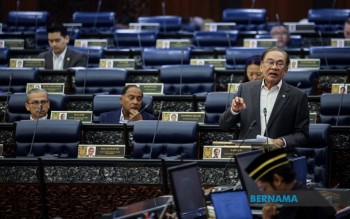
The Malaysian government has unveiled a comprehensive e-invoice compliance initiative designed to ease the regulatory burden on the business community, particularly smaller enterprises that form the backbone of the nation's economy. Prime Minister Datuk Seri Anwar Ibrahim, speaking in his capacity as Finance Minister during parliamentary question time, outlined the e-Invoice Voluntary Declaration Programme, which will remain open until December 31, 2027, and represents a significant departure from conventional tax administration practices.
The voluntary declaration scheme allows businesses to make updates, review their records, and correct previous submissions without fear of sanctions from the Inland Revenue Board of Malaysia. This amnesty-like approach is notably uncommon in Malaysian income tax proceedings, signalling the government's recognition that the transition to digital invoicing has created genuine hardship for many operators, particularly those in the micro and small enterprise categories who lack dedicated accounting infrastructure. By removing the penalty dimension from voluntary compliance activities, authorities are acknowledging that technical oversights and administrative delays often stem from resource constraints rather than deliberate tax avoidance.
The initiative addresses concerns raised by Lee Chuan How, Member of Parliament for Ipoh Timor representing Pakatan Harapan, who questioned how the MADANI administration was tackling the mounting pressures facing the business sector amid volatile global economic conditions. The question reflected widespread anxiety within the entrepreneurial community about rising compliance costs coinciding with inflationary pressures and uncertain market conditions. The government's response demonstrates a deliberate policy shift toward business-friendly regulation without compromising revenue collection objectives.
Accompanying the voluntary declaration programme is an accelerated tax incentive mechanism that permits businesses to claim full capital allowance on eligible e-invoice implementation expenses within a single fiscal year. This expedited depreciation approach reduces the time businesses must wait to recover their technology investments, effectively lowering the real cost of digital system adoption. For enterprises operating on tight margins, this acceleration translates into immediate cash flow benefits during the critical implementation phase.
These measures represent recognition that digital transformation, while necessary for modernising tax administration and combating revenue leakage, cannot be imposed uniformly across businesses of vastly different operational scales and technological sophistication. The government's tiered approach acknowledges that a restaurant operator managing daily cash transactions faces fundamentally different implementation challenges than a manufacturing concern with complex supply chain documentation requirements.
In December 2025, the authorities had already adjusted the income threshold for e-invoice exemption from RM500,000 to RM1 million, a decision that provided relief to over one million taxpayers who previously fell within the mandatory compliance category. This threshold elevation recognised that the compliance burden's relative weight differs significantly between an enterprise grossing RM600,000 annually and one exceeding RM2 million. By raising the floor, the government reduced the compliance universe while maintaining coverage of economically significant business activities.
The voluntary declaration component proves particularly significant for businesses that may have struggled with initial implementation deadlines or operated in sectors where invoicing practices evolved inconsistently. Small retailers, service providers, and contractors operating across multiple jurisdictions often face challenges coordinating systems changes across various regulatory authorities. The penalty-free window provides practical space for these operators to achieve full compliance without the catastrophic financial consequences that would otherwise accompany discovered discrepancies.
From a regional perspective, Malaysia's approach contrasts with some neighbouring jurisdictions where digital tax compliance has been implemented more rigidly. The voluntary declaration model may serve as a template for other Southeast Asian nations grappling with similar transitions, suggesting that developmental state capacity building benefits from flexibility in implementation timelines rather than rigid enforcement from inception. The success of this Malaysian initiative could influence how other ASEAN members balance revenue modernisation with business competitiveness.
The policy also reflects broader macroeconomic concerns about MSME survival rates during periods of elevated interest rates and reduced consumer spending. By reducing the regulatory cost of doing business, the government acknowledges that tax compliance expenses represent real drains on operational capital for enterprises with minimal administrative staff. When a five-person business must hire external accountants to manage digital invoicing compliance, the resulting costs can consume margins that otherwise support employment and investment.
The three-year timeframe extending to December 31, 2027, provides substantial runway for systematic business adjustment without artificial deadline pressure. This extended horizon allows enterprises to integrate e-invoicing into their normal accounting cycles during periodic system upgrades rather than forcing emergency implementations. The extended window also permits the government to gather data on compliance challenges that emerge during the transition, enabling refinements to requirements or support mechanisms based on real-world experience.
Implementation of these measures will require effective communication to ensure businesses understand the programme's terms and the mechanics of claiming accelerated capital allowances. The Inland Revenue Board will need to develop clear guidance distinguishing between eligible implementation expenses and ordinary operational costs, preventing legitimate deductions from being improperly claimed while ensuring genuine system investment receives intended treatment.
The combined package of voluntary declaration amnesty, accelerated capital allowance claims, and the previously raised RM1 million exemption threshold represents a coordinated attempt to manage the complex transition to digital tax administration. By addressing implementation costs, compliance timelines, and administrative penalties simultaneously, the government demonstrates recognition that achieving comprehensive digital compliance requires balancing regulatory objectives with business sustainability imperatives.

