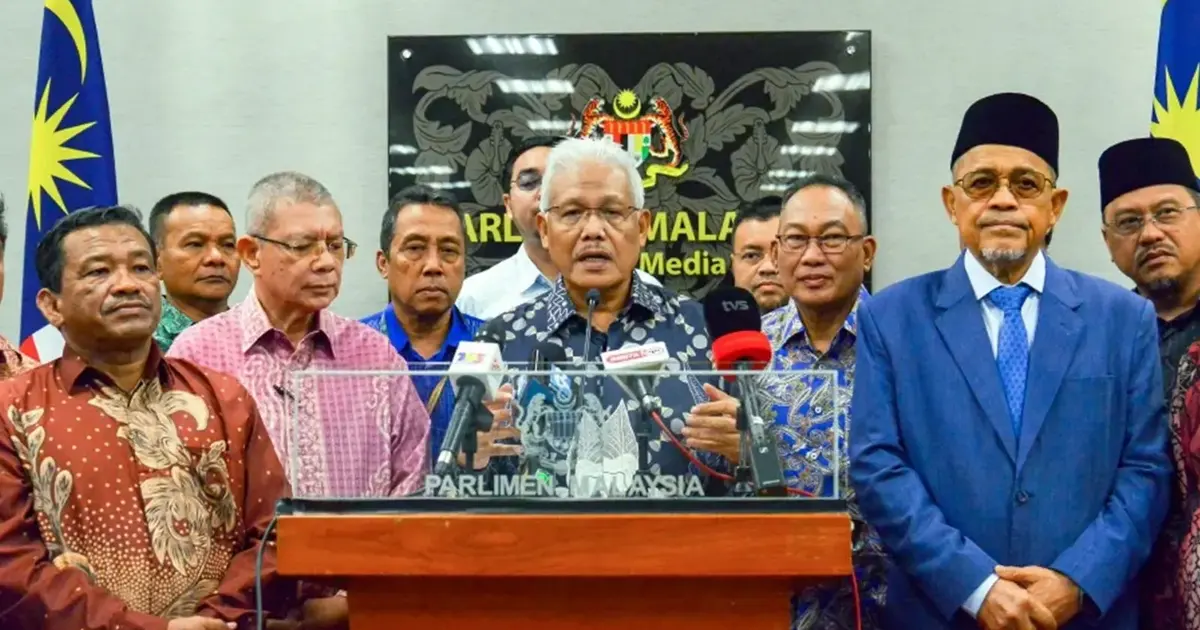
The opposition leader has demanded that the government furnish a comprehensive explanation regarding Azam Baki's recent appointment as an adviser to the National Anti-Financial Crime Centre, raising significant questions about the propriety of the decision at a time when the former Malaysian Anti-Corruption Commission chief faces mounting legal scrutiny. Hamzah Zainudin's intervention reflects growing unease within opposition circles about how senior government positions are being allocated and the transparency surrounding such appointments in the post-election political environment.
Azam Baki stepped down from his role as MACC chief in 2023 following a period marked by considerable controversy. His tenure had become increasingly contentious, with critics pointing to various governance concerns and alleged inconsistencies in the commission's operations. The appointment to the National Anti-Financial Crime Centre advisory board has therefore drawn immediate criticism from observers who question whether someone under investigation can credibly serve in an advisory capacity within Malaysia's financial crime prevention apparatus.
The core of Hamzah's objection centres on what he perceives as a fundamental contradiction in governance. An individual who is himself the subject of investigations cannot reasonably be expected to guide or advise an institution whose mandate is to combat financial misconduct and uphold the highest standards of integrity within the financial system. This concern transcends partisan politics and touches on institutional credibility—a matter of genuine consequence for Malaysia's standing in international financial oversight frameworks.
The government has not yet provided public clarification on the specific terms of Azam's appointment, the nature of his advisory responsibilities, or the scope of his involvement with the centre's operations and policy development. This opacity has fuelled speculation among political observers and civil society groups about whether the move represents a consolidation of power within the executive or a deliberate positioning of Azam ahead of potential legal proceedings.
Azam's investigative troubles stem from allegations relating to financial irregularities and improper conduct during his tenure as MACC chief. While he has consistently maintained his innocence, the ongoing scrutiny creates an awkward situation for both him and any institution that seeks to benefit from his expertise or counsel. For the National Anti-Financial Crime Centre, which operates at the intersection of banking, law enforcement, and regulatory oversight, maintaining unblemished public confidence is essential to its effectiveness.
The timing of this appointment warrants examination within the broader context of Malaysian politics and governance reform. Since the last general election, there have been recurring instances of positions being allocated to figures who remain embroiled in legal disputes or public controversies. Each such decision chips away at public perception of institutional independence and meritocratic advancement, concerns that are particularly acute in institutions responsible for financial crime prevention.
For Malaysia's regional standing, the implications are noteworthy. Southeast Asian financial regulators increasingly coordinate on anti-money laundering frameworks and cross-border financial crime investigations. When senior figures in Malaysian anti-corruption or financial crime institutions face questions about their own integrity, it inevitably affects diplomatic relationships and the confidence of partner agencies in information-sharing and joint operations.
Opposition figures like Hamzah are likely to continue pressing this issue in parliamentary proceedings, particularly when budgets and oversight mechanisms for the National Anti-Financial Crime Centre come under review. This sustained political pressure may eventually compel the government to articulate a detailed rationale for the appointment—one that satisfactorily addresses concerns about conflict of interest and institutional impartiality.
The broader question underlying this controversy concerns the kind of governance standards Malaysia wishes to establish as it navigates an increasingly complex financial and geopolitical landscape. Whether senior appointments can proceed with minimal public explanation, or whether heightened transparency and accountability are non-negotiable features of institutional decision-making, remains unresolved. The Azam Baki appointment has crystallized this tension in ways that extend well beyond a single personnel decision.

