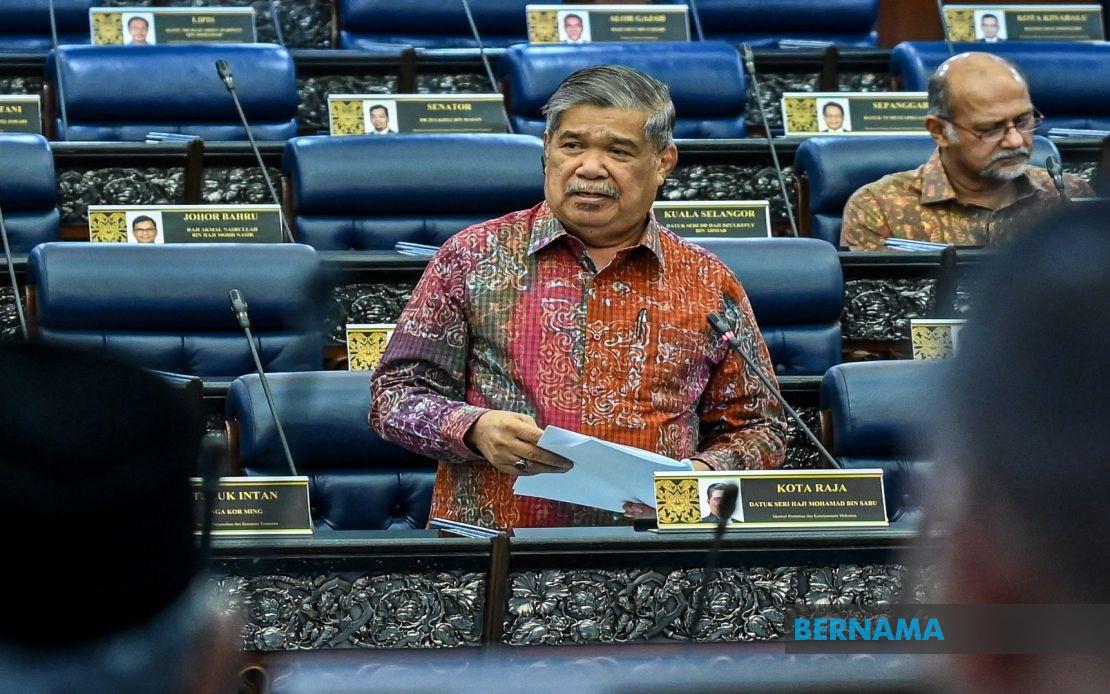
The Malaysian government is extending a lifeline to thousands of unlicensed fishermen through a regularisation programme designed to accommodate those currently operating without proper documentation. Agriculture and Food Security Minister Datuk Seri Mohamad Sabu announced in Parliament that coastal fishermen can now submit applications for fishing licences through their respective District Fisheries Offices, with the scheme operating on a periodic basis to absorb capacity gaps created when existing licences are revoked or cancelled.
The regularisation initiative represents a pragmatic approach to a persistent challenge within Malaysia's fishing sector, where informal operations have long coexisted alongside the formal licensing framework. Rather than pursuing enforcement-heavy tactics that could devastate vulnerable communities economically, the government is incentivising voluntary regularisation by offering qualified applicants a structured pathway into the legal system. This methodology acknowledges the reality that many traditional fishermen, particularly in remote coastal settlements, operate without permits due to bureaucratic barriers, financial constraints, or lack of awareness regarding application procedures.
Modulod Sabu emphasised that formalising previously unlicensed operations delivers tangible benefits beyond mere regulatory compliance. Fishermen who transition to licensed status gain immediate eligibility for government assistance programmes, subsidised fuel schemes, insurance coverage, and disaster relief provisions—benefits that remain inaccessible to their unregulated counterparts. Furthermore, licensing creates an official record linking fishermen to their operations, enabling policymakers to gather reliable data on fishing capacity, resource utilisation patterns, and community demographics that inform sustainable management decisions.
The licensing approval statistics reveal the programme's scale. During the previous financial year, authorities approved 800 new licences across Malaysia, compared to 915 approvals in the preceding year. These figures demonstrate consistent annual absorption capacity, though they also suggest potential bottlenecks or reduced demand, depending on application rates. For comparison with Southeast Asian neighbours, Indonesia and the Philippines manage substantially larger fishing sectors with different licensing philosophies, but Malaysia's more stringent approach reflects the resource constraints and conservation imperatives facing the country's maritime environment.
Applications for special boat licences—the category most relevant to traditional coastal operators—must satisfy multiple criteria designed to verify genuine fishing dependency and operational feasibility. Prospective licensees must secure a decade-long residency confirmation from their fishing village headman, establishing deep community roots and reducing concerns about speculative applications. Critically, applicants must demonstrate that they venture to sea for a minimum of 120 days annually, a threshold that distinguishes genuine fishermen from part-time operators or those engaged in auxiliary activities. State Fisheries Office endorsement represents an additional screening layer, enabling regional authorities to assess local capacity and ensure licensees can actually support themselves through fishing within their jurisdiction.
Personal eligibility thresholds further narrow the applicant pool. Candidates must be at least 18 years old and in good health—the latter requirement acknowledging the physically demanding nature of maritime fishing. A crucial poverty-targeting provision specifies that retired applicants cannot draw pensions exceeding RM2,200 monthly, directly channelling opportunities toward individuals for whom fishing represents economic survival rather than supplementary income. This means pensioners with substantial retirement benefits remain ineligible, directing scarce licences toward those most dependent on fishing livelihoods.
When parliamentary member Datuk Syed Abu Hussin Hafiz Syed Abdul Fasal raised concerns about regulatory flexibility for traditional fishermen facing enforcement actions, Mohamad acknowledged that licensing criteria merit periodic revision to maintain alignment with evolving sectoral realities. He invited fishermen concerned about improper licence allocations—such as non-fishing individuals holding permits—to file formal complaints directly with the Fisheries Department, establishing a feedback mechanism for identifying and correcting administrative errors. This responsiveness signals that licensing criteria are not immutable but subject to evidence-based refinement.
The underlying sustainability rationale merits examination. Malaysia's fish stocks face mounting pressure from industrialised trawling operations, climate change impacts on breeding patterns, and habitat degradation. Regularising artisanal fishermen paradoxically addresses both equity and conservation concerns. Licensed operations become subject to seasonal closures, gear restrictions, and catch quotas that protect spawning populations and juvenile cohorts. By contrast, unlicensed fishing typically operates outside monitoring systems, creating invisible harvesting pressure that exceeds what formal statistics suggest. Bringing informal operators within the licensing framework enables authorities to quantify actual extraction rates and implement targeted conservation measures.
For Malaysian fishing communities, the regularisation pathway offers immediate practical advantages alongside longer-term institutional benefits. Licensed fishermen access subsidised diesel fuel through government schemes, reducing operational costs significantly. Fishing communities gain formal representation in policy discussions affecting their interests, whereas unregistered operators remain voiceless when regulations change. Wives and dependents of licensed fishermen become eligible for fishing family assistance grants, providing economic cushioning during monsoon closures or illness. Life insurance and accident coverage options become available, addressing a genuine occupational hazard that previously fell entirely on individual and family resources.
Regionally, Malaysia's approach contrasts with neighbouring countries' strategies for informal fishing populations. Thailand's approach emphasises labour rights and documentation for fishing crews, many of whom are migrant workers vulnerable to trafficking. Indonesia's regularisation efforts focus on artisanal fisher cooperatives, building collective negotiating capacity. The Philippines has experimented with community-based fisheries management that devolves licensing decisions to barangay councils. Malaysia's model centralises decision-making while incorporating local verification steps, reflecting the country's administrative structure and resource allocation priorities.
Looking forward, the regularisation programme's success depends on sustained promotion and simplified application procedures. Rural fishermen often lack internet access or literacy skills for complex administrative forms. Establishing mobile registration units or enhanced service delivery at District Fisheries Offices could significantly boost participation rates. Equally important is ensuring that political will remains consistent across election cycles, as fishing communities require predictable policy frameworks to make investments in vessels and equipment. The mechanism exists; translation into tangible livelihood improvements for Malaysia's estimated 200,000-plus fishing families requires sustained administrative attention and resource allocation beyond the regularisation cycle itself.

