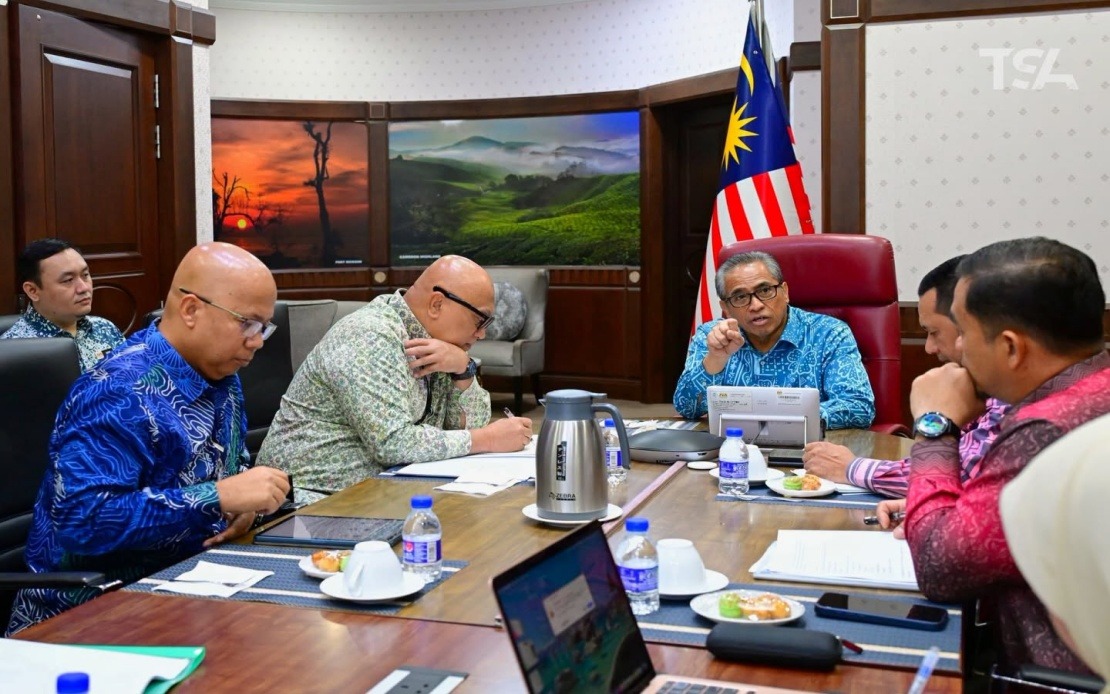
The government's top civil servant has intervened directly in deteriorating conditions at one of Malaysia's premier teaching hospitals, signalling heightened concern over public healthcare standards. Chief Secretary to the Government Tan Sri Datuk Seri Shamsul Azri Abu Bakar issued orders this week to address critical operational issues affecting the Universiti Malaya Medical Centre (PPUM), emphasizing that public health protection remains central to the MADANI Government's priorities. The move represents an escalation of efforts to tackle long-standing complaints that have mounted across the institution.
Shamsul Azri convened a morning meeting involving senior officials from multiple government departments tasked with resolving the crisis. Participants included the Secretary-General of the Ministry of Higher Education, the Secretary-General of the Ministry of Health, the Vice-Chancellor of Universiti Malaya, and senior PPUM administrative personnel. This high-level coordination underscores the gravity with which authorities view the situation and suggests systemic challenges requiring intervention beyond individual departmental capacity.
The discussions centred on three interrelated problem areas that have generated sustained public dissatisfaction. Excessive waiting times represent the most visible symptom of institutional strain, affecting patient experience and potentially compromising treatment outcomes. Beyond administrative inefficiency, the meeting identified fundamental challenges in clinical service delivery itself—gaps in capability and responsiveness that strike at the core mission of a teaching hospital. Underlying both issues is a critical shortage of skilled personnel and specialist expertise, a constraint that amplifies pressure on existing staff and limits the facility's ability to meet demand.
PPUM's institutional role as a teaching hospital shapes how its operations are evaluated and justified. As a facility intertwined with academic training at Universiti Malaya, PPUM must balance patient care responsibilities with educational obligations to produce the next generation of medical professionals. Shamsul Azri's statement acknowledged this dual mandate, noting that hospital services operate within defined capacity and capability parameters. This framing suggests that some service limitations may reflect structural rather than merely administrative shortcomings, though it does not absolve the institution of responsibility for optimizing performance within existing constraints.
The identification of policy-related issues arising from public complaints indicates that operational difficulties stem partly from institutional rules and procedures rather than resource scarcity alone. Wait time problems, for instance, may reflect appointment scheduling systems, triage protocols, or resource allocation procedures that can be reformed through administrative action. This distinction matters because it suggests some improvements remain possible through directive action without awaiting major capital investment or recruitment drives. Shamsul Azri's instruction that immediate decisions from the meeting be implemented reflects recognition that the institution possesses internal mechanisms for change that have not been fully mobilized.
The involvement of both the Ministry of Higher Education and Ministry of Health highlights an ongoing jurisdictional tension within Malaysia's healthcare ecosystem. University medical centres occupy ambiguous institutional space, answerable to education ministry oversight while delivering public health functions under health ministry purview. When problems emerge, this dual governance structure can complicate accountability and slow remedial action. By convening representatives from both spheres alongside university leadership, Shamsul Azri created a forum where conflicting priorities could be negotiated and unified direction established.
Waiting times at public hospitals represent a persistent challenge across Malaysia's healthcare system, reflecting broader pressures on facilities serving as primary care providers for much of the population. PPUM's prominence makes its performance symbolically important; deterioration in service standards at a premier institution carries reputational consequences extending beyond individual patient experiences. The government's direct intervention suggests awareness that allowing conditions to deteriorate further risks undermining public confidence in the entire tertiary care system.
Staffing shortages in Malaysian healthcare have become increasingly acute, particularly in specialized fields where brain drain to private practice and overseas employment compounds local training gaps. The specific mention of inadequate specialist expertise at PPUM indicates that the facility struggles to maintain rosters sufficient for both teaching and service delivery. Resolving this dimension requires strategies extending beyond immediate operational adjustments—potentially including revised compensation structures, career pathway improvements, or geographic recruitment initiatives that operate at timescales longer than emergency intervention typically encompasses.
The government's commitment to addressing these issues will be tested by implementation of decisions reached during the meeting. Without sustained follow-up and resource allocation, directives from the Chief Secretary's office risk becoming symbolic gestures insufficient to alter institutional behaviour. Malaysian healthcare stakeholders will be monitoring whether PPUM demonstrates measurable improvements in waiting times and service quality in coming weeks, or whether the intervention proves another instance of top-down pressure that dissipates without institutional transformation.
For Southeast Asian observers, PPUM's challenges reflect difficulties common across the region's tertiary healthcare systems—institutions expected to provide world-class care while operating under budget constraints, managing teaching obligations, and competing for talent in increasingly globalized markets. Malaysia's direct governmental intervention illustrates one approach to managing these tensions, though success will depend on whether fundamental resource constraints can be overcome through better management, or whether sustained investment proves necessary.

