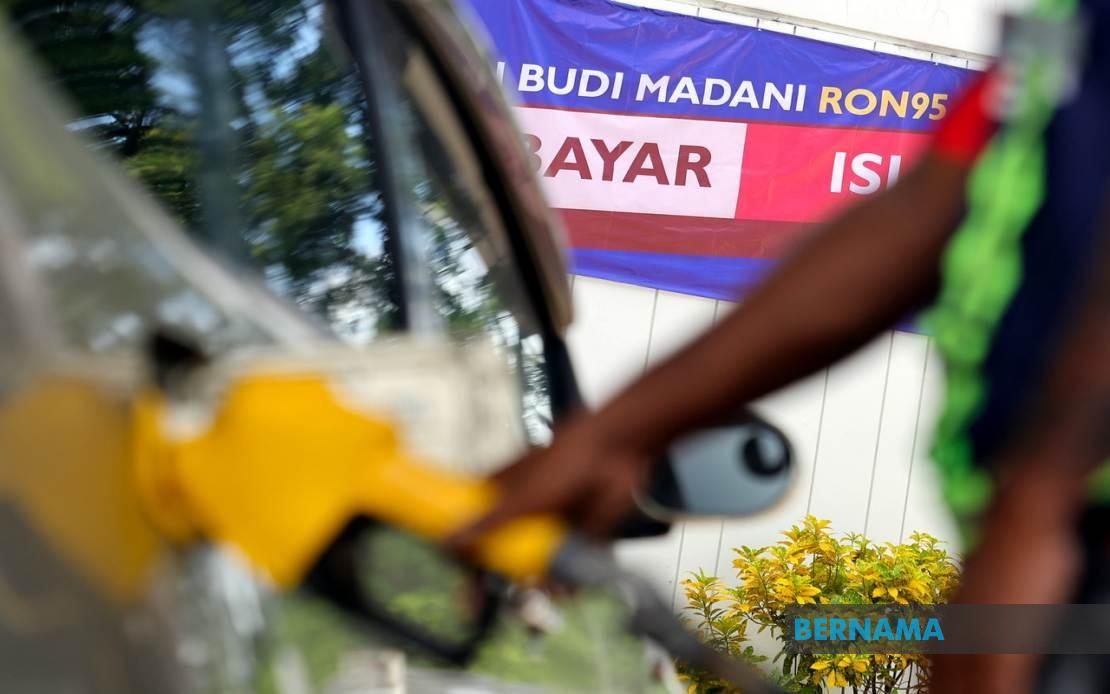
Malaysia's government has reversed course on fuel subsidy reductions, announcing the restoration of the BUDI95 MADANI RON95 programme's monthly quota back to 300 litres per user. Prime Minister Datuk Seri Anwar Ibrahim made the announcement during his National Day address at the Putrajaya International Convention Centre on August 30, signalling a shift in the administration's approach to managing fuel subsidies amid ongoing geopolitical pressures.
The reversal represents a significant policy adjustment that will directly affect the nation's automotive landscape. The measure immediately benefits more than 16 million registered users who rely on subsidised RON95 petrol at the controlled price of RM1.99 per litre. This restoration restores purchasing power for ordinary motorists who had braced themselves for the previously announced cut, which would have reduced their monthly allocation by one-third.
The government's decision extends beyond standard cars to support broader segments of the economy. Owners of diesel-powered commercial vehicles—specifically pick-up trucks and jeeps—will receive up to 400 litres of subsidised Budi Diesel monthly. This provision acknowledges the transportation and agricultural sectors' dependence on affordable fuel, recognising that commercial operators form a vital backbone of Malaysia's rural and semi-urban economies.
Understanding the timeline of this policy reversal provides crucial context for Malaysian drivers and businesses. In late March, the government had announced a reduction from 300 to 200 litres monthly, effective from April 1, 2026. This upcoming cut had been justified as a necessary fiscal measure responding to heightened tensions in West Asia, which threatened global oil supply stability and by extension Malaysia's import costs. The announcement had generated considerable concern among working families and small business operators dependent on affordable transport.
The restoration decision reflects broader economic and political calculations within the current administration. Fuel subsidies represent one of the largest components of Malaysia's annual budget allocation, straining government finances while attempting to shield ordinary citizens from international commodity price volatility. By reversing the planned reduction now, rather than allowing it to proceed as scheduled, the government signals its prioritisation of household purchasing power and economic stability over shorter-term fiscal consolidation.
The geopolitical context remains relevant despite the reversal. Global energy markets continue experiencing disruptions stemming from regional conflicts, and crude oil prices fluctuate based on supply concerns. Malaysia, as a net energy importer despite its own upstream production, remains exposed to these international price movements. The government's decision to maintain higher subsidy levels essentially absorbs potential future price increases at the domestic pump, shifting the burden onto the national budget rather than consumers.
For Malaysian consumers and businesses, the practical implications are substantial. The restoration of the 300-litre quota means monthly fuel budgets for private vehicles remain unchanged from previous levels, providing certainty for household financial planning. For commercial operators, particularly those in logistics, agriculture, and rural transport sectors, the guaranteed 400-litre diesel allowance provides operational predictability without the uncertainty of fluctuating retail prices.
This policy reversal also carries electoral and social dimensions. The fuel subsidy programme remains politically sensitive across Malaysia's diverse communities, with any reduction triggering public concern about cost-of-living pressures. By announcing the restoration during the annual National Day address—a high-visibility platform—the government reinforces its commitment to supporting ordinary households and working-class Malaysians. The timing suggests a strategic effort to consolidate public confidence in the administration's economic management.
Regionally, Malaysia's approach to fuel subsidies differs markedly from some Southeast Asian neighbours. While some countries have pursued more aggressive subsidy reductions, Malaysia continues balancing fiscal sustainability with social protection. This decision reinforces that the government views fuel subsidies as essential social infrastructure rather than temporary welfare measures, particularly in a context where transportation remains fundamental to employment, education, and healthcare access across the nation.
The broader implications extend to inflation management and consumer confidence. Fuel prices anchor expectations about general price levels across the economy. By stabilising the subsidised fuel quota, the government helps anchor inflation expectations, potentially supporting wider price stability for transportation, food, and manufactured goods that depend on fuel-based logistics costs.
Looking forward, the sustainability of this policy level depends on multiple factors beyond government control. International crude oil prices, global supply dynamics, and Malaysia's own fiscal capacity will determine whether the 300-litre quota and RM1.99 per litre price point can be maintained indefinitely. The government's reversal, while welcome to consumers, may intensify future pressure on fiscal balances, potentially necessitating trade-offs in other spending areas or revenue-raising measures.
The restoration ultimately demonstrates the government's assessment that economic and political costs of the planned subsidy cut outweighed its fiscal benefits. For Malaysian households and small businesses already navigating post-pandemic economic recovery and persistent inflation in other consumer goods, the preservation of affordable transport costs provides immediate relief. Whether this represents a permanent policy reset or a temporary pause pending further review remains unclear, though the National Day announcement's formal nature suggests a committed strategic direction.

