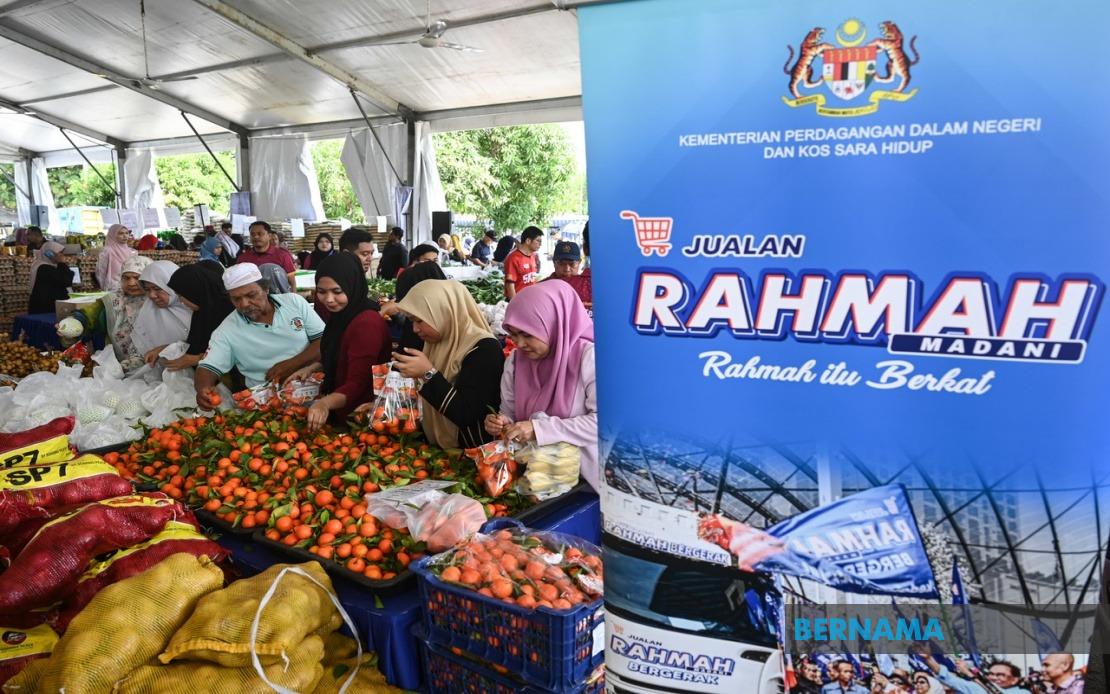
Prime Minister Datuk Seri Anwar Ibrahim has announced that the government will introduce the Ihsan Rahmah 9.9 online sale beginning September 9, positioning the digital commerce initiative as part of the nation's Malaysia Day 2026 observance. The announcement came during his address at the TikTok Shop Summit Malaysia here, underscoring the administration's intention to leverage e-commerce platforms for broader public benefit.
The initiative represents a significant departure from previous iterations of the Jualan Rahmah programme, which has historically operated through physical retail locations. By moving the sale onto digital platforms, the government aims to extend access beyond geographical constraints, allowing Malaysians across urban and rural areas to participate simultaneously. This shift towards online commerce reflects broader efforts within Southeast Asia to harness digital infrastructure for social welfare distribution.
According to Anwar, the programme will operate with backing from multiple government ministries and external partners to maximize outreach and ensure comprehensive coverage across the nation's 34.5 million population. The effort exemplifies the administration's approach of coupling economic performance with tangible improvements in living standards. The Prime Minister framed the initiative within a larger narrative of inclusive development, where strong gross domestic product growth must translate into immediate relief for households managing persistent cost pressures.
The Jualan Rahmah programme, managed by the Ministry of Domestic Trade and Cost of Living (KPDN), has established itself as a recurring mechanism for providing subsidized essential goods. Products offered through the sale typically retail at between 10 and 30 per cent below standard market pricing, targeting food items, household supplies, and other frequently purchased necessities. The pricing structure aims to reduce household expenditure while supporting lower-income segments of society.
Communications Minister Datuk Seri Fahmi Fadzil, Entrepreneur and Cooperative Development Minister Steven Sim Chee Keong, and Domestic Trade and Cost of Living Minister Datuk Armizan Mohd Ali were present at the summit, demonstrating multi-agency coordination behind the initiative. Their participation signals whole-of-government commitment to executing the programme effectively, with each ministry contributing distinct expertise ranging from digital infrastructure to business development and retail price regulation.
Anwar emphasized that effective promotion will prove critical to the sale's success, with extensive publicity required to ensure awareness reaches consumers across diverse demographic groups and geographic locations. The government recognizes that even well-designed programmes fail to achieve optimal outcomes without sufficient public knowledge and accessibility information. Malaysian policymakers have observed through previous retail initiatives that information gaps can significantly limit participation rates, particularly among elderly populations and those with limited digital literacy.
The timing of the announcement during the TikTok Shop Summit underscores the government's growing reliance on major e-commerce platforms to distribute social assistance. The decision reflects both practical recognition of where Malaysians increasingly shop and a strategic choice to partner with private sector technology providers rather than develop independent government digital infrastructure. This approach mirrors trends across the region, where governments leverage established marketplace ecosystems for public programmes.
For Malaysian consumers, the initiative promises tangible savings during a period when household budgets face mounting pressures from persistent inflation in food and energy costs. The programme's focus on daily necessities directly addresses purchasing patterns of lower and middle-income families, who typically allocate significant budget portions to essential goods. The September 9 launch date provides families two months advance notice to plan participation.
The programme carries broader implications for Malaysia's cost-of-living debate, where political discourse increasingly centres on government capacity to provide targeted relief. By positioning Ihsan Rahmah 9.9 as part of Malaysia Day celebrations—a national commemoration of the formation of the Federation—the administration frames support for household welfare as integral to national identity and collective responsibility. This messaging strategy connects poverty alleviation with patriotic sentiment.
Looking ahead, the success of this online iteration will likely inform the government's approach to future social commerce initiatives. If the September sale achieves strong participation rates and media coverage, policymakers may consider expanding digital distribution for other assistance programmes. The experiment also provides data on consumer behaviour patterns and digital platform effectiveness that could shape policy design in subsequent years.
The initiative reflects recognition that modern cost-of-living support requires integration with digital commerce ecosystems where younger demographics and urban consumers increasingly conduct transactions. By adapting Jualan Rahmah to online channels, the government bridges traditional welfare distribution with contemporary shopping habits, potentially capturing broader participation than previous physical-location sales achieved. For Malaysian consumers and observers of regional social policy, the September 9 launch represents a significant experiment in government-facilitated digital commerce at scale.

