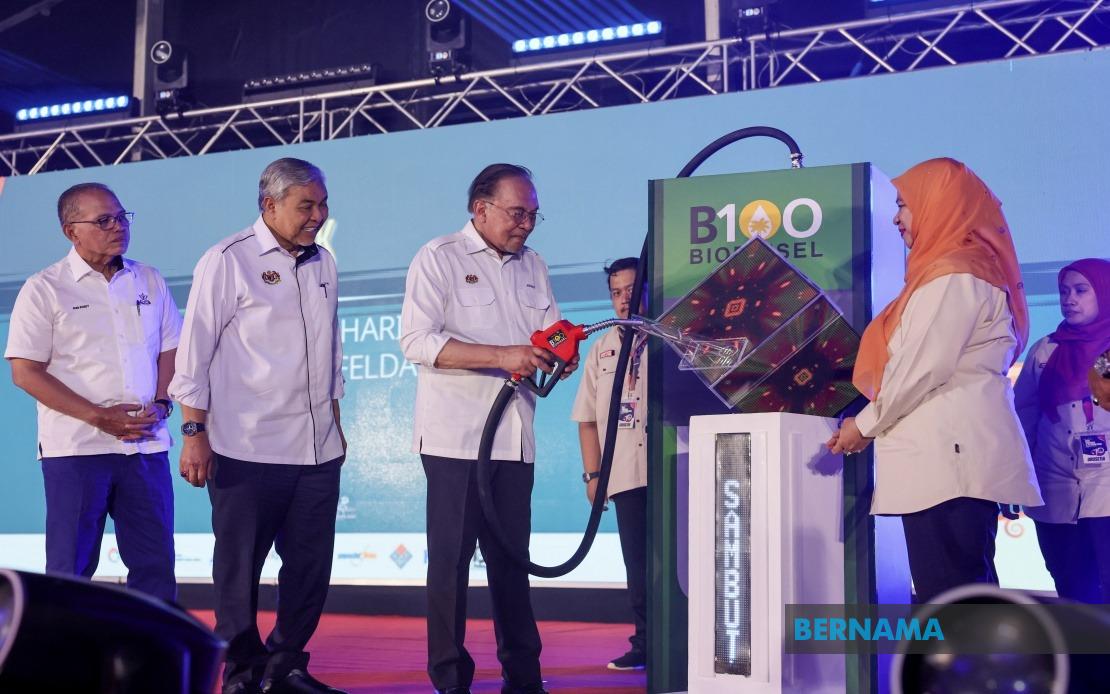
Prime Minister Datuk Seri Anwar Ibrahim has announced an imminent legislative shift that could reshape residential development patterns within Federal Land Development Authority settlements across Malaysia. Speaking at the FELDA Settlers' Day and FELDA's 70th Anniversary celebrations in Bandar Pusat Jengka, Anwar disclosed that the government intends to amend the Land (Group Settlement Areas) Act 1960 (Act 530) to facilitate the construction of multiple residential units on individual lots currently owned by FELDA settlers. The proposed amendment represents a significant departure from the existing regulatory framework that has governed FELDA land use for more than six decades.
The timeline for legislative action has been clearly delineated, with Anwar directing FELDA to prepare comprehensive draft amendments within a two-month window. These proposals will subsequently be forwarded to the Cabinet for deliberation before advancing to Parliament for final consideration and passage during the current parliamentary year. The accelerated schedule reflects the government's commitment to resolving longstanding constraints on FELDA settler property rights and addressing accumulated demand for expanded residential infrastructure within these established communities.
Concrete evidence of existing demand for multiple-dwelling arrangements already exists on the ground. Approximately 8,000 houses have been constructed on individual lots and occupied by settlers since December 31, 2025, operating in a legal grey area as current legislation has not explicitly authorised such dual-structure arrangements. Rather than delay utility provision pending legislative completion, the government has adopted a pragmatic interim approach. Anwar confirmed that immediate approval will be granted for water and electricity connections to these 8,000 existing homes, ensuring basic service access while the formal legal amendments proceed through parliamentary channels.
Infrastructural responsibility has been clearly delineated across government agencies to expedite service delivery. Water supply provision will be transferred to respective state governments, aligning service administration with state-level governance structures. Tenaga Nasional Berhad (TNB), the national electricity monopoly, has received explicit instruction to accelerate electrical connections across all 8,000 residential units. This division of responsibilities acknowledges both the constitutional framework governing water services and the established role of TNB in electricity distribution networks across Malaysian territory.
The broader context for this amendment initiative stems from FELDA's New Generation Housing Project (PGBF), which has been operational since 2013 and represents a modernised approach to settler housing within FELDA communities. The project currently encompasses 43 distinct sites distributed across seven Malaysian states: Pahang, Johor, Negeri Sembilan, Kedah, Terengganu, Kelantan, and Perak. These sites collectively comprise 8,224 housing units, indicating a geographically dispersed programme with substantial scale and regional reach.
The amendment holds particular significance for Malaysian property development patterns and settler wealth accumulation within FELDA communities. Historically, FELDA schemes were conceived as small-hold agricultural settlements, with residential lots sized accordingly for single family occupation. The regulatory restriction to single structures per lot reflected mid-twentieth-century planning assumptions about settlement density and agricultural production. Contemporary reality, however, demonstrates that many FELDA settlers, particularly younger generation members, aspire to diversified property arrangements including rental units, commercial premises, or extended family housing configurations on their allocated land.
From a Malaysian perspective, the amendment addresses a legitimate gap between regulatory permission and settled practice. The fact that 8,000 homes have already been constructed outside explicit legal sanction demonstrates both the intensity of settler demand for such arrangements and the practical limitations of enforcement mechanisms. Formalising this activity through legislative amendment converts de facto practice into legitimate legal structures, reduces compliance costs for settlers, and enhances the security of property investments that settlers have already undertaken.
The seven-state distribution of PGBF sites reflects FELDA's historical geographic footprint, concentrated particularly within Peninsular Malaysia's agricultural regions. Pahang's prominence as a FELDA heartland is reinforced by the Maran location of the anniversary celebration, while the inclusion of East Coast states (Terengganu and Kelantan) and Perak represents FELDA's traditional operational territories. This geographic span means the Act 530 amendment will have differential impacts across state jurisdictions, with water authorities in participating states requiring coordination and capacity planning for expanded service obligations.
From a Southeast Asian perspective, Malaysia's approach to regularising informal settlement arrangements through legislative amendment contrasts with alternative regulatory models employed in regional jurisdictions. Rather than enforcement-based approaches that penalise existing non-compliant structures, the Malaysian model prioritises retroactive legitimisation combined with prospective clarification of permissible development patterns. This approach acknowledges economic realities while establishing clearer future rules, potentially serving as a instructive model for other regional governments confronting similar property regulation challenges.
The economic implications for FELDA settlers extend beyond immediate property rights clarification. Permitting multiple structures on individual lots substantially increases the asset value and income-generation potential of FELDA land holdings. Settlers can contemplate rental arrangements, provide housing for extended family members at reduced cost, or develop mixed-use properties combining residential and commercial elements. This enhanced property flexibility may contribute to settler household economic stability and wealth accumulation, particularly for younger generation settlers seeking to establish themselves within FELDA communities.
The amendment also reflects evolving governmental perspectives on FELDA's contemporary role within Malaysia's broader economic and social landscape. Rather than preserving FELDA settlements as static agricultural communities frozen in twentieth-century spatial and economic configurations, the government is facilitating adaptive evolution that enables settlers to respond to market conditions, family needs, and economic opportunities. This modernisation trajectory acknowledges that FELDA communities are living, dynamic settlements whose residents merit regulatory frameworks reflecting their actual circumstances and aspirations rather than anachronistic statutory constraints.
Implementation of the amendment will require careful coordination between federal authorities (FELDA, Cabinet, Parliament), state governments (water provision), and TNB (electricity connections). The two-month timeline for draft amendment preparation, while ambitious, appears feasible given that FELDA presumably maintains existing legislative expertise and the amendment represents a discrete modification rather than comprehensive statutory replacement. Parliamentary passage before year-end seems achievable provided Cabinet prioritises the matter appropriately and no unanticipated political complications emerge.
For Malaysian settlers within FELDA communities, this announcement signals government responsiveness to accumulated grievances regarding property rights restrictions. The immediate approval for utility connections to existing structures, coupled with firm legislative amendment timelines, demonstrates commitment to practical solutions rather than purely rhetorical gestures. The amendment's successful passage would constitute a meaningful enhancement of settler property rights and economic opportunities within Malaysia's long-established federal land development framework.

