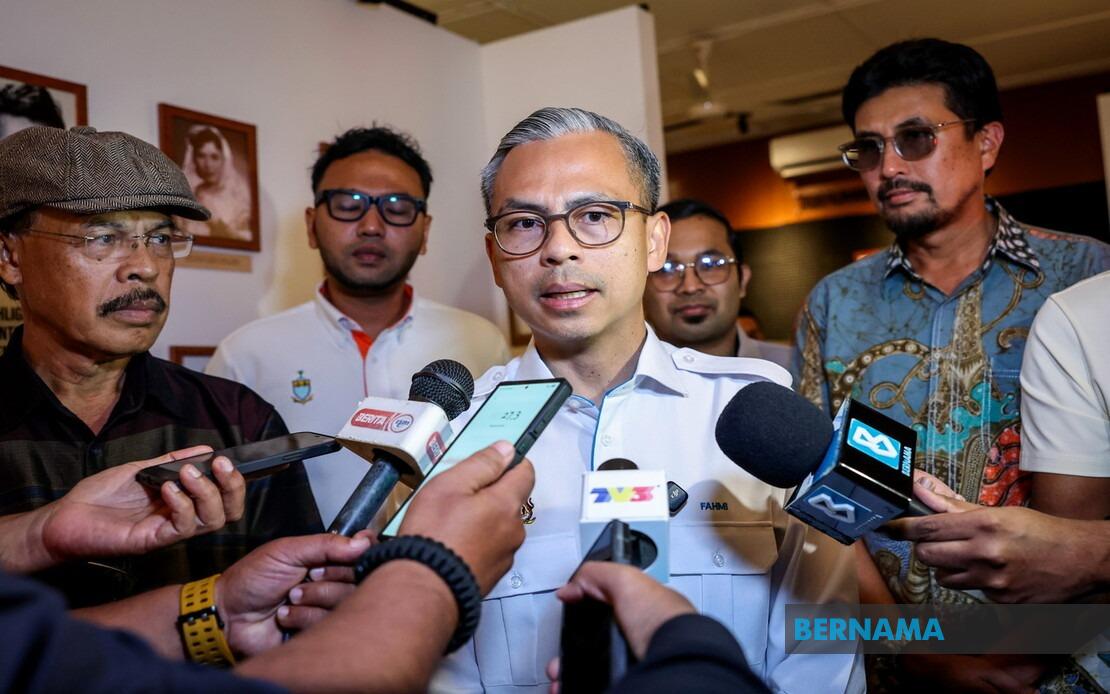
The Malaysian government is charting a path to develop the Nordin Ahmad Gallery, a newly opened cultural institution dedicated to one of Malay cinema's most celebrated figures, as Communications Minister Datuk Seri Fahmi Fadzil pledged support for the facility during a recent visit to Bukit Mertajam. The gallery, situated within Sekolah Kebangsaan Permatang Pasir in Penang, represents a deliberate effort to safeguard the artistic and cinematic contributions of the late Datuk Nordin Ahmad for present and future generations, marking a recognition of his outsized influence on Malaysia's golden age of film.
Fahmi indicated that substantive assistance would materialise through cross-ministry collaboration, signalling the government's intent to treat the gallery as more than a local heritage project. He outlined plans to engage with the Unity Ministry to determine the most appropriate form of intervention, whether through financial support, administrative guidance, or strategic advice on museum operations. This bureaucratic coordination underscores how heritage preservation in Malaysia increasingly requires coordination across multiple government portfolios, reflecting the complex institutional landscape governing cultural institutions.
The Communications Minister emphasised that the gallery's existence validates years of advocacy by Penang's arts community and professional associations, who have worked to maintain Nordin Ahmad's legacy within collective memory. He positioned the initiative as particularly significant because Nordin Ahmad remains an unmistakable figure from Malay cinema's most prolific period, a time when locally produced films commanded cultural dominance and shaped regional entertainment. The actor's performances in landmark productions such as Semerah Padi in 1956 and Hang Jebat in 1961 established templates for cinematic storytelling that influenced subsequent generations of filmmakers across Southeast Asia.
Fahmi's comments during the gallery tour reflected a modernising perspective on how heritage institutions should engage younger audiences. Rather than treating museums as static repositories of memorabilia, he advocated for dynamic, technology-enabled presentation methods that leverage digital platforms popular among Gen Z and millennial visitors. This approach acknowledges a fundamental challenge facing traditional cultural institutions globally: maintaining relevance when entertainment consumption has migrated decisively toward digital channels and social media ecosystems.
Specifically, the minister proposed that the National Film Development Corporation of Malaysia (FINAS), represented at the visit by Chief Executive Officer Datuk Azmir Saifuddin Mutalib, contribute digitised archival materials including restored film footage in high resolution. FINAS's involvement is strategically significant, positioning the gallery within Malaysia's broader film development ecosystem rather than isolating it as a provincial curiosity. Access to professionally restored archival content would substantially elevate the gallery's educational and entertainment value, particularly for researchers and film enthusiasts.
Fahmi's suggestion to incorporate social media-friendly elements—specifically mentioning TikTok filters and branded backgrounds—represents pragmatic cultural policy aimed at organic viral dissemination. By enabling young visitors to create shareable content featuring gallery content, the institution gains algorithmic amplification without direct advertising expenditure. This strategy acknowledges that heritage preservation in the digital age requires competing for attention within crowded content ecosystems, a reality that many Southeast Asian cultural institutions have been slow to embrace.
The Galeri Karyawan Nordin Ahmad officially opened in January 2025 within renovated sections of the 1888-built school building where Nordin Ahmad himself studied as a boy. This geographical and historical resonance—positioning the gallery within the actual institution that shaped the icon—adds authentic narrative weight to the visitor experience. The renovation project, funded through the Seberang Perai Town Grant Programme under the Levelling Up Seberang Perai initiative with coordination from the Prime Minister's Department and the Penang Museum and Art Gallery Board, exemplifies how infrastructure modernisation can serve cultural preservation objectives.
The gallery's interactive spaces currently display archival photographs, personal memorabilia, and digital materials documenting Nordin Ahmad's film career and broader life trajectory. This curatorial approach balances documentary rigour with accessible storytelling, essential for institutions seeking to reach audiences beyond specialist film historians. The integration of multiple media formats reflects best practices in contemporary museum design, acknowledging that modern visitors expect varied sensory and intellectual engagement.
Recognition of Nordin Ahmad's cultural significance extended beyond the gallery opening when, in July, he received a posthumous Darjah Setia Pangkuan Negeri (DSPN) award carrying the title Datuk, fifty-five years after his death. The honour, conferred during Penang's State Awards ceremony commemorating the Yang Dipertua Negeri's 85th birthday, underscores how Malaysian society increasingly acknowledges cinema's historical importance through formal state recognition. For Penang particularly, celebrating local cultural icons strengthens regional identity and tourism appeal.
The gallery initiative carries implications extending beyond heritage preservation into questions of soft power and cultural diplomacy. As Southeast Asian nations compete for regional cultural leadership, institutions celebrating cinema's classical period position Malaysia within a broader narrative of shared regional artistic achievement. Nordin Ahmad's films circulated across Malaya, Singapore, and Brunei, making him a recognisable figure whose legacy transcends national boundaries.
Fahmi's commitment to enhanced digital presentation reflects broader Malaysian government recognition that younger generations access history differently than their predecessors. Rather than lamenting declining museum attendance, progressive cultural policy adapts institutional practices to contemporary consumption patterns. The suggestion to develop interactive, social-media-compatible experiences positions the Nordin Ahmad Gallery as a potential model for modernising heritage institutions throughout Malaysia.
The government's engagement with this Penang-based initiative also demonstrates how devolved development programmes like Levelling Up Seberang Perai can generate cultural outcomes alongside infrastructure improvements. By locating heritage preservation within broader regional development frameworks, policymakers signal that cultural vitality contributes materially to community wellbeing and economic sustainability through heritage tourism and educational programming.

