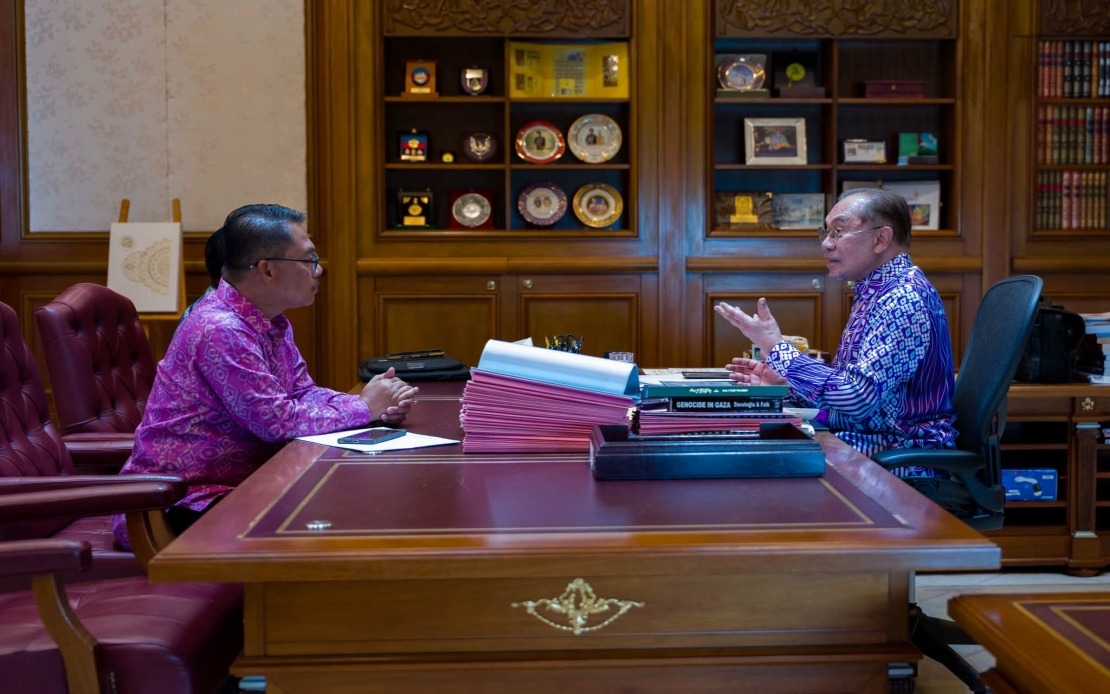
Malaysia's federal government has committed to fine-tuning the rollout of targeted fuel subsidies across Sabah and Sarawak, signalling a willingness to adapt policy based on how communities experience the initiative on the ground. Datuk Mustapha Sakmud, the Minister in the Prime Minister's Department overseeing both states, confirmed that authorities are actively incorporating input from local stakeholders, state administrations, and federal agencies to ensure the subsidy scheme functions without unnecessary disruption to residents' living standards, particularly in more remote areas where access to fuel and transport networks carry heightened importance.
The government's flexibility on the issue reflects broader recognition that policy implementation rarely unfolds according to initial planning when applied across geographically diverse and economically varied regions. Sabah and Sarawak, separated from Peninsular Malaysia and characterised by extensive hinterland territories, present distinct logistical and administrative challenges that warrant customised approaches. Communities in these states have raised specific concerns about how the subsidy framework affects their circumstances, a reality that has prompted higher-level political engagement to understand implementation friction points.
Prime Minister Datuk Seri Anwar Ibrahim has personally made time to hear direct accounts of difficulties encountered during the rollout, demonstrating that concerns originating from Sabah have reached the highest levels of decision-making. This engagement signals both responsiveness to regional challenges and an acknowledgment that centralised policies require ground-truth validation before becoming permanently embedded in administrative practice. The willingness of senior leadership to listen, rather than simply defend existing arrangements, establishes space for meaningful refinement.
The BUDI Diesel initiative, which commenced nationwide on July 1, represents Malaysia's contemporary approach to fuel subsidy targeting. Rather than blanket subsidies affecting all diesel consumers indiscriminately, the scheme restricts benefits to privately-owned diesel vehicles, establishing a baseline monthly allocation of 200 litres at RM2.10 per litre. Owners of specified utility vehicles and pickup trucks operating for business or essential purposes may qualify for an additional 100 litres monthly, provided they satisfy predetermined eligibility requirements that attempt to balance subsidy costs with genuine need.
This targeted methodology diverges from Malaysia's historical subsidy architecture, when fuel price controls applied comprehensively across the market, generating substantial fiscal burdens and creating unintended consequences including smuggling, fuel hoarding, and inefficient consumption patterns. By restricting subsidies to specific vehicle categories and establishing quota limits, policymakers sought to constrain expenditure while concentrating support on populations considered most dependent on diesel access. However, the transition to such systems inevitably creates winners and losers, generating implementation challenges as communities adjust expectations and administrative systems adapt to enforcement requirements.
Sabah and Sarawak's geographical remoteness and dispersed settlement patterns mean that diesel access carries particular significance for economic activity and quality of life. Rural populations, indigenous communities in interior regions, and smallholder agricultural operators often depend on reliable diesel availability for transport, equipment operation, and commerce. Concerns raised in these states likely reflect frustrations with quota restrictions that may appear reasonable when viewed from administrative headquarters in Kuala Lumpur but feel arbitrary when experienced by those whose livelihoods depend on fuel availability exceeding official allocations.
The government's commitment to ongoing stakeholder consultations suggests willingness to examine whether quota levels, application procedures, vehicle classification criteria, or enforcement mechanisms require adjustment to better reflect regional realities. Such refinement might involve raising allocation thresholds, broadening eligible vehicle categories, streamlining application processes, or establishing regional variations reflecting local economic structures and transport dependencies. Each modification carries fiscal implications and administrative complexity, yet remaining inflexible risks generating sustained friction between federal policy and state-level governance.
The invocation of the principle that "the voice of the people is a sacred voice" within Malaysia's MADANI governance framework positions consultation as fundamental rather than supplementary to policymaking. This rhetorical commitment, while potentially subject to cynical interpretation, establishes an explicit standard against which government responsiveness can be assessed. Communities in Sabah and Sarawak that have voiced concerns about subsidy implementation now possess documented acknowledgment that their feedback matters within official decision-making frameworks.
For regional observers, the government's approach illustrates broader Southeast Asian governance challenges: how large, diverse nations implement economic policies uniformly across territories with substantially different economic structures, populations densities, and infrastructure development levels. Malaysia's effort to modify targeted subsidies based on regional feedback offers a model—imperfect though it may be—of responsive federalism attempting to balance national fiscal sustainability with regional equity considerations.
The refinement process remains preliminary, with no specific modifications yet announced. The coming weeks will reveal whether feedback incorporation translates into substantive policy adjustments or represents rhetorical commitment without material change. For residents in Sabah and Sarawak who have invested effort in articulating concerns, the credibility of government responsiveness depends on demonstrable accommodation of legitimate grievances rather than mere acknowledgment of their existence.

