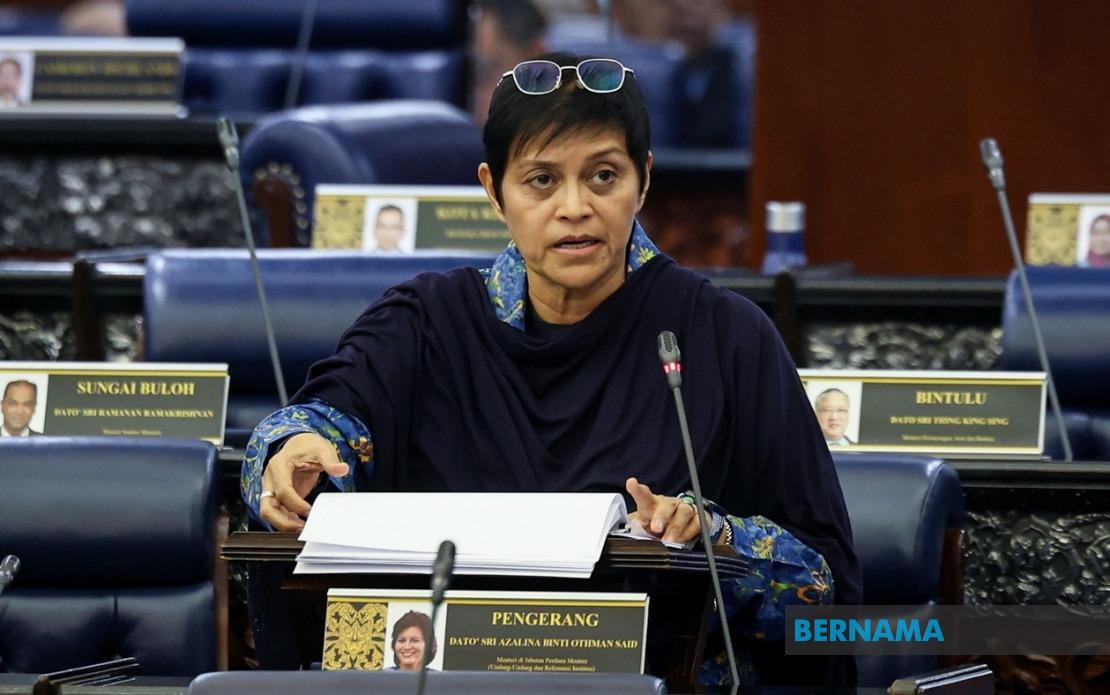
A pivotal institutional reform initiative moves forward as the government prepares to lay before Parliament a comprehensive report recommending the structural separation of the Attorney General's office from the Public Prosecutor's function. The tabling of the Special Select Committee's findings in the Dewan Rakyat represents a watershed moment for Malaysia's justice sector, according to Datuk Seri Azalina Othman Said, the Minister in the Prime Minister's Department overseeing Law and Institutional Reform. Her announcement underscores the administration's broader push to reshape core government institutions in pursuit of greater independence and accountability.
The proposed separation carries substantial implications for how Malaysia's prosecution machinery operates. Currently, these dual roles concentrate significant prosecutorial power within a single office, a structure critics have long argued compromises institutional independence and public perception of fairness. The committee's recommendation to sever these functions addresses concerns that have surfaced repeatedly in constitutional discussions and civil society debates over recent years. This separation would establish the Public Prosecutor as a distinct entity with its own governance framework, effectively creating a more compartmentalised approach to prosecution functions.
After deliberating across seven formal meetings, the committee has distilled its recommendations into seven substantial improvements designed to fortify the Public Prosecutor's independence and operational integrity. These proposals extend beyond mere administrative restructuring to encompass fundamental constitutional principles. The envisioned changes reflect a philosophy that stronger institutions require structural separation of powers, clearer appointment procedures, and enhanced parliamentary oversight mechanisms. Each recommendation builds incrementally toward an institutional architecture where prosecutorial decisions rest on professional and legal grounds rather than potential executive influence.
Central to the reform package is a reimagined appointment mechanism that strips the executive branch of direct involvement in selecting the Public Prosecutor. Under the new framework, the Judicial and Legal Service Commission would nominate candidates to the Dewan Rakyat Speaker, enabling parliamentary scrutiny through a specialised Select Committee before the name returns to the commission for final recommendation to the Yang di-Pertuan Agong. This circular process creates multiple checkpoints for quality assurance and representational input. By inserting Parliament into this chain, the mechanism inherently democratises what was previously an executive prerogative, allowing elected representatives to participate meaningfully in choosing a figure who wields tremendous prosecutorial authority.
The proposed seven-year fixed and non-renewable tenure offers another critical safeguard. Rather than serving at pleasure, as occurs under current arrangements, a defined term provides the Public Prosecutor with secure tenure to pursue cases without fear of dismissal for political inconvenience. Simultaneously, the non-renewable clause prevents indefinite entrenchment of a single individual, ensuring periodic institutional refresh and forestalling scenarios where prolonged tenure cultivates excessive influence. This balance between security and rotation reflects lessons learned from comparable democracies that have grappled with balancing prosecutorial independence against legitimate oversight concerns.
The introduction of a dedicated Code of Ethics for Public Prosecutors formalises professional standards that have previously relied on custom and individual discretion. Such a code would establish transparent benchmarks for conduct, case selection, resource allocation, and conflict management. Malaysian civil society has increasingly pressed for formalised ethical frameworks to guide prosecutorial decision-making, particularly given the office's power to determine which matters receive investigative resources and courtroom attention. A published code creates accountability mechanisms whereby departures from stated principles invite scrutiny and remedial action.
Parliament's enhanced legislative capacity within this framework allows for adaptive governance as institutional experience accumulates. Rather than crystallising the entire reform in constitutional text, the government proposes endowing the legislative body with authority to strengthen the Public Prosecutor's institution through subsequent laws. This flexibility acknowledges that perfect institutional design rarely emerges fully formed; rather, refinement comes through practice, identified gaps, and demonstrated needs. Malaysian lawmakers would gain capacity to respond to lessons learned during the early years of the reformed structure.
The proposed constitutional amendment to Article 145A represents the formal mechanism through which these changes acquire legal force. By amending the constitutional text rather than relying solely on statutory modification, the government signals the permanence it envisions for these reforms. Constitutional reform carries heightened procedural requirements and public significance, signalling that this transcends ordinary legislative adjustment. For Malaysia, where constitutional amendments demand supermajorities and carry symbolic weight, pursuing this path demonstrates institutional commitment to permanence and societal consensus-building.
The government frames this initiative not as fragmentation but as a strengthening of the overall justice ecosystem through functional clarification. By separating roles that currently intertwine, each institution gains clarity of purpose and focused accountability. The Attorney General retains distinct responsibilities for legal advice and constitutional matters, while the Public Prosecutor concentrates on professional prosecution according to established standards. This delineation mirrors approaches adopted by Australia, Canada, and other common law jurisdictions where historical experience demonstrated that consolidated roles risked compromising prosecutorial impartiality.
For Malaysian citizens and the business community, the implications centre on confidence that prosecution decisions rest on evidence and law rather than political calculation. International investors assess jurisdictions partly by confidence in their judicial systems; perceptions of prosecutorial independence significantly influence investment decisions and business confidence. By institutionalising independence through structural reform, Malaysia addresses legitimate concerns that have occasionally surfaced regarding the politicisation of prosecution decisions, whether accurate or perceived.
The broader context reveals the MADANI Government's commitment to institutional modernisation as part of its electoral mandate. Following recent political transitions, the administration has pursued multiple institutional reforms spanning anti-corruption frameworks, parliamentary procedures, and judicial administration. This Public Prosecutor reform sits within a comprehensive agenda to rebuild public trust in government institutions through structural reinforcement of independence and accountability. Each reform initiative contributes to an overarching narrative of institutional strengthening.
Southeast Asian observers will likely scrutinise Malaysia's approach, as several regional neighbours confront similar questions regarding prosecutorial independence and institutional design. Malaysia's willingness to undertake constitutional amendment for justice sector modernisation may catalyse regional conversations about institutional best practices. The success or challenges Malaysia encounters implementing these reforms could influence broader Southeast Asian discussions about institutional development and governance modernisation.
The pathway forward requires parliamentary engagement with the committee's report, deliberation over proposed constitutional amendments, and organisational preparation within the Public Prosecutor's institution for operational transition. Implementing these reforms will demand careful change management, training initiatives, and potentially new budgetary allocations for independent institutional infrastructure. The report's tabling tomorrow initiates what will likely become an extended process of parliamentary debate, public consultation, and institutional adjustment before the reformed structure becomes operational.

