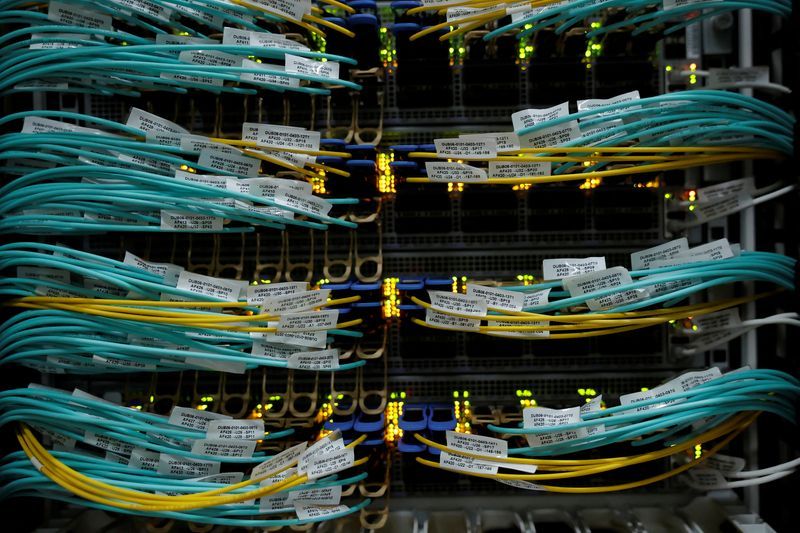
Policymakers across North America and Europe are increasingly moving to restrict, freeze or outright prohibit new data centre construction as the infrastructure demands of artificial intelligence technology push against the limits of local utilities and environmental resources. The backlash reflects mounting public concern about the electricity consumption, water depletion, land use and community disruption caused by hyperscale facilities designed to power the mushrooming AI sector. What was once seen as straightforward economic development is now facing coordinated resistance from elected officials responding to constituents worried about the true cost of technological progress.
In the United States, New York became the first state to enact a comprehensive moratorium when Governor Kathy Hochul imposed a one-year construction ban on any data centre requiring 50 megawatts or more of electrical power. During this moratorium period, the state's Department of Environmental Conservation will refrain from issuing new discretionary permits as officials work to establish environmental assessment standards specifically designed to evaluate the impact of such facilities. The move signals that existing regulatory frameworks were inadequate to measure and mitigate the consequences of large-scale data centre development.
Maine presented a different political calculus around data centre regulation. Governor Janet Mills rejected bipartisan legislation that would have implemented an 18-month moratorium on facilities using more than 20 megawatts of power—a threshold that would have been groundbreaking in the American context. While Mills indicated support for a moratorium in principle, she vetoed the measure because it lacked provisions exempting a specific proposed project in the Town of Jay, suggesting that local economic considerations can override broader resource protection goals even when environmental risks are acknowledged.
In California, Monterey Park residents took matters directly into their own hands by voting to permanently ban data centres through a ballot initiative in June 2026, marking the first time an American city has imposed such a comprehensive prohibition through popular vote. This grassroots action followed years of resistance to proposed facilities. The city had initially adopted a one-year moratorium in 2019, then expanded restrictions in April 2025 to prohibit new data centre developments or expansions until at least 2030. The escalating measures demonstrate how communities frustrated with development trajectories are using available democratic tools to reassert control over their local infrastructure.
Europe has witnessed similarly restrictive approaches. The Dutch government implemented a hyperscale data centre ban in 2022 that confines large facilities to just two designated locations nationally, a spatial constraint designed to concentrate environmental and infrastructural impacts. However, the policy has proven porous. Microsoft secured approval in January 2026 for a project designed as three separate towers, each individually falling below the regulatory size threshold, illustrating how companies can navigate restrictions through creative project structuring.
Ireland's experience demonstrates both the severity of grid strain and the possibility of adapting rather than maintaining permanent bans. The country's grid operator effectively froze new data centre connections to the Dublin area beginning in 2021 after warnings that facilities were overloading electrical infrastructure. This restriction lasted until December 2025, when the freeze was lifted with a critical modification: new connections would henceforth be required to provide their own on-site power generation capacity, shifting responsibility for grid impact from the utility to the developer. This compromise suggests a middle path between blanket prohibition and unfettered expansion.
For Malaysia and Southeast Asia, these international trends carry significant implications. As the region positions itself as an alternative technology hub to avoid China-related supply chain complications and seeks to capture AI development investment, governments must grapple with whether they possess the infrastructure resilience to accommodate large-scale data centres. The power generation capacity challenges facing developed nations with established grids suggest that rapidly developing economies in Southeast Asia could face even steeper constraints. Water availability in countries dependent on monsoon patterns and already facing climate-related precipitation variability presents another serious consideration.
The escalating restrictions also reflect changing public attitudes toward unregulated technological development. Citizens in advanced economies are demanding that companies and governments conduct genuine environmental impact assessments before greenlit projects, and that infrastructure expansion serve community interests rather than simply maximising corporate returns. This democratic pressure may influence how Southeast Asian governments navigate requests from technology firms seeking to establish massive data centre clusters in the region.
The economic tension underlying these restrictions merits attention. Data centres generate tax revenue, employment and foreign investment that attracts policymakers. Yet they consume enormous quantities of electricity and water while often generating relatively few sustained job opportunities for local communities. Communities increasingly question whether the jobs created justify the environmental costs, particularly when power generation remains dependent on fossil fuels or when freshwater supplies face competing demands from agriculture and household use.
The geographic dispersion of restrictions—spanning American states, European nations and specific cities—indicates this is not a fleeting regulatory trend but rather an emerging consensus that data centre expansion requires stricter controls. Companies operating in the AI sector should anticipate that obtaining permits for large-scale facilities will become more difficult and expensive as jurisdictions demand comprehensive environmental assessments and potentially require developers to finance renewable energy infrastructure or invest in grid improvements. For policymakers in developing economies considering welcoming such facilities, the international experience suggests that early establishment of rigorous environmental and infrastructure standards may prove less economically disruptive than imposing moratoriums after communities mobilise against projects.

