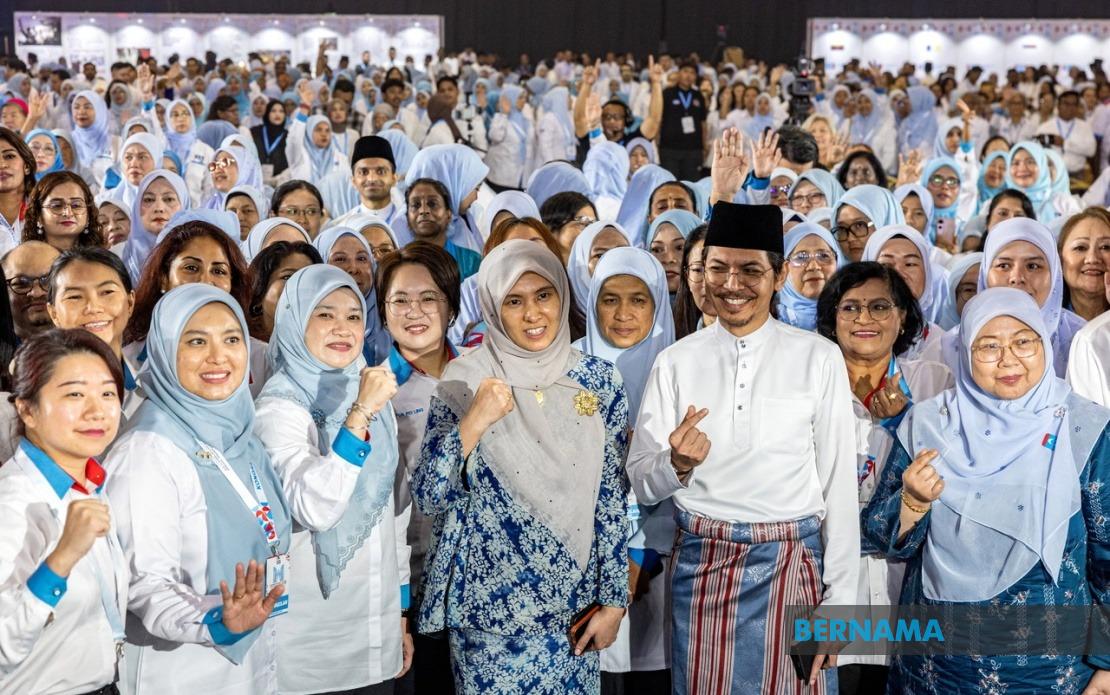
In remarks delivered during the 2026 AMK National Congress in Melaka, Angkatan Muda Keadilan chief Muhammad Kamil Abdul Munim underscored a fundamental principle of political longevity: elected representatives cannot afford to become disconnected from the communities they serve. His message reflected growing recognition among Malaysian political movements that maintaining voter loyalty requires sustained, genuine engagement beyond campaign seasons. The emphasis on grassroots connection resonates particularly in Malaysia's multi-layered political landscape, where state and federal contests, municipal elections, and party internal dynamics all demand coordinated messaging and strong community anchors.
Muhammad Kamil articulated that robust networks at the community level serve multiple strategic purposes within a political movement. Beyond the obvious benefit of direct voter contact, these relationships establish the infrastructure through which parties can effectively articulate their policy positions and counter-narratives to competing claims made by opposition factions. In Malaysia's highly competitive political environment, where misinformation and competing narratives frequently dominate discourse, the ability to communicate directly with constituents becomes a significant organizational advantage. Leaders who maintain regular presence in their communities can address voter concerns immediately and credibly, rather than allowing information vacuums to be filled by external voices or digital rumour mills.
The AMK chief's statement encompasses several dimensions of political organization that are often treated separately but function interdependently. Institutional machinery, communication capacity, narrative development, and personal relationships all strengthen when leaders prioritize grassroots presence. This integrated approach suggests that political effectiveness cannot be reduced to top-down messaging or sophisticated central communications strategies. Rather, successful political movements require multiple reinforcing channels through which consistent messaging flows while remaining responsive to local contexts and concerns.
For Malaysia's political system, where electoral competition has intensified significantly over the past two decades, Muhammad Kamil's emphasis on community relationship-building addresses a recurring vulnerability in established political structures. Parties that fail to maintain organic connections with voters—relying instead on administrative machinery or symbolic leadership presence—frequently discover these advantages erode rapidly during electoral challenges. The COVID-19 pandemic further demonstrated how political relevance depends on demonstrated commitment to community welfare rather than ceremonial engagement. Leaders who disappeared from community sight during lockdowns faced particular electoral penalties, while those who adapted programmes to address pandemic-related hardships maintained constituent goodwill.
The AMK chief's particular concern about ensuring party members understand the ideological foundations and historical struggles of their movement reflects anxiety about institutional drift common to established political organizations globally. In Malaysian context, where younger voters increasingly demand evidence of competence and genuine commitment rather than accepting inherited partisan loyalties, the challenge of transmitting party values becomes acute. New members recruited through campaign enthusiasm or personal connections may lack understanding of why specific policy positions matter or how current struggles connect to historical party narrative. Without deliberate education efforts, these members risk becoming transactional participants rather than committed activists, vulnerable to defection when competing parties offer marginal material benefits.
Muhammad Kamil's warning that movements may gradually deviate from their foundational principles without sustained ideological reinforcement touches on a genuine institutional problem. Malaysian political history includes numerous examples of movements that began with clear ideological moorings but became hollowed out by patronage politics, factional struggles, and competing personal ambitions among leaders. When the bridge between grassroots members and party leadership becomes attenuated, institutional culture shifts from mission-driven organization to patronage network. Members pursue personal advancement rather than collective goals, and party leadership loses the constraining influence of an engaged membership base that would otherwise police adherence to stated principles.
The practical implication of Muhammad Kamil's remarks extends to how Malaysian political movements should allocate resources and leadership attention. Many established parties concentrate senior leaders' time on national-level politics, media appearances, and high-level strategic deliberation, leaving local organization to junior functionaries often lacking resources or authority. This structural choice reflects assumptions that national messaging drives electoral outcomes. However, Malaysian electoral patterns increasingly demonstrate that local ground organization, community service delivery records, and perceived responsiveness to constituent concerns shape voting behavior as powerfully as national narratives. Parties that reverse this resource allocation, investing senior leadership capacity in regional and local engagement, frequently outperform those maintaining traditional hierarchical structures.
For PKR specifically, Muhammad Kamil's intervention reflects organizational introspection occurring within Anwar Ibrahim's party as it confronts the challenge of maintaining internal cohesion while governing in coalition with parties of different ideological orientations. The AMK, as the party's youth wing, bears particular responsibility for member retention and ideological transmission to younger cohorts. The emphasis on instilling understanding of party values among new members suggests concerns that rapid membership expansion during periods of political ascendancy may have recruited individuals without deep commitment to PKR's specific platform or historical narrative. This matters because such members become vulnerable to recruitment by competing parties or defection to rival coalitions if PKR's electoral fortunes decline.
Muhammad Kamil's framework also implies that preparation for the 2026 general election should not follow the conventional Malaysian pattern of intensifying national-level campaign activities during the final months before polling. Instead, the AMK chief advocates for extended groundwork beginning immediately, with local leaders establishing regular community engagement patterns, organizing membership education programmes, and building the relational infrastructure that converts nominal party supporters into active voters. This longer time horizon reflects mature campaign thinking, acknowledging that sudden, intensive campaign activity cannot overcome months of grassroots neglect or substitute for demonstrated commitment to constituency welfare.
The context of these remarks at the 2026 AMK National Congress indicates that PKR's leadership perceives significant electoral vulnerability for the next general election. Malaysian coalition politics remains fluid, with numerous potential realignments possible depending on how economic conditions develop and how government parties manage internal tensions. For PKR, which entered government with considerable ideological baggage regarding anti-corruption and democratic renewal, the risk exists that disappointed expectations among members and supporters may translate into organizational fatigue or defection. Muhammad Kamil's emphasis on renewed grassroots engagement represents one strategic response, attempting to reinvigorate party organization before electoral campaign season intensifies.
The broader significance of these statements extends beyond PKR to Malaysia's political system generally. The country's electoral competitiveness depends partly on whether parties maintain genuine organizational depth and membership engagement versus becoming hollow structures dominated by elite factions competing for power. Muhammad Kamil's implicit critique of tendencies toward institutional drift and his advocacy for sustained grassroots engagement represent a plea for Malaysian political movements to prioritize membership development and community connection alongside the elite networking and national-level strategy discussions that typically dominate party leadership attention.

