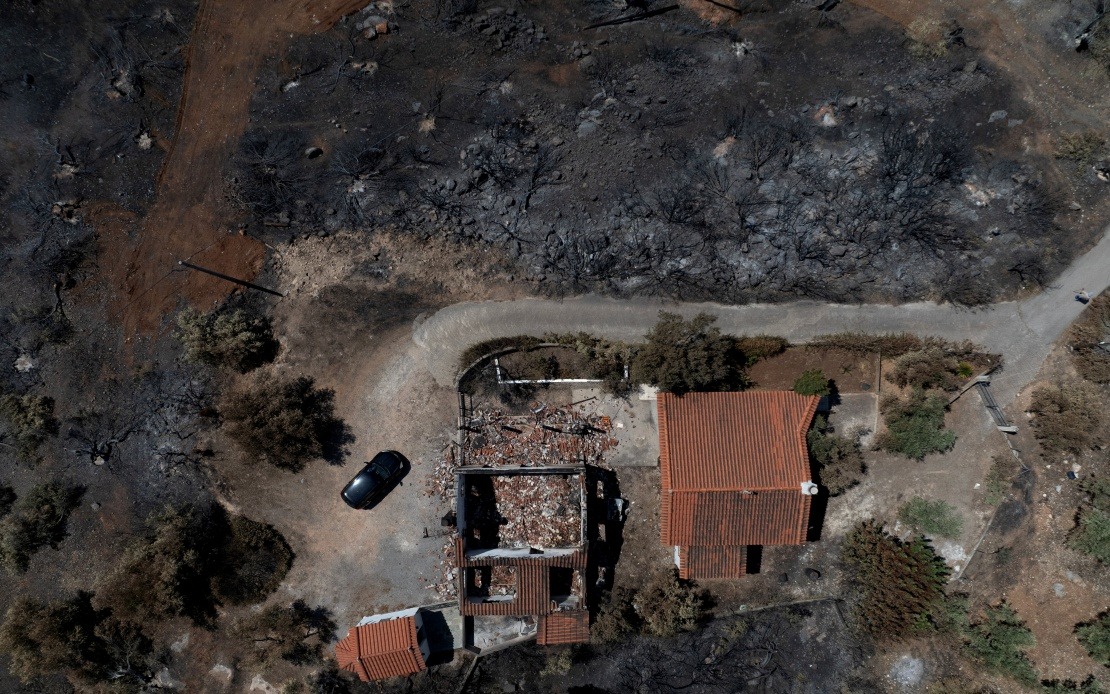
Greece has activated its most severe wildfire warning system for three regions encompassing the nation's capital and surrounding areas, signalling the exceptional danger posed by escalating fire conditions across the country. The General Secretariat for Civil Protection, working under the Climate Crisis and Civil Protection Ministry, elevated the threat classification to Category 4 for Thursday, affecting Attica, Viotia and Evia. This highest-tier alert reflects authorities' assessment that conditions have created an environment where fire outbreaks pose an extraordinary hazard to populated areas, infrastructure and forest ecosystems alike.
The decision to trigger a red alert initiates a comprehensive emergency mobilisation that extends far beyond routine fire management protocols. Greece's National Civil Protection Mechanism shifts into full operational mode, bringing together coordinated resources from the fire service, police and military units. Ground and aerial patrol teams have been deployed across vulnerable zones to provide rapid response capacity, while preventive traffic restrictions are being imposed on forest access points and recreational areas. These measures acknowledge that during extreme fire weather conditions, human activity—whether accidental or deliberate—poses the greatest risk to triggering additional catastrophic blazes.
The heightened alert comes as firefighting teams continue battling a sprawling blaze that ignited in the Viotia region more than a week ago and has since crossed into western Attica. Satellite data from the European Union's Copernicus monitoring system reveals the fire has consumed approximately 14,424 hectares of landscape, equivalent to roughly 35,642 acres. This scale of destruction underscores the intensity and persistence of the flames, which have resisted containment efforts despite sustained suppression operations. The spreading nature of the blaze demonstrates how rapidly wildfires can expand when weather conditions remain unfavourable for firefighting efforts.
In a tragic reminder of the hazards facing those combating such emergencies, a Danish pilot and Greek aerial coordinator lost their lives during helicopter operations against this same fire on Sunday when two firefighting aircraft collided midair. The incident represents a devastating toll within the international firefighting community and highlights the extreme risks undertaken by aviation personnel conducting water-dropping missions in challenging conditions. Their deaths underscore both the critical importance of aerial support in modern wildfire suppression and the dangers inherent in coordinating multiple aircraft in smoke-filled environments.
On Wednesday, firefighting crews managed to bring a separate blaze under control near Koropi, located southeast of the capital. This fire had erupted in low vegetation within the Driggia area at approximately 1.45 pm local time and prompted a substantial emergency response. At least 52 firefighting personnel, including three specialised forest commando units, were mobilised alongside 14 ground vehicles. The aerial component involved four helicopters and two water-dropping aircraft, with additional helicopter assets providing coordination and surveillance of the operation. Local authorities contributed water tankers to support the suppression efforts, while operations centres used thermal and optical drone cameras to monitor fire behaviour and direct resources accordingly.
Investigative teams have been assigned to determine how the Koropi fire originated, with an arson investigation unit dispatched to examine the scene. Such inquiries are critical given that many Mediterranean wildfires result from deliberate firebombing, negligence or uncontrolled clearing practices. Establishing the cause of each incident allows authorities to refine prevention strategies and, where appropriate, pursue legal accountability. The deployment of investigative resources alongside suppression operations reflects Greece's commitment to understanding fire origins even amid emergency response operations.
For Malaysian and Southeast Asian observers, Greece's experience offers important cautionary insights about wildfire risk management during climate-stressed periods. The region's Mediterranean climate, with its prolonged dry summers and volatile wind patterns, creates conditions superficially comparable to the dry seasons experienced across parts of Southeast Asia. However, Greece's sophisticated early warning systems, multi-national aerial firefighting capacity and coordinated civil protection frameworks represent institutional capabilities that many developing nations in the region continue to build. The Category 4 alert system itself exemplifies how structured risk communication can guide public behaviour and emergency resource allocation.
The authorities' decision to restrict public access to forests and vulnerable areas during high-risk periods reflects a recognition that even well-intentioned human presence can inadvertently trigger catastrophic fires. During extreme fire weather, a discarded cigarette, unattended campfire or spark from machinery can rapidly develop into an uncontrollable blaze, particularly in regions experiencing prolonged drought conditions. Such restrictions, while potentially unpopular with outdoor enthusiasts, represent evidence-based policy designed to minimise ignition sources during periods when suppression becomes extraordinarily difficult.
Greece's activation of full civil protection capacity alongside the red alert demonstrates institutional coordination across security and emergency management sectors. The involvement of armed forces, police and fire service reflects an understanding that large-scale wildfire emergencies require resources and capabilities extending beyond traditional firefighting agencies. Military units can provide logistics, transportation and personnel support, while police can enforce evacuation orders and traffic management. This integrated approach has become standard practice across Mediterranean nations facing recurrent fire seasons.
The broader context of these fires relates to Greece's historical vulnerability to summer wildfire seasons, exacerbated in recent years by climate patterns affecting precipitation and temperature. Extended dry periods have become more frequent, creating fuel conditions where even modest ignition sources can generate rapid fire spread. The 14,424-hectare blaze currently burning in Viotia and Attica exemplifies how fire behaviour has intensified, with individual incidents now frequently exceeding the destructive scale of fires from previous decades.
For regional policymakers, Greece's experience underscores the necessity of maintaining robust firefighting capacity during seasonal fire risks, including investment in aerial assets, trained personnel and coordination infrastructure. The fatal helicopter collision demonstrates that even with sophisticated equipment, wildfire suppression remains inherently dangerous work. Southeast Asian nations facing similar seasonal fire hazards, particularly Indonesia and Malaysia, might consider whether their own civil protection frameworks provide comparable integration and resource depth.
Looking forward, Greece's red alert status will remain in effect provided weather conditions persist that elevate fire risk to Category 4. Authorities will likely maintain restrictions and heightened patrol operations until forecasted conditions improve. The ongoing Viotia-Attica fire, meanwhile, will continue consuming resources and personnel for days or potentially weeks, depending on whether weather patterns shift to favour suppression efforts. The activation of maximum alert status serves as an institutional acknowledgement that conditions have approached the threshold where conventional fire management becomes inadequate and emergency systems must assume crisis posture.

