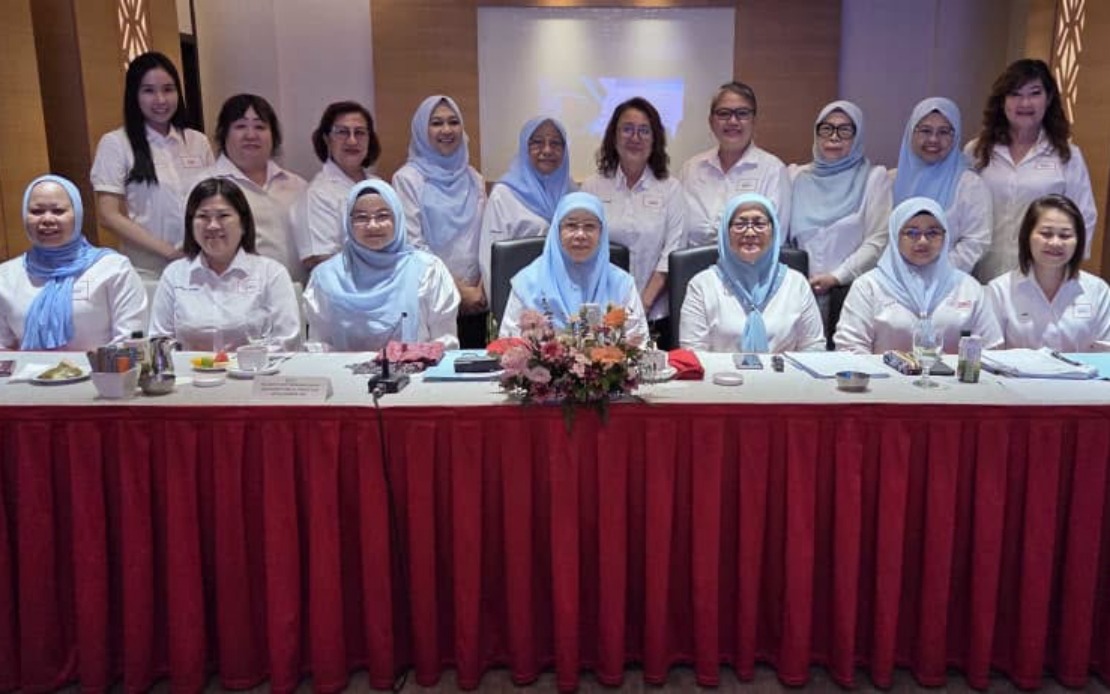
The Gabungan Rakyat Sabah (GRS) Women's wing has taken organizational steps intended to sharpen the coalition's political machinery and deepen its reach at the grassroots level as it prepares for Malaysia's next general election. The decision to create five specialized operational units was formalized during a leadership meeting held in Kota Kinabalu on July 21, with Datuk Seri Azizah Mohd Dun, the wing's chief, confirming the initiative and outlining the structure that will guide the organization's activities moving forward.
The five units established represent a deliberate attempt to compartmentalize and professionalize the Women's wing's approach to political engagement. The Policy and Strategy Unit, which will operate under Azizah's direct oversight, is tasked with developing the ideological and tactical frameworks that will guide campaign messaging and long-term positioning. The Economic Unit, directed by Datuk Surinam Sadikun, will focus on economic policy advocacy and programmes that resonate with household financial concerns, a portfolio increasingly central to electoral competition in Malaysia. The Health Unit, led by Simi Linggom, signals GRS's intention to stake out territory on healthcare issues, an area of growing voter concern.
The Information Unit under Datin Atin Belynda Buntot reflects the modern political reality that effective communication—particularly across digital platforms and traditional media—determines electoral success. Meanwhile, the Welfare Unit headed by Datin Wong Siow Lee @ Mary Wong will coordinate social safety net initiatives and community assistance programmes that build direct relationships between the party and voters at the local level. This structure mirrors organizational models adopted by other major political coalitions across Southeast Asia, where specialized units enable targeted policy development and constituent service delivery.
Azizah's remarks to reporters underscored a strategic assessment that political complacency poses an organizational risk. She emphasized that the GRS Women's wing cannot afford to operate from a position of assumed security or established routine, particularly given how rapidly Malaysia's electoral environment has shifted in recent years. The formation of these units reflects recognition that maintaining competitive political capacity requires continuous adaptation and proactive rather than reactive engagement.
The chief's framing of political dynamics as inherently fluid rather than stable carries implications for how GRS intends to position itself relative to competitors. By institutionalizing regular coordination meetings and establishing clear lines of responsibility across functional areas, the Women's wing aims to create organizational structures capable of responding quickly to emerging political issues or opportunities. This approach anticipates that the period leading to the next general election will feature unpredictable developments requiring rapid organizational response.
Sabah's political landscape has demonstrated significant volatility over the past decade, with electoral outcomes frequently defying conventional predictions and coalitions experiencing substantial membership flux. The GRS Women's wing's restructuring reflects awareness of this uncertainty and an intent to build organizational resilience. By distributing responsibilities across multiple leadership figures through the unit system, the wing creates redundancy in decision-making capacity and ensures that the organization does not depend excessively on any single individual's availability or judgment.
The timing of this organizational restructuring—undertaken well in advance of any formal election announcement—suggests strategic patience combined with preparedness. Political coalitions in Malaysia historically face pressure to mobilize rapidly once an election date is set, leaving limited time for institutional development. By establishing these structures now, GRS is essentially compressing preparation timelines and positioning the Women's wing to activate comprehensive campaigns quickly when circumstances demand.
The emphasis on structured community engagement through the Welfare Unit and the systematic policy development through the Policy and Strategy Unit reflects broader trends in Malaysian politics toward more granular constituent relationship management. Rather than relying primarily on mass rallies and traditional communication channels, modern political organizations increasingly seek to build persistent, personalized connections with voter communities through targeted service delivery and localized policy responsiveness. The GRS Women's wing's new structure facilitates this approach.
Women's political participation and leadership in Malaysian electoral politics has become increasingly significant, with female voters representing a demographic that multiple coalitions actively court. The GRS Women's wing, by establishing itself as a sophisticated organizational entity with defined strategic capacity, positions women's leadership within the coalition as substantive rather than ceremonial. This carries implications for how the broader GRS coalition will be perceived by female voters and demonstrates institutional investment in women's political engagement.
The creation of a dedicated Health Unit merits particular attention in the Malaysian context, where healthcare access, medication affordability, and public hospital capacity remain consistent voter concerns. By designating a specialized unit focused on these issues, GRS signals that women's health advocacy and family healthcare concerns fall within the coalition's policy portfolio. Given that women typically serve as primary healthcare decision-makers within Malaysian households, this positioning strategy carries electoral significance.
The Economic Unit's establishment reflects recognition that household economic management, employment opportunities, cost of living pressures, and financial security represent central electoral concerns for Malaysian voters, particularly women managing household budgets. By dedicating organizational capacity to economic policy advocacy, the GRS Women's wing creates space for development of economically-focused messaging and programming that speaks to constituent material concerns rather than abstract political principle.
Looking forward, the effectiveness of this organizational restructuring will depend on the degree to which these units translate structural coherence into practical campaign activities and voter engagement. Well-designed organizations require capable personnel, adequate resources, and sustained leadership commitment to realize their potential. The GRS Women's wing's success will ultimately be measured not by the elegance of its organizational chart but by the tangible outcomes it produces in terms of community engagement, policy implementation, and electoral performance when the next general election occurs.
The initiative represents a broader pattern of coalition-building sophistication in Malaysian politics, where electoral competition increasingly rewards organizations that combine strategic planning capacity with structured grassroots activation. As GRS positions itself for future electoral contests through these organizational investments, the coalition is simultaneously signaling to both internal party members and external voters that it operates with strategic intentionality and institutional durability.

