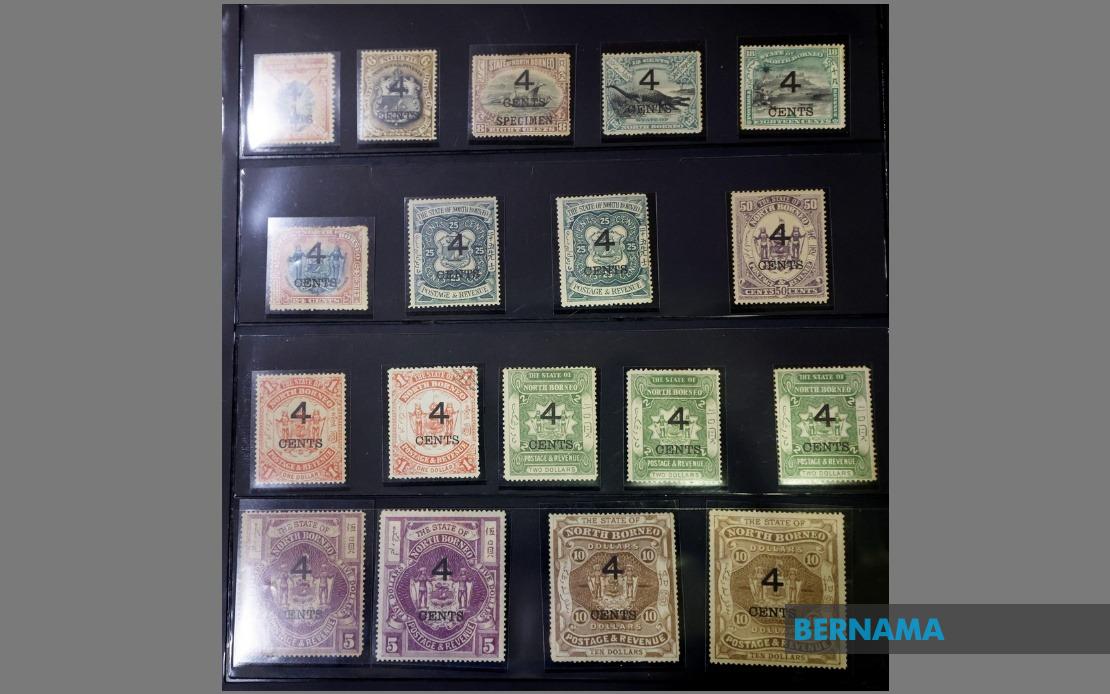
Kota Kinabalu's antique dealers are noticing something troubling: century-old North Borneo stamps are vanishing from circulation, their scarcity driving prices ever higher and threatening to sever a tangible link to Sabah's pre-independence past. The stamps, issued over an 80-year period from 1883 onwards, have become increasingly difficult to locate, prompting conservationists to warn that systematic preservation efforts are now essential if these fragile historical documents are to survive for future Malaysian generations.
Dr Shari Jeffri, 56, founder and president of the Borneo History Association, characterises the philatelic collection as a "living archive"—one that encodes not merely postal transactions but the broader narratives of Sabah's administrative evolution, economic priorities and cultural identity across the late colonial and early post-colonial eras. The collection spans the British North Borneo Chartered Company period through to 1963, capturing decades of territorial governance in miniature form. Yet contemporary interest in stamp collecting has waned dramatically, with younger Malaysians far less exposed to philately than their predecessors, leaving Jeffri and peers grappling with how to transmit these collections and their historical significance to audiences increasingly accustomed to digital rather than physical artefacts.
A Bernama survey of Kota Kinabalu's antique sector confirmed the rarity and rising cost of North Borneo issues. Prices fluctuate significantly depending on age, preservation condition, and scarcity rating. Among discovered specimens was a six-cent Queen Elizabeth II stamp from the 1954–1961 series, paired with a ten-cent logging scene—both exemplifying how colonial postal authorities deployed stamps as instruments of imperial branding and resource documentation. Such items, once commonplace in household correspondence, now command premium valuations that place them beyond casual collectors' reach.
Jeffri's own journey into philately illuminates how institutional and familial transmission of collecting practices operated historically. His grandfather, employed at the Recreation Club Jesselton during the 1920s, observed British officers pursuing stamp collecting and gradually accumulated postal materials himself, later bequeathing the assembled collection to his descendants. Jeffri inherited this foundation at age seven and became an active collector during his secondary school years, ultimately devoting nearly four decades to building expertise in North Borneo philately. His trajectory reflects patterns once common across the British Empire—where stamp collecting served as both hobby and inadvertent historical documentation—but increasingly rare as generational knowledge transfer weakens.
Among Jeffri's most prized holdings are two two-cent North Borneo stamps from the inaugural 1883 issue, featuring a brown sailing boat design and original postmarks. For serious collectors, the 1883 series represents a foundational acquisition; stamps from this first emission occupy pride of place in any comprehensive North Borneo assemblage. This emphasis on completeness reveals how philately functions as historical narrative: each denomination, each design variant, each postmark tells a specific story about how postal authorities, merchants and colonial administrators operated within a defined timeframe. Without these objects, institutional memory fragments and gaps emerge in the archival record.
The visual evolution of North Borneo stamps reflects shifting colonial priorities and emerging territorial identity. Initially, designs incorporated generic imperial symbols—lions, boats and tigers—familiar across British dominions. However, from 1894 onwards, the Chartered Company pivoted to featuring indigenous Borneo flora, fauna and wildlife, acknowledging the territory's distinct ecology and resources. A 1935 redesign further emphasised Sabah's particularity, with denominations ranging from two sen to one dollar. This design progression mirrors broader shifts in imperial representation, moving from abstract universalism toward localised imagery that simultaneously claimed administrative competence and acknowledged regional distinctiveness.
Authentication and conservation present formidable technical challenges. Jeffri emphasises that stamps must be housed in acid-free albums to prevent deterioration—a requirement often overlooked by collectors lacking specialised knowledge. The presence of complete postal cancellations—showing mailing date, originating post office, time and geographical location—elevates a specimen's rarity and value considerably, as such markings provide verifiable historical data. Additionally, the composition of stamp paper and adhesive layer carries significance; variations in glue formulation and paper stock serve as authenticity indicators and help date materials precisely. Jeffri has consulted Singapore-based experts including Voon Kyam Foh and Tan Chun Lim, and references authoritative catalogues such as Commonwealth & British Empire Stamps to deepen his analytical capabilities.
The British North Borneo Chartered Company introduced these stamps in 1883 and maintained the postal system for approximately 52 years, until broader colonial administrative restructuring. This half-century of uninterrupted issue creates a continuous visual and material record of territorial governance, economic priorities—as evidenced by the logging imagery on later denominations—and changing artistic aesthetics. Few other Southeast Asian territories possess such comprehensive postal documentation spanning the late 19th and early 20th centuries, making North Borneo's collection exceptional within Malaysian and regional contexts.
While handwritten letters and posted parcels have largely surrendered to digital communication, North Borneo stamps retain profound value as historical witnesses. They document relationships between colonial authorities and subject populations, reveal commercial networks and resource extraction patterns, and embody aesthetic choices that illuminate period sensibilities. The decline in letter-writing has accelerated the fragmentation of these collections; whereas Victorian households maintained correspondence that circulated stamps broadly, contemporary mail practices concentrate stamps in dealer hands and specialist collections, reducing public access and awareness.
Jeffri's efforts through the Borneo History Association represent a deliberate counterweight to this dispersal. By researching stamp design evolution, tracing provenance, and advocating for systematic preservation, he and allied collectors attempt to recover the historical narratives embedded in postal systems. Yet without institutional support, funding mechanisms and educational initiatives that engage younger Malaysians in philately, these efforts risk remaining marginal. The challenge extends beyond conservation; it encompasses cultural transmission—convincing a generation accustomed to digital communication that physical artefacts encoding historical information merit sustained attention and financial investment.
The future of North Borneo stamp preservation ultimately depends on whether Malaysian heritage institutions, educational bodies and collectors can collectively reframe philately as a legitimate historical practice rather than antiquarian eccentricity. Sabah's postal stamps from 1883 onwards constitute irreplaceable primary sources documenting economic structures, colonial administration, indigenous representation and territorial identity across a transformative century. Without active preservation, cataloguing and public engagement initiatives, these miniature archives will scatter, deteriorate and disappear—taking with them nuanced historical evidence that no secondary source can fully replace. The stakes, therefore, extend beyond collecting hobbyists to encompass Malaysia's broader commitment to preserving and transmitting regional historical knowledge.

