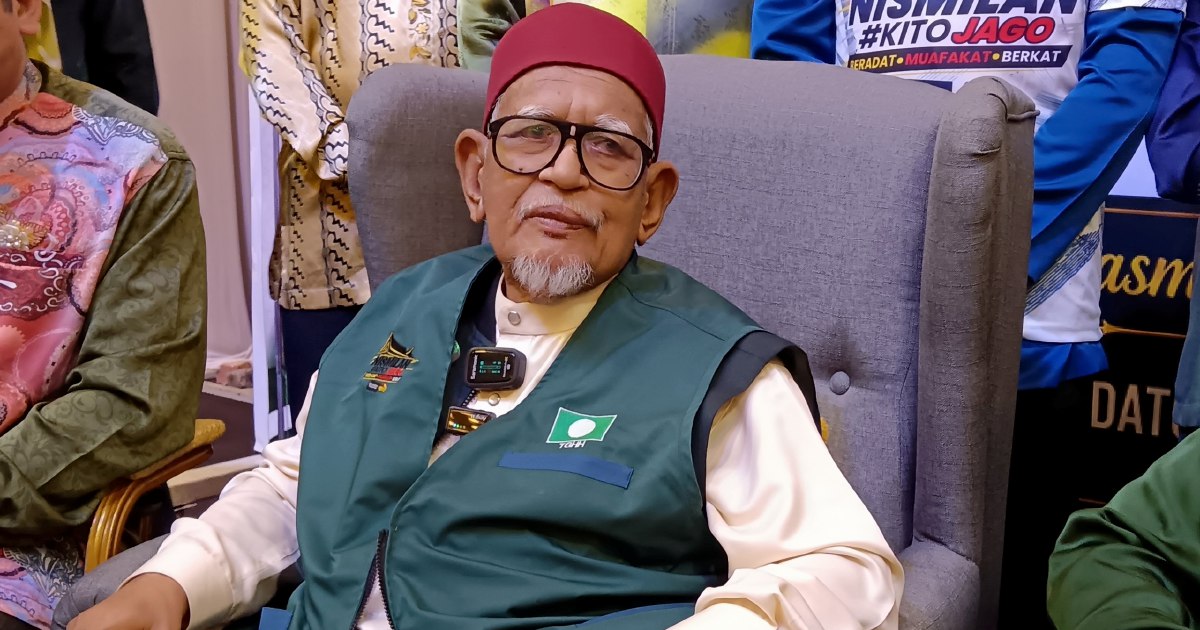
The leadership of Perikatan Nasional remains fractured as PAS president Tan Sri Abdul Hadi Awang flatly rejected assertions by former coalition chairman Tan Sri Muhyiddin Yassin that the opposition alliance has grown "toxic" under Islamic party stewardship. Speaking in his stronghold of Jempol, Hadi shifted responsibility for the coalition's deteriorating image away from PAS and squarely onto Bersatu, Muhyiddin's political vehicle, signalling deepening rifts within an alliance that once positioned itself as an alternative to the Pakatan Harapan government.
The exchange represents the latest chapter in a protracted power struggle within PN, an informal confederation formed to challenge the ruling coalition. Since PAS assumed the de facto leadership role following the 2023 general election, tensions have mounted between the party's conservative Islamic agenda and the secular-nationalist orientation of Bersatu. Muhyiddin, who previously chaired PN and commanded respect across its member parties, appears to have taken aim at PAS's direction of the alliance, using the loaded term "toxic" to suggest the coalition's appeal has eroded among voters and potential partners.
Hadi's rebuttal carries strategic weight in Malaysian politics, where coalition mathematics determine parliamentary viability and government formation. By attributing toxicity to Bersatu rather than accepting criticism of PAS's stewardship, Hadi has drawn a clear line between the two parties. This distinction matters because it frames the narrative: PAS is presenting itself as a stabilising force, while characterising Bersatu's actions and statements as destabilising. For Malaysian voters and opposition sympathisers, such public blame-shifting indicates that PN lacks the internal cohesion necessary to present a united challenge to Pakatan Harapan, undermining claims that the opposition represents a viable alternative government.
The timing of these comments is significant, as PN continues to navigate the political landscape following the 2023 election. PAS secured substantial representation and rural support, especially in Kelantan and Terengganu, which strengthened its position within the coalition. Bersatu, by contrast, has experienced erosion of its political base and faces ongoing internal pressures. Muhyiddin's statement about PN's toxicity could be interpreted as a last attempt to reassert influence and challenge PAS's consolidation of power, particularly as discussions continue about potential realignments in Malaysian politics.
The "toxic" characterisation also reflects public perception issues that PN faces. Opinion surveys and electoral performance in several constituencies have suggested that voters view the coalition with ambivalence. Some perceive PAS-led PN as ideologically rigid on religious and social issues, while others worry about secular governance standards. Muhyiddin's comment may have been directed at these perceptions, implying that PAS's religious emphasis has alienated moderate voters and business interests. Hadi's counterattack by naming Bersatu suggests that PAS believes it can distance itself from unpopular policies or rhetoric by attributing them to coalition partners.
For Southeast Asian observers, the PN dynamics underscore broader patterns in the region's opposition politics. Multi-party coalitions frequently collapse under the strain of competing ideologies, ambitions, and policy priorities. Malaysia's PN, despite initial hopes, has struggled to maintain unity. Unlike Pakatan Harapan, which maintains relatively clearer ideological ground (centre-left, democratic reform), PN encompasses both Islamic-oriented and secular-nationalist factions. This structural contradiction has repeatedly surfaced, with PAS pushing for religiously conservative policies while Bersatu and other members resist what they view as extremism.
The personal rivalry between Hadi and Muhyiddin also plays a role in these exchanges. Muhyiddin, a former prime minister, carried considerable prestige and political leverage. However, his authority within PN has diminished as PAS gained strength. Public criticism from Muhyiddin therefore represents a challenge to Hadi's leadership that cannot be ignored. Hadi's swift and direct response indicates he views Muhyiddin's remarks as a threat to PAS's standing within the coalition and among voters.
For Malaysian politics more broadly, these divisions illustrate why forming a stable, credible opposition remains difficult. Voters considering an opposition vote must weigh whether PN can govern effectively despite apparent internal disagreements. The constant public disputes between Muhyiddin and Hadi, whether over coalition direction or personal positioning, reinforce doubts about PN's readiness to assume government. This dynamic potentially favours Pakatan Harapan, which, despite its own tensions, has maintained greater message discipline.
Moving forward, the trajectory of PN will depend on whether Hadi can consolidate PAS's dominance and silence dissenting voices like Muhyiddin's, or whether Bersatu and other members reassert influence. Should PAS become too dominant, secular-leaning parties may exit the coalition. Conversely, if PAS weakens, Bersatu might attempt to reclaim the leadership position. The comments exchanged between Hadi and Muhyiddin suggest this internal competition remains unresolved, leaving PN's future institutional health and electoral prospects uncertain.

